
A bare trailer tongue gives an opportunistic thief the fastest route to your load. Utility and boat trailers need a lock chosen for their exact coupler, not the package claim alone.
Shop DoubleLock truck and trailer security locks before your next tow, or use the wholesale quote path for fleet and bulk needs.
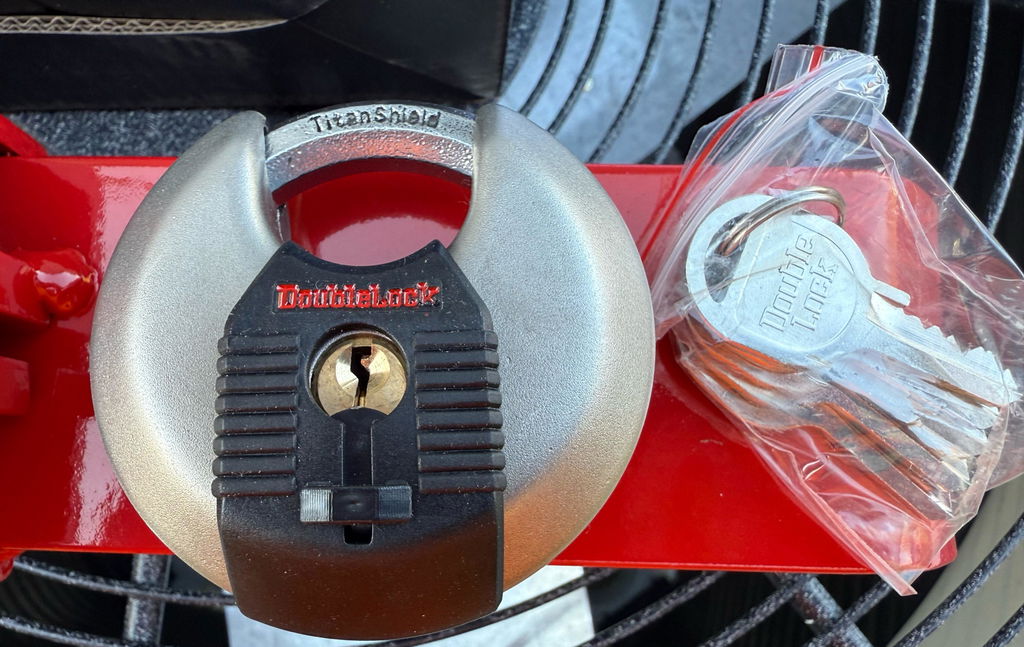
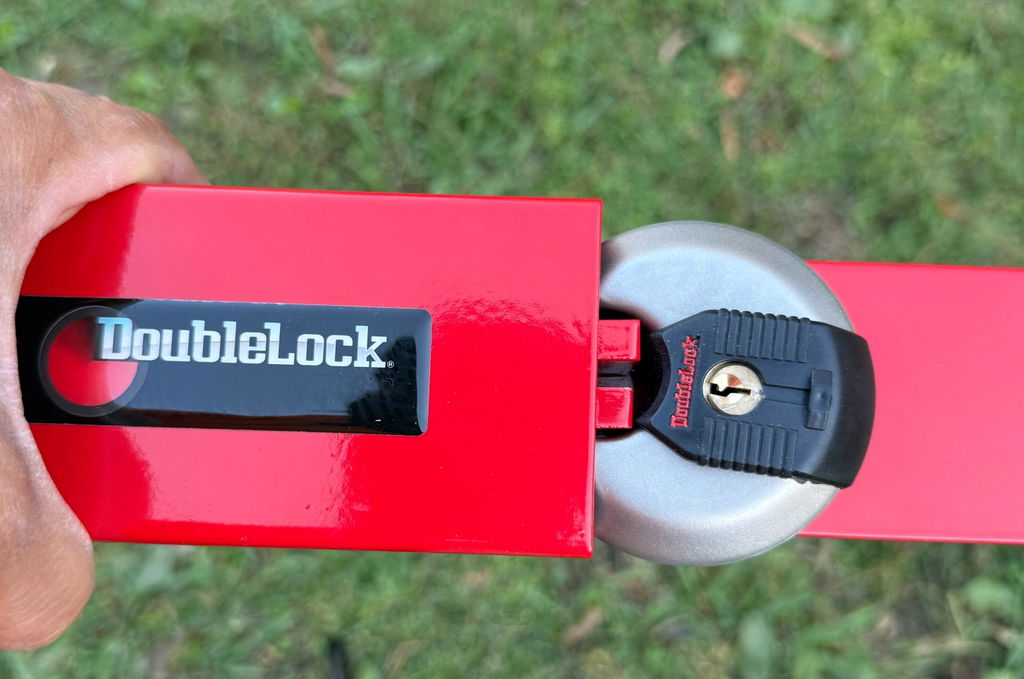
A trailer coupler lock blocks the coupler from accepting a tow ball while the trailer is parked, making unauthorized hookup slower and more obvious. Choose the design by matching the lock to the coupler's ball size, latch shape, lip dimensions, and any surge-brake hardware before buying. For boat trailers, favor weather-resistant construction; for utility trailers, prioritize rugged materials, minimal loose fit, and a clearly visible body that signals resistance from a distance. A visible barrier can discourage opportunistic theft, but Purdue Extension advises owners to understand theft methods and use layered protection around unattended equipment. Pair the coupler lock with a hitch pin lock when connected, plus a wheel lock or another independent layer when parked for longer stops.
The right answer depends on more than the ball size stamped nearby. Choosing for a utility or boat trailer means weighing fit, exposure, daily use, and the security demanded by the load. The next section, Trailer coupler lock basics for utility and boat trailers, breaks down that choice. Here's how.
Trailer coupler lock basics for utility and boat trailers
A trailer coupler lock protects the connection point used to attach a trailer to a tow vehicle. On a parked utility or boat trailer, it helps stop someone from dropping the open coupler onto another hitch ball and driving away.
What a coupler lock does
Most coupler locks fill or cover the ball socket, then secure that barrier with a keyed lock. The device is meant for an unhitched trailer. It differs from a hitch pin lock, which secures parts of the towing setup while the trailer is connected.
The exposed coupling point is a basic route for unauthorized trailer connection. Research on trailer theft describes mechanical hitch and coupler barriers as part of prevention. This trailer theft research from MIT also treats trailer security as one part of wider risk control.
Why parked trailers need coupler protection
An unhitched trailer can be a simple target because its main towing connection is open and easy to reach. A visible trailer coupler lock adds work and delay. Purdue guidance notes that mechanical and visual deterrents can make an opportunistic theft less appealing.
Utility trailers often sit at jobsites, yards, or homes with tools and equipment on board. Boat trailers face a different setting. They may spend time at ramps, marinas, storage lots, or driveways where rain, spray, grit, and outdoor exposure affect the lock.
- Match the lock to the coupler style and ball size.
- Check that the lock blocks the socket without loose gaps.
- Choose construction suited to repeated outdoor use.
- Inspect the coupler and lock for wear or signs of tampering.
A focused layer, not complete towing security
This article focuses on utility and boat trailer applications, not every type of towing hardware. Broader DoubleLock guides cover general lock selection and towing setups, including the related best trailer coupler lock guide for buyers comparing fit and security features. Here, the key question is how coupler security fits the places and conditions where these two trailer types are parked.
No lock makes a trailer impossible to steal. A coupler lock reduces risk at one exposed point, so owners should use other layers where the setup allows. For example, they can pair it with a locking hitch pin when securing the tow vehicle connection.
Which trailer coupler lock type fits your setup?
The right trailer coupler lock must fit the coupler before it can protect the trailer. Start with the coupler style, ball size, and space around the tongue. Then weigh how often the trailer moves, where it sits, and how much exposure the lock will face.
Fit comes before lock style
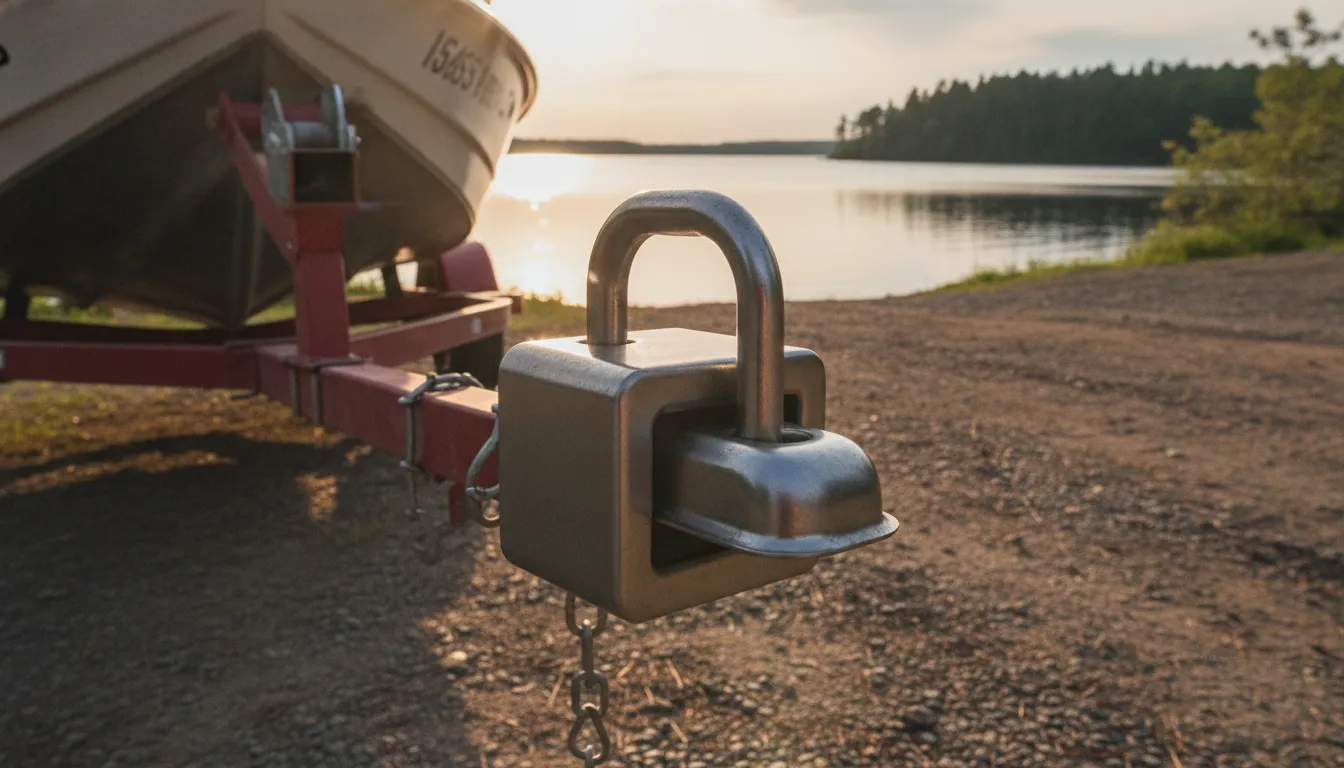
A ball-style lock fills the coupler socket and blocks a tow ball from entering. It is a practical choice for many standard utility and boat trailer couplers. Its value depends on a snug fit, since excess movement can leave more room for tools.
Wraparound or clamshell locks cover more of the coupler body. They can limit access to the socket, latch, and nearby hardware. Before buying one, check the coupler profile and any jack, safety-chain mount, or brake parts that could block installation.
| Lock type. | Main strength. | Main limitation. | Best fit. |
|---|---|---|---|
| Ball-style. | Blocks the coupler socket. | Must closely match the socket and coupler. | Standard utility or boat trailer couplers. |
| Wraparound or clamshell. | Covers more of the coupler body. | Nearby tongue hardware may interfere. | Trailers parked outdoors for longer periods. |
| Latch-pin or coupler latch. | Fast to install for frequent stops. | Protects a smaller part of the coupler. | Active utility trailers with regular use. |
| Heavy-duty enclosed. | Creates a larger physical barrier. | Heavier and more fit-sensitive. | High-value utility or boat trailers. |
Daily use versus parked security
Latch-pin locks secure the coupler latch instead of filling or enclosing the socket. Their small size makes them easy to store and use during frequent stops. Still, they protect a narrow point, so they suit lower-risk stops better than long unattended storage.
Heavy-duty enclosed designs place a larger barrier around the coupling point. That added coverage can suit equipment trailers, valuable boats, or trailers left at remote sites. No lock is invincible, but stronger barriers can increase the time and effort needed for theft.
Also note when the lock will be used. A coupler lock mainly protects an unhitched trailer. A locking hitch pin helps secure towing hardware when the trailer is connected.
Utility and boat trailer needs
Utility trailer owners should balance fast access with the risk at each parking site. A simple lock may work for regular stops, while an enclosed design better suits overnight storage. For broader defense, pair with a locking hitch pin and consider a wheel lock.
Boat trailer owners also need to account for wet, dirty, and exposed conditions. Choose a lock that fits without pressing against brake hardware or the tongue jack. In a coastal or launch-ramp setting, check whether the lock sheds water and leaves enough clearance for normal coupling. Inspect it for damage and tampering as part of regular trailer checks.
A visible mechanical barrier can make an easy target look harder to take. Purdue guidance explains how thieves often seek easy opportunities and recommends layered prevention steps. Use that approach when comparing trailer coupler locks, since the right type is one part of the full setup. Review the trailer theft prevention guidance for added context.
How to measure fit before you buy
A trailer coupler lock only works as intended when its shape matches the towing setup. Check the coupler, tongue, and nearby hardware before choosing a lock. This matters most on utility and boat trailers, where exposed parts and tight clearances can limit the options.
Details to record
Start with the coupler stamping or data plate. Record the listed ball size, coupler maker, model, and load rating without guessing. Then note whether the latch folds, slides, or lifts. A pintle-style connection needs a different approach, so review guidance on securing your pintle hitch instead.
Next, inspect the trailer tongue as a complete assembly. Safety-chain mounts, a jack, wiring, brake parts, or welded plates may block a lock body. Look above, below, and beside the coupler. A lock that fits the socket can still hit nearby hardware or leave the latch partly open.
A practical fit check
Use this process before buying a trailer coupler lock. Keep your notes and photos handy when comparing product dimensions or asking the maker about fit.
- Read the coupler stamping. Clean off dirt and record the ball size, maker, model, and any clear fit information shown on the coupler.
- Identify the connection and latch. Confirm whether the trailer uses a standard ball coupler, surge-brake coupler, adjustable channel, or pintle setup. Photograph the latch from both sides.
- Measure the coupler. Measure the socket opening, latch area, coupler width, and the space beneath the coupler. Record the narrowest clearance near each possible contact point.
- Check tongue geometry. Note the tongue profile and any plates, bolts, chains, jack parts, or wiring close to the coupler. Measure how far each part sits from the latch and socket.
- Review exposure. Note whether the trailer faces road salt, rain, mud, or marine spray. Choose materials and keyway protection suited to that exposure, then plan regular cleaning and inspection.
- Compare the maker's fit guidance. Match every recorded measurement and coupler detail against the lock's published dimensions. If guidance is unclear, send the maker your photos and measurements before ordering.
- Test-fit without forcing it. Seat and lock the device as directed. Confirm that it closes fully, clears nearby parts, and cannot be removed while locked.
Fit after installation
During the test fit, move the latch and nearby parts through their normal range. The lock should not pinch wiring or rest against a brake component. Remove it, then look for fresh scrape marks or bent parts that may show a poor match.
Recheck the lock after road use and during routine trailer inspections. No lock is undefeatable, but a sound fit helps it serve as a useful barrier. Visible mechanical deterrents can make an easy target less appealing, according to Purdue Extension trailer theft guidance. For broader selection, compare the available trailer coupler locks against your recorded measurements.
Materials, weather resistance, and visible deterrence
A trailer coupler lock lives outside, often close to road grit, rain, and saltwater spray. Its materials and design should match that hard setting. Focus on the parts a thief can reach, then check how well the whole lock handles repeated outdoor use.
Hardened steel and protected shackles
Hardened steel can add useful resistance at the coupler, but material alone does not tell the full story. Look at the lock's shape, exposed gaps, and the amount of metal around its locking parts. A close-fitting body leaves less room to position common hand tools.
Shackle protection matters for any design with an exposed shackle or locking pin. A guarded or partly enclosed shackle gives a thief less working space. Thick parts can still have weak points, so inspect the complete design rather than trusting weight or size alone.
No trailer coupler lock is undefeatable. The goal is to add time, noise, and effort while reducing easy access to the coupler. For broader protection, pair with a locking hitch pin and consider another layer at the wheel.
Weather and corrosion exposure
Boat ramps create a harsh cycle. A lock may face water, salt, mud, and then long periods in outdoor storage. Utility trailers also collect road spray and dirt near the coupler. Weather-resistant construction is important, but owners still need to inspect and care for the lock.
Check for rust, damaged coatings, stiff movement, and signs of tampering. Pay close attention after saltwater trips or winter road use. Rinse away salt and grit when the maker's care instructions allow it, then dry the lock before storage.
The keyway also needs protection from dirt and water. A covered or shielded keyway can help keep debris away from the lock cylinder. Test the key before each trip, and never force a key into a stiff or blocked cylinder.
Why visibility matters
A clearly visible lock can change the first choice a thief makes. Purdue University guidance notes that mechanical and visual deterrents help make a trailer a less appealing target. A bold lock body can signal that removal will take more time and effort.
Visibility does not replace physical strength. It works with strong materials, protected locking parts, and smart parking. Use a visible trailer coupler lock whenever the trailer is unhitched, including at a ramp, jobsite, driveway, or storage lot.
Keep that signal credible. A bright lock with deep rust, a loose fit, or an exposed weak point may not deter close inspection. Choose a sound design, maintain it, and use it as one part of a layered trailer security plan.
Request a wholesale quote if you need keyed, repeatable trailer security for multiple utility, marine, or fleet trailers.
When should you pair it with a hitch pin or wheel lock?
A trailer coupler lock protects one key point, but it does not cover every way a trailer can be moved. Add another lock when the trailer stays unattended, carries valuable gear, or sits where a thief has time to work. The goal is not to make theft impossible. It is to add visible barriers that take more time and tools to defeat.
Match each lock to a different weak point
A coupler lock blocks someone from placing the parked trailer on a standard tow ball. A hitch pin lock serves a different role while the trailer is connected. It helps keep the receiver and ball mount from being removed. Review how to pair with a locking hitch pin before choosing hardware for a connected towing setup.
A wheel lock adds a barrier away from the coupler. It can limit wheel movement even if someone attacks or bypasses the towing connection. Purdue Extension notes that thieves may target trailers with specific tools and methods. Its trailer theft prevention guidance supports using clear deterrents and planning for known theft methods.
- Use a coupler lock when the trailer is disconnected from the tow vehicle.
- Add a hitch pin lock when the trailer remains connected or the ball mount stays in the receiver.
- Add a wheel lock when the trailer will sit unattended for hours or overnight.
Layers for home, marina, and roadside stops
At home, start with a fitted coupler lock and add a wheel lock for trailers parked in an open driveway. Good lighting and a position that blocks easy towing add more friction. If several family trailers share regular drivers, the convenience of keyed alike trailer locks can make daily lock use easier.
Marina storage calls for the same layered plan, with extra attention to weather exposure and lock care. Use a coupler lock on the parked boat trailer, then add a wheel lock for longer stays. Check both locks for rust, damage, or signs of tampering before each tow.
During a roadside stop, the trailer usually remains connected. A hitch pin lock is the practical second layer because it protects the receiver connection while you step away. Park in a bright, visible area, keep the stop brief, and check the connection before leaving.
Jobsite and fleet lot planning
Jobsites often leave utility or equipment trailers near tools, materials, and open access points. Pair the trailer coupler lock with a wheel lock whenever the unit sits after hours. Positioning the locked wheel against a curb or fixed barrier can also make removal less direct.
Fleet lots need a repeatable plan rather than a different choice for each driver. Set a lock standard by trailer type, parking time, and exposure. Use keyed alike sets where controlled key access helps the team, and keep spare keys under a clear sign-out process.
Managers should inspect locks on a set schedule and record damage or tampering. For larger fleets, a wholesale path can help standardize approved lock types across many trailers. No single device removes all risk, but each added layer forces another step before a trailer can move.
Utility trailer vs. boat trailer lock priorities
Trailer type changes what a lock must handle each day. Start by confirming that the trailer coupler lock matches the coupler's size and style. Then weigh exposure, visibility, daily use, and the value of the trailer and its load.
Open utility trailer priorities
An open utility trailer exposes both the load and security hardware to view. That makes fit and visible deterrence key priorities, especially when tools or equipment stay aboard. Purdue University's guidance on trailer theft notes that visual and mechanical deterrents can make a trailer less inviting to opportunistic thieves.
Because cargo is exposed, protect the load as a separate layer. Prioritize exact coupler fit, then add a wheel lock or another physical barrier when risk calls for it. No lock is invincible, so each added layer should increase the time and effort needed for theft.
- Measure the coupler and note its style before comparing locks.
- Check whether the lock remains easy to see when the trailer is parked.
- Remove loose tools or secure them apart from the trailer connection.
Enclosed cargo trailer priorities
Enclosed cargo trailers hide their contents, but the closed box can draw attention to an unknown load. Treat the cargo doors and coupler as separate attack points. Start with a properly fitted coupler lock when parked and unhitched. Then secure the doors with hardware suited to their design.
If the tow vehicle stays attached, the receiver-side connection also needs attention. DoubleLock's guide explains how to pair with a locking hitch pin without confusing that device with a coupler lock. Keep door locks visible, and avoid leaving keys or spare security gear inside the trailer.
Boat trailer and waterfront priorities
Small boat trailers often move between storage, roads, and wet ramps. Prioritize weather-resistant construction, simple operation, and a fit that stays secure on the actual coupler. Confirm dimensions before buying; the words universal or marine do not replace a fit check. Avoid product compatibility assumptions based only on trailer type or boat size.
At a ramp or marina, frequent locking and unlocking make ease of use more important. Choose a setup you can secure every time, even during a busy launch or retrieval. Visible hardware helps show that the trailer is protected, while a second layer covers another path of attack.
Build the final setup around where the trailer waits longest. Use a coupler lock for the connection point, then add protection for wheels, receiver hardware, cargo, or marine gear as needed. Inspect exposed locks for wear, damage, and signs of tampering before the next trip. Compare available trailer coupler locks only after you know the required fit and daily conditions.
Compare truck and trailer locks once your coupler measurements, parking conditions, and towing setup are clear.
Frequently Asked Questions
Is a trailer coupler lock worth it?
Yes, a trailer coupler lock is worth using because it creates a visible and physical barrier against unauthorized towing. It cannot make any utility or boat trailer theft-proof, but it can increase the time, effort, and noise required. Purdue Extension notes that effective deterrents make theft less attractive by increasing the work involved.
What is the best coupler lock for a trailer?
The best trailer coupler lock fits the exact ball size and coupler style, leaves little exposed hardware, and suits the storage environment. For boat trailers, prioritize weather-resistant construction and inspect the lock often for corrosion or damage. For high-value utility trailers, compare material strength and resistance to likely attack methods. A universal label does not replace checking dimensions against the manufacturer's specifications before purchase.
Is a coupler lock the same as a hitch lock?
No. A coupler lock blocks access to the trailer coupler, usually while the trailer is parked and disconnected. A hitch pin or receiver lock secures the removable ball mount to the tow vehicle's receiver. Some sellers loosely use "hitch lock" for either product. Check which connection point a product protects, then use both locks where the towing setup allows.
How do you lock a trailer hitch so it cannot be stolen?
Start with a coupler lock fitted tightly to the trailer's exact coupler size and style. Add a locking hitch pin so the removable ball mount cannot be taken, and use a wheel lock to stop rolling. Park in a visible, controlled area and inspect each device for damage or tampering. No lock is invincible, so layered security reduces easy attack paths and makes opportunistic theft less attractive.
Ready to Strengthen Your Trailer Security?
Waiting to secure an unattended utility or boat trailer leaves its coupler, wheels, and connected equipment exposed to avoidable theft risk. Choosing a properly fitted coupler lock now gives you time to test operation, confirm clearance, and add other protective layers. Starting before the next trip also prevents rushed purchases that may not fit your coupler or suit wet, outdoor storage conditions.
Ready to protect your trailer? Shop truck and trailer locks to compare options for utility and boat trailers. Review fit details before ordering, then pair your coupler lock with a hitch pin or wheel lock as needed. Fleet and bulk buyers can also request a wholesale quote after identifying the trailer types and lock quantities their operation requires.