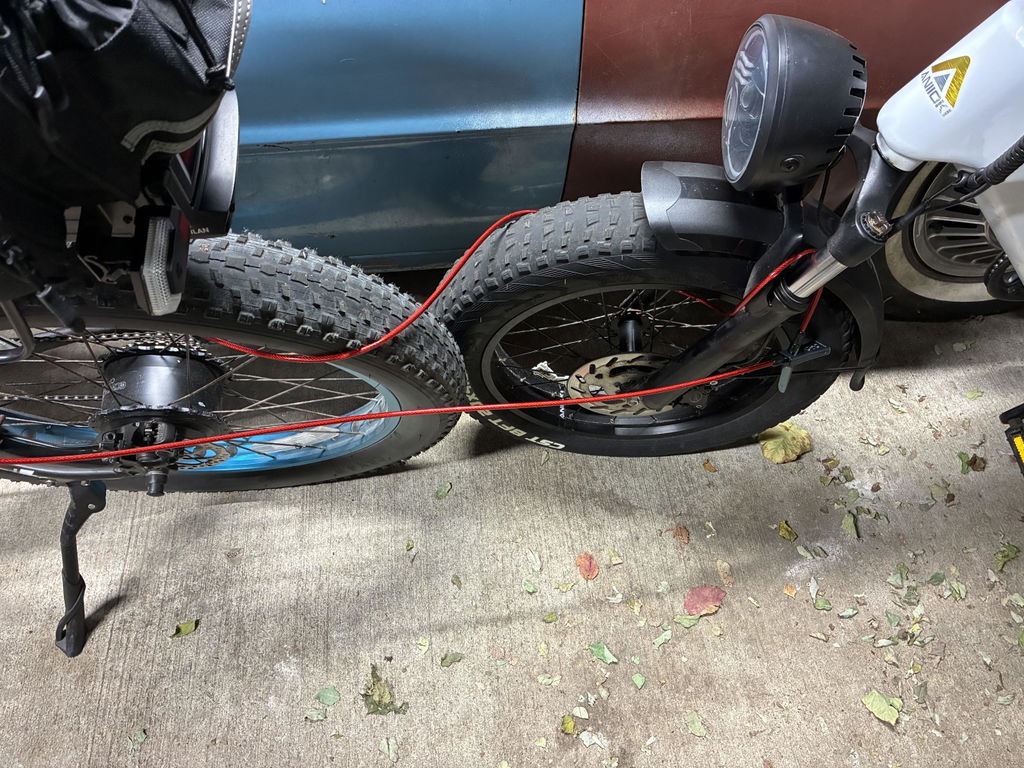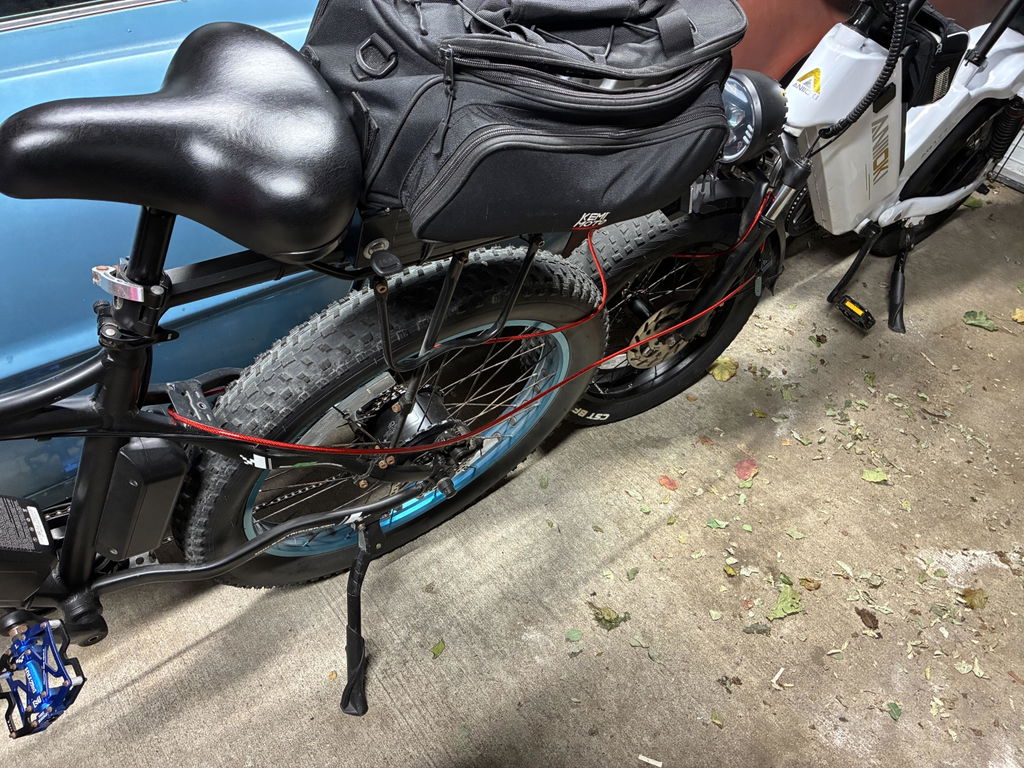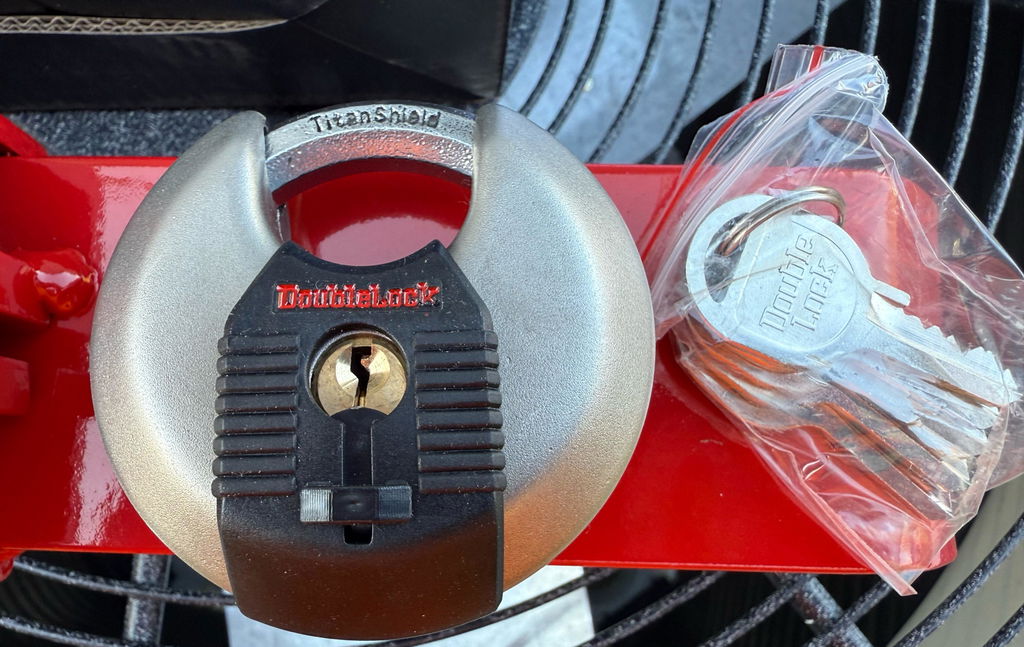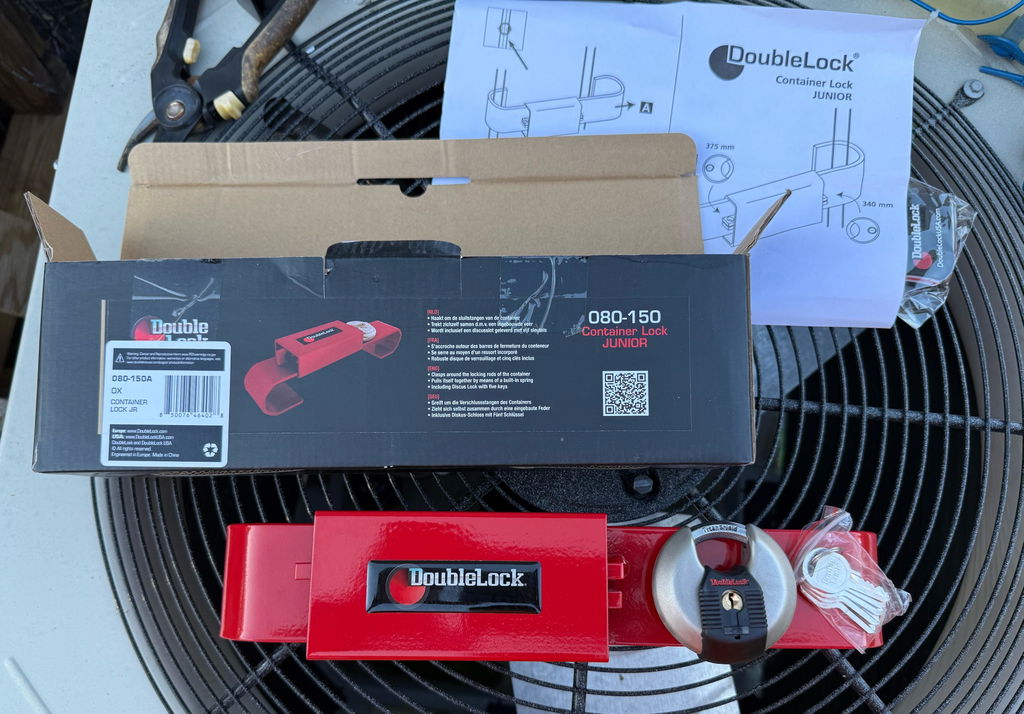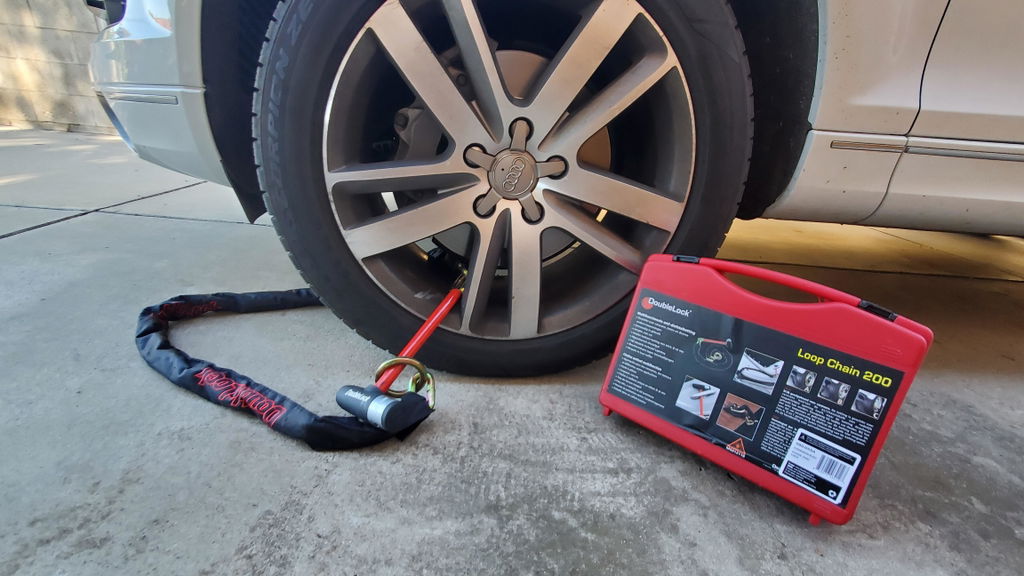



A portable generator can keep a crew productive when power is unavailable, but its wheels, exposed frame, and predictable value also make it attractive to thieves. Effective portable generator theft prevention is not one oversized lock or a promise that equipment cannot be stolen. It is a practical system that makes removal slower, noisier, more difficult, and easier to investigate while keeping the generator safe to operate.
Shop DoubleLock USA security hardware and build a stronger first layer.
The best setup connects a structural part of the generator to a fixed anchor, limits access to the lock, and adds site controls that still work after the crew leaves. This guide explains how to lock a generator at a jobsite, on a trailer, and in long-term storage without relying on vague claims or a one-size-fits-all checklist.
Quick answer: Lock a portable generator by routing a cut-resistant cable or chain through a welded frame member and around a fixed steel or concrete anchor. Pull the line snug, place the lock where tools have limited access, keep the connection clear of hot and moving parts, then add lighting, controlled access, asset records, and an end-of-shift inspection.
Why is portable generator theft prevention a layered job?
A generator security plan has to address more than the lock. A thief may attack the cable, remove a weak anchor, cut a thin frame tube, or tow away the trailer carrying the generator. Layers matter because each one closes a different path. A visible barrier can encourage a quick-moving thief to look elsewhere. A strong anchor and well-routed cable create delay. Lighting, cameras, access control, and asset records improve detection and response.
No lock is undefeatable. The useful question is whether the complete setup creates enough time, effort, exposure, and uncertainty to change the risk. DoubleLock USA approaches physical security from a premium, practical perspective shaped by more than 30 years of European engineering heritage. That background is reflected in rugged hardware designed for demanding equipment, trailer, and jobsite applications. Learn more about the company's practical security focus on the DoubleLock USA story page.
Think like the person responsible for the asset
Start with the loss that would hurt operations most. If a generator disappears from a concrete crew at 6:00 a.m., the immediate damage is not only replacement cost. The crew may lose a workday while a pour, inspection, or tool schedule slips. If the same generator is stolen with a trailer, the business loses transport capacity and every unsecured item inside. Your plan should protect the operating bottleneck, not just the most visible machine.
Then identify the easiest removal path. Can two people lift the unit into a pickup? Can someone roll it through an open gate? Is the generator locked to a trailer that can be hitched and driven away? Is a ground anchor installed in weak soil? This simple review often reveals a cheaper and more effective improvement than buying a larger lock without changing the setup.
Use the four-part DELAY decision framework
A practical way to compare security options is the DELAY framework: Destination, Exposure, Lock path, Anchor, and Your routine. Destination asks where the generator stays during use and overnight. Exposure covers visibility from roads, neighboring properties, and active work areas. Lock path examines every component from the generator frame to the anchor. Anchor tests whether the fixed point can actually resist removal. Your routine determines whether the system will be applied consistently at the end of a long shift.
If any one part is weak, improve it before adding complexity elsewhere. A strong cable attached to a light fence panel fails the Anchor test. An excellent setup that workers skip because it takes twenty minutes fails the Your routine test. For broader planning beyond a single generator, use the construction site theft prevention checklist to review gates, tools, trailers, and records together.
How do you lock a generator correctly?
To lock a generator correctly, connect a welded structural frame member to an immovable anchor with the shortest practical cable or chain path. Protect the lock body and shackle from easy tool access, and never route hardware across exhaust components, fuel controls, air intakes, electrical outlets, wheels, or moving engine parts. The generator must remain stable, ventilated, and serviceable whenever it operates.
Follow this seven-step locking sequence
- Choose a structural frame point. Use a thick, welded member that is integral to the generator frame. Avoid handles, wheel brackets, cosmetic panels, thin guards, or parts that can be unbolted quickly.
- Select a fixed anchor. Favor a steel building member, properly installed concrete anchor, or substantial trailer frame. Do not rely on a removable railing, light fence panel, loose post, or equipment that can be carried away with the generator.
- Inspect the entire lock path. Check the generator frame, cable or chain, lock, connector, and anchor. The weakest reachable component determines the real strength of the setup.
- Route high and tight. Remove unnecessary slack and keep the line off the ground when possible. A tight route reduces room for leverage and makes it harder to position cutting tools.
- Shield the lock. Place the lock body and shackle near the frame or anchor where a large tool cannot approach squarely. Keep the keyway accessible to the crew.
- Confirm operating safety. Make sure nothing contacts hot exhaust, blocks ventilation, interferes with controls, or creates a trip hazard. Follow the generator manufacturer's operating and clearance instructions.
- Test and document. Pull firmly on the connection, photograph the completed setup, and record the responsible worker's name in the closeout log.
This sequence answers the basic question of how to lock a generator, but hardware still needs to match the site. A flexible cable may be practical when workers move the generator several times a day or must loop around an awkward steel member. A heavy chain may suit a fixed overnight position. A shrouded or guarded lock design can reduce access to the shackle, but only when the surrounding connection is equally considered.
Do not turn security hardware into an operating hazard
Portable generators produce heat and exhaust, and they require clear airflow. Never run a cable across a muffler or place a lock where vibration can drive it into the fuel tank. Do not operate a generator in a closed trailer, shed, or cage unless the installation is specifically designed for safe generator operation and follows all manufacturer guidance. Security must not compromise carbon monoxide safety, fire safety, grounding, ventilation, or maintenance access.
For construction and rental teams that need flexible equipment security, review the practical use cases in the BEAST XL cable lock jobsite guide. It helps explain when reach and routing flexibility are operational advantages.
Match the lock plan to the generator's location
Location changes the likely attack and the best response. A generator beside an active crew has natural observation during the day but may sit exposed after dark. A truck-bed unit is easy to transport because it is already at loading height. A generator inside a trailer may be hidden, but the entire trailer can become the target. Long-term storage offers time to install a serious anchor, yet it also gives a thief a predictable location.
| Location | Likely weak point | Best first improvement | Routine priority |
|---|---|---|---|
| Active jobsite | Open perimeter after shift | Fixed steel or concrete anchor | Named closeout inspection |
| Open utility trailer | Generator and trailer both movable | Lock generator to frame and secure trailer | Check both lock paths |
| Truck bed | Fast lift-out | Short connection to structural tie point | Remove or secure at every stop |
| Home or shop storage | Predictable unattended location | Concealment plus concrete anchor | Inspect after each use |
Scenario: the generator that moves with the concrete crew
A concrete crew unloads a generator at dawn, moves it between a saw station and finishing area, then parks it near the trailer at shift end. A permanent chain at one point would be inconvenient during operations, so the crew needs a flexible daytime method and a stronger overnight position. The supervisor installs a rated anchor at the overnight location, assigns a cable specifically to the generator, and marks the correct welded frame route with a small paint indicator.
At closeout, one worker moves the generator to the designated zone, pulls the cable tight, places the lock close to the steel anchor, and photographs the result. The foreman checks the gate and trailer separately. This plan works because it makes the secure action obvious and repeatable. It also supports the wider controls outlined in DoubleLock USA's jobsite theft prevention checklist.
Scenario: a generator carried on an open trailer
A landscaping company carries a generator, compressor, and fuel containers on an open utility trailer. Locking the generator to the side rail looks convenient, but the rail is bolted on and can be removed. The better route runs through the generator's welded frame and around a substantial trailer frame member. The crew keeps the connection short enough to prevent the unit from reaching the trailer edge.
That solves only half the problem. If the trailer itself is left unsecured, a thief can take every locked item at once. The closeout routine must include the generator connection, coupler or kingpin protection as applicable, safety-chain control, and the tow vehicle or storage anchor. Fleet managers standardizing hardware across many crews can discuss application needs through the DoubleLock USA wholesale and fleet channel.
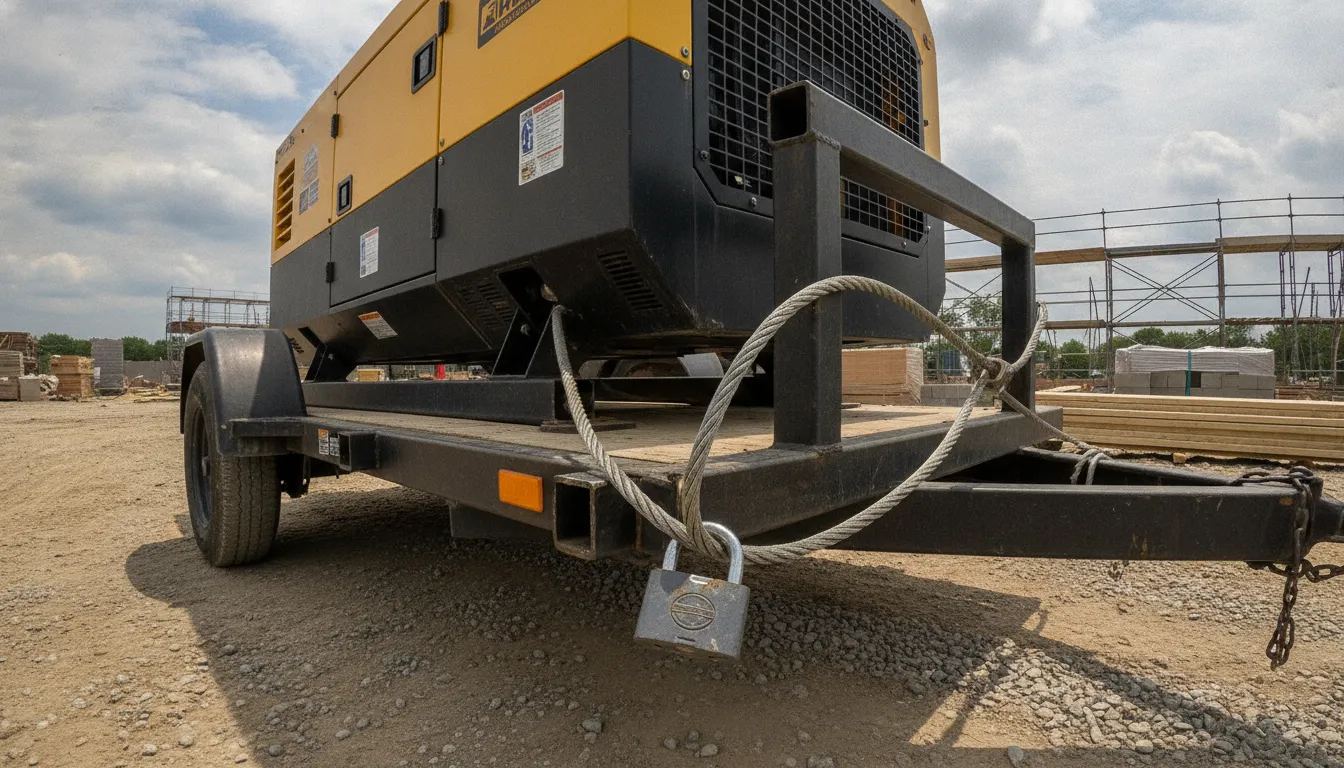
Compare DoubleLock USA security hardware for generators, trailers, and jobsite equipment.
Build a complete security system around the lock
Physical locking is the center of a generator security plan, not the whole plan. The surrounding site should make suspicious activity visible, limit access, and preserve useful information if equipment disappears. These measures do not need to be elaborate. They need to address the actual conditions at the site and survive normal crew behavior.
Control visibility without advertising the asset
During working hours, keep the generator within the crew's normal line of sight when practical. After hours, move it away from the road and behind a controlled boundary. Motion-activated lighting can expose movement near the equipment, while a properly positioned camera can document vehicles, entry paths, and activity around the anchor. A camera pointed only at the generator may miss the license plate or route that matters most.
Balance concealment with observation. Hiding a generator behind a remote stack of material may remove it from roadside view, but it can also give a thief cover. A better position is often inside the secured perimeter, away from public sight, and visible to a camera or occupied building. Incorporate that choice into the broader construction site security plan rather than improvising every night.
Record details before they are needed
Create an asset record when the generator enters service. Include the make, model, serial number, purchase record, assigned crew, and clear photographs of the full unit and identifying marks. Add a photo showing any owner-applied marking. Store the record somewhere accessible to a manager even when the job trailer is unavailable.
If the generator goes missing, the team should know who will check cameras, notify site management, preserve records, and make a police report. GPS or other tracking technology may add a recovery layer when legally and properly used, but it does not replace a physical lock or a response plan. Treat tracking as one component, and avoid placing workers in danger by attempting recovery without law enforcement.
Make the end-of-shift check specific
Vague instructions such as "secure the site" invite inconsistent results. A good closeout card names the equipment, route, and person responsible. For example: move Generator 2 to the south anchor, route the assigned cable through the marked frame point, lock with minimal slack, photograph the connection, verify the trailer lock, close the gate, and submit the checklist by 5:15 p.m.
The check should also catch wear. Look for cable damage, corrosion, a sticking lock, a loose anchor, altered hardware, or fresh marks around the frame. Replace questionable components rather than waiting for failure. DoubleLock USA's premium security hardware philosophy is built around practical protection in demanding conditions, but even rugged equipment needs correct use and routine inspection.
What should you prioritize when budget and time are limited?
Start with changes that remove the easiest theft path. First, create a real fixed anchor and connect it to a structural generator frame point. Second, secure the vehicle or trailer that could carry the generator away. Third, reduce public visibility while improving controlled lighting and camera coverage. Fourth, assign a short closeout routine. Fifth, keep complete asset records.
This order is useful because it focuses on the mechanics of removal before optional complexity. A tracker in an unlocked generator may help after a theft, but it does not stop the fast lift-out. A premium padlock on a weak gate does not fix the gate. A camera without usable lighting may record little. Spend time tracing the complete removal path, then strengthen its weakest practical point.
Choose hardware by fit, not appearance alone
Compare cable or chain reach, the available anchor geometry, the generator frame opening, lock clearance, weather exposure, and how often the unit moves. Hardware that is too short may encourage workers to use a weak anchor. Hardware that is unnecessarily long may leave dangerous slack. A lock body that cannot sit near the anchor may remain exposed to tools.
For a single home generator, that review may lead to a dedicated concrete anchor and a compact connection stored beside the unit. For a rental fleet, standardization may matter more. Managers can define approved lock routes for each model, issue matched kits, and train every driver on the same closeout process. The wholesale and bulk inquiry page is the appropriate route for discussing fleet-scale security needs without assuming one product fits every application.
Review the setup after conditions change
Reassess security when a project moves phases, a generator changes trailers, the crew relocates the laydown yard, or an anchor becomes blocked. A secure position beside an occupied building can become isolated after the tenant leaves. A camera view can be obscured by a new material stack. A cable route can become unsafe when a different generator model has a hotter exhaust position.
Schedule a brief monthly review for long projects and a setup review at every new site. Ask the DELAY questions again: Where will the generator end up, who can see it, what is the complete lock path, what does the anchor resist, and will the crew follow the routine? That discipline makes portable generator theft prevention part of operations rather than an occasional reaction.
Frequently Asked Questions
Can I lock a generator while it is running?
Yes, if the connection remains clear of the exhaust, fuel system, controls, outlets, air intake, wheels, and moving parts. Maintain required ventilation and operating clearances, follow the manufacturer's instructions, and never run a generator in an unsafe enclosure.
Is a cable or chain better for a portable generator?
The better choice fits the anchor, frame opening, required reach, weather exposure, and crew routine. Flexible cable can simplify routing around awkward equipment. Chain may suit a fixed anchor. In either case, minimize slack and inspect every component in the lock path.
Where is the best place to attach a lock?
Use a substantial welded frame member that cannot be removed without significant work. Avoid handles, wheels, brackets, guards, and thin tubing. Connect it to a fixed steel or concrete anchor, then position the lock where large tools have limited working room.
How can I secure a generator on a trailer?
Lock the generator's structural frame to a substantial trailer frame member, not a removable side rail. Then secure the trailer itself so a thief cannot tow the complete locked load away. Review both connections during every closeout.
Will a lock completely prevent generator theft?
No lock is undefeatable. A properly selected and routed lock can add meaningful delay and deter opportunistic theft. Combine it with a strong anchor, trailer protection, controlled access, lighting, asset records, and a consistent inspection routine.
Build your portable generator theft prevention setup
A strong generator security plan begins with a clear removal-path review, a reliable fixed anchor, and hardware that the crew can route correctly every time. Add trailer protection, lighting, records, and a named closeout routine to create layers that work together. DoubleLock USA brings European engineering heritage and a practical, no-nonsense approach to protecting trailers, jobsites, equipment, and other high-value assets.
Shop DoubleLock USA security hardware or request a wholesale and fleet conversation to plan the next layer.