

One exposed hitch can turn a parked trailer into a fast, easy target. Real protection makes every step of stealing it slower, louder, and harder for thieves.
How to lock a trailer so it cannot be stolen starts with layered security, not a single lock. Secure the coupler when unhitched. Lock the receiver when connected. Immobilize at least one wheel with a strong wheel lock. For semi-trailers, fit a purpose-built kingpin lock before leaving the unit unattended. Park in a well-lit, high-traffic location and block easy towing access. Record the trailer's identifying details. No lock is undefeatable, but layers increase the time, tools, and risk a thief must accept. This approach follows Purdue Extension guidance that mechanical deterrents include coupler, hitch, and wheel locks.
The question is not whether one lock looks tough; it is how each layer works together against a fast theft attempt. How to lock a trailer so it cannot be stolen with layered security lays out that sequence, starting at the hitch and ending with documentation. Here's how.
How to lock a trailer so it cannot be stolen with layered security
No single lock can make a trailer impossible to steal. A strong plan instead forces a thief to defeat several barriers before moving the trailer. That added work, noise, and time can make a better-protected trailer a less appealing target.
The practical answer to how to lock a trailer so it cannot be stolen is to protect separate points with different devices. Match each device to the trailer type, cargo value, and parking risk. Then check every layer before leaving the trailer.
Protect the connection points
Start where another vehicle would connect. On a bumper-pull trailer, fit a coupler lock while the trailer is detached. A padlock through the latch alone does not block every way someone might connect or alter the coupler. Learn why a coupler lock serves as the primary defense for trailer couplers.
For a semi-trailer, secure the kingpin instead. The lock should fit tightly and prevent an unauthorized tractor from coupling. Also lock the tow vehicle's receiver and hitch hardware when the trailer remains attached. This keeps a thief from simply pulling the hitch assembly from the receiver.
Stop the trailer from rolling
Add a wheel lock or boot as a separate barrier. It makes the trailer harder to roll even if someone defeats the coupler or kingpin lock. Use it on firm ground, where it seats correctly and remains easy to inspect.
Mechanical deterrents can include coupler locks, hitch locks, and wheel locks, according to Purdue Extension guidance on trailer theft. Using more than one type matters because each protects a different attack point. Check fit and operation often, since a damaged or loose device may provide less delay.
- Secure the coupler on bumper-pull trailers or the kingpin on semi-trailers.
- Lock the receiver pin and other removable hitch parts.
- Immobilize at least one wheel with a correctly fitted lock or boot.
- Remove keys and keep spares away from the trailer.
Control the site and keep records
Hardware works better when the parking site also creates risk for a thief. Park in a lit, visible area with the hitch facing a wall or fixed barrier when possible. Avoid spots that give an unknown tow vehicle an easy, straight approach. Gates, cameras, and clear sight lines add more layers.
Record the trailer's VIN, plate number, make, model, color, and unique marks. Keep current photos from several angles, plus receipts and serial numbers for security devices. Store copies somewhere other than inside the trailer. A hidden GPS tracker can add another layer and may help locate a stolen asset.
Before each trip or storage period, inspect every lock and confirm the trailer's details are current. Fleet operators should use a written check process so no layer depends on memory. Buyers managing many units can also review trailer and kingpin security options by application.
Secure the coupler, hitch, and receiver first
The connection point is often the first place a thief checks. An open coupler can let another tow vehicle connect and leave with the trailer. If you are learning how to lock a trailer so it cannot be stolen, start by blocking each usable connection point.
Match each lock to its job
A coupler lock fills or covers the ball socket while the trailer is parked and uncoupled. A latch lock keeps the coupler handle from opening. Both must fit the coupler's size and shape, with little room for tools to reach the lock body.
When the trailer remains attached, protect the hitch pin and receiver. A hitch pin lock secures the drawbar inside the tow vehicle's receiver. It does not replace a coupler lock or latch lock because each device guards a different joint.
Purdue University lists coupler, hitch, and wheel locks among useful mechanical theft deterrents. No lock makes a trailer impossible to steal, but several fitted locks add delay and make tampering easy to spot.
Lock the latch and control the chains
Place a padlock through the coupler latch's intended lock hole only when the shackle fits closely. A loose, exposed shackle gives cutting tools more working room. For a closer look at fit and lock styles, review the primary defense for trailer couplers.
Safety chains are vital towing equipment, not a stand-alone theft lock. Keep them off the ground and secured against casual handling while parked. Do not alter, cut, or bind them in a way that could weaken their towing role.
- Close the coupler latch, then test that it cannot lift.
- Lock the coupler whenever the trailer is detached.
- Lock the receiver pin when a drawbar stays installed.
- Check that chains cannot hide access to a loose latch or pin.
Pintle hitch and heavy-trailer connections
A pintle setup uses a lunette ring and a closing jaw instead of a standard ball coupler. A ball-style coupler lock will not protect that connection. Secure the pintle jaw or latch with hardware made for its shape, then protect any removable receiver pin.
Inspect the ring, jaw, latch, and lock for space that could let another vehicle connect. DoubleLock USA's guide to pintle hitch security measures explains this connection type in more detail. Fleet and semi-trailer operators should also secure any kingpin or other tow point not covered by the hitch lock.
After parking, pull on each connection and confirm every lock is fully seated. Repeat the check before towing so a security device never remains where it could affect safe travel.
Add wheel immobilization and ground control
A coupler or hitch lock protects the connection point, but wheel control adds another problem for a thief. Purdue Extension lists wheel locks among the mechanical deterrents for trailers. Each visible layer demands more tools, effort, and time. No setup makes a trailer impossible to steal, but layered control can reduce the risk.
Wheel locks and chocks
Fit a wheel lock or clamp to at least one wheel before leaving the trailer. On a tandem-axle trailer, consider an immobilizer that controls the space between both tires. Choose hardware that fits the tire, wheel, and axle layout without touching brake lines. A bright, easy-to-see device also warns that the trailer has more than one defense.
Use wheel chocks on both sides of a tire when the trailer sits on a slope. Chocks help stop normal rolling, but they are not theft locks. Do not rely on them alone. Pair wheel control with the primary defense for trailer couplers, then test each device after installation.
Ground anchors and chains
A fixed ground anchor lets you tie the trailer frame to the parking site. Place it in concrete or another sound base, following the anchor maker's instructions. Run a suitable chain through a closed frame section, then secure it with a guarded lock. Keep the chain off open ground where possible, since firm support can make tool use easier.
Protect the anchor and chain from vehicle traffic, mud, and standing water. Inspect the full setup for loose fasteners, deep rust, worn links, and damage before each use. At a shared yard, control keys and record who removes each lock. These simple checks prevent a strong layer from becoming a weak point.
Parking at home, in a yard, or on a jobsite
At home, park behind a locked gate when possible. Turn the coupler away from the street, and place the trailer where another vehicle blocks direct access. Never block an exit or create an unsafe path. A fixed barrier should limit towing room without trapping people or emergency vehicles.
In a storage yard, park trailers close enough to limit turning space while keeping safe lanes open. Use approved anchors or fixed posts instead of fences, pipes, or unknown structures. Add lighting and clear sight lines around the trailer. Purdue Extension notes that lighting and signage act as visual deterrents at storage areas.
On a jobsite, avoid soft shoulders, isolated corners, and spots hidden by equipment. Park within the controlled area, lock a wheel, and chain the frame to an approved anchor. Recheck every layer at the end of each shift. When access, wheel movement, and towing all require separate work, theft becomes a slower and more visible task.
What about kingpin locks for commercial trailers?
Where a kingpin lock fits
Commercial operators need a different lock plan than owners of small towable trailers. A kingpin lock covers the connection point used by a semi-trailer. This makes it useful when an uncoupled trailer sits in a fleet yard, drop lot, staging area, or customer lot.
The risk is not theoretical. California's 2023 vehicle theft data shows commercial trucks and trailers made up 5.8 percent of stolen vehicles. That state figure does not describe every market. It does show why parked commercial trailers need a clear security plan.
A layered fleet-yard plan
A kingpin lock should be one part of that plan, not the whole plan. No lock is undefeatable. The goal is to add delay, make tampering easier to spot, and push a thief toward a less protected target.
How to lock a trailer so it cannot be stolen depends on its connection points and parking conditions. For a semi-trailer, start with the kingpin. Then layer controls around the trailer and the yard:
- Lock the kingpin whenever the trailer is dropped and not connected to a tractor.
- Use wheel or door security where the trailer design and cargo risk call for it.
- Park in a well-lit, high-traffic area with clear sight lines.
- Check locks before dispatch and after each trip.
For more detail on fit and daily use, review the guide to securing semi-trailer king pins. Fleet teams should also assign responsibility for each check. A strong lock left off during a rushed handoff provides no protection.
Choosing a commercial kingpin lock
Choose hardware for the trailer type, cargo value, parking site, and expected dwell time. DoubleLock USA's LION Trailer Lock is a kingpin trailer lock made for semi-trailer kingpin security. The customer knowledge base lists it as SCM Class HEAVY.
Before standardizing it across a fleet, confirm fit on the trailers in service. Test the lock procedure with drivers and yard staff. Keep a record of issued locks, keys, checks, and maintenance so missing gear or skipped steps become visible.
Large operators also need a plan for purchasing, key control, replacement, and staff training. DoubleLock USA provides a wholesale and quote path for fleet and bulk needs. That route can help teams discuss deployment needs without assuming that one setup fits every trailer.
How to evaluate trailer lock quality before you buy
A quality trailer lock fits the exact part it must protect and leaves little room for tool access. Start with the trailer type, coupler, hitch, kingpin, or wheel. Then compare materials, weather protection, key control, and visibility. No lock makes theft impossible, so judge each option by how well it adds delay and risk.
Fit before features
Confirm all measurements before comparing brand claims or added features. A coupler lock must match the coupler style and size without loose gaps. Semi-trailers need a kingpin-specific device, while pintle setups need a different fit. This primary defense for trailer couplers guide explains what to check on towable trailers.
| Quality check. | Stronger sign. | Warning sign. |
|---|---|---|
| Application fit. | Made for the exact coupler, hitch, kingpin, or wheel size. | Loose movement or unclear dimensions. |
| Body and steel. | Thick steel body with little exposed shackle space. | Thin parts, open gaps, or easy tool access. |
| Weather resistance. | Protected keyway, coated surfaces, and drainage where needed. | Bare surfaces or an open keyway that holds dirt and water. |
| Key control. | Clear spare-key process and keys managed for intended users. | Unclear replacement process or too many uncontrolled copies. |
| Visibility. | Easy to spot before a thief approaches the trailer. | Hidden device that adds no clear visual warning. |
| Daily inspection. | Installs firmly and can be checked before each trip. | Awkward fit that encourages skipped use or poor checks. |
Do not treat steel thickness alone as proof of a good lock. Look at the full assembly, including the lock body, shackle, keyway, and contact points. Exposed space can give tools room to work. A firm fit also makes it easier to notice damage or tampering during a routine check.
Quality in real conditions
Think about where the trailer sits and who uses it. Rain, road salt, dust, and jobsite grit can affect a lock that works well indoors. Ask how the keyway stays covered and how water leaves the body. Also check whether gloved hands can install the device without leaving it partly engaged.
Visibility matters because locks can warn off an opportunistic thief before contact. Purdue Extension lists coupler locks, hitch locks, and wheel locks as mechanical trailer theft deterrents. A visible lock should still fit tightly and protect its weak points. Bright color cannot make up for exposed parts or poor steel construction.
One lock within a layered plan
The right lock depends on the trailer and the point a thief could use to move it. Choose a coupler lock for an unhitched towable trailer. Use a receiver or hitch pin lock when the trailer remains connected. For commercial equipment, review options made for securing semi-trailer king pins.
Finally, compare how the lock works with another layer, such as a wheel lock or secure parking setup. Separate devices force a thief to address more than one point. That added effort is useful, but it does not remove all risk. Select hardware that crews will install correctly and inspect often.
Step-by-step checklist for locking a trailer before you leave
Knowing how to lock a trailer so it cannot be stolen starts with a repeatable routine. No lock is undefeatable, so use several barriers instead of trusting one device.
Build the security layers
The right setup makes towing, rolling, and cargo access harder. Purdue University lists coupler locks, hitch locks, and wheel locks among useful mechanical deterrents for trailers.
Remove valuables and loose gear. Take tools, electronics, paperwork, and keys with you when practical. Hide any cargo that must remain, then record what is inside.
Choose the parking position. Use a well-lit, busy area with the trailer visible from a building or camera. Back the coupler toward a wall or other solid barrier when space allows.
Lock the coupler or kingpin. Fit the correct coupler lock on a towable trailer. For a semi-trailer, secure the kingpin so another tractor cannot connect. Review the guide to securing semi-trailer king pins when setting a fleet routine.
Lock the receiver. If the trailer stays attached, secure the receiver pin and coupler latch. Check each lock by pulling firmly on it before walking away.
Immobilize a wheel. Install a wheel clamp or boot on a visible wheel. Place it where a thief cannot easily reach its lock or remove the wheel.
Secure doors and cargo. Lock rear, side, ramp, and storage doors. Fasten equipment inside so quick access does not lead to a quick loss. Use seals when they help staff spot tampering.
Document and inspect. Photograph the VIN, trailer position, cargo, and every fitted lock. Save the images with the date and location. After storms or long storage, inspect the locks, tires, doors, and parking area again.
Run the final check
Walk around the trailer once before leaving. Confirm that every device is fully seated, locked, and free from obvious damage. For towable trailers, a primary defense for trailer couplers should be paired with wheel and receiver protection.
Keep the photos and a short lock inventory where an owner or fleet manager can find them. A clear record helps the next check follow the same steps and exposes missing gear fast.
Where DoubleLock USA fits in a trailer security setup
DoubleLock products should fill specific points in a layered plan, not replace the plan itself. Start with the trailer type, hitch design, parking site, and exposed hardware. Then choose locks that fit those points without gaps or loose movement.
This approach matters because thieves do not all use the same method. Purdue Extension describes opportunistic, career, and internal thieves in its trailer theft guidance. Several visible and well-fitted barriers can raise the time, noise, and effort needed to move the trailer.
Match the first lock to the hitch
For a pintle hitch trailer, the SCORPION Tow Hitch Lock can cover the hitch layer. A receiver setup may call for the TITAN Hitch Pin Lock at the receiver connection. Before ordering, confirm the hitch style, pin diameter, clearances, and the way each part sits when parked.
The first lock should address the point a thief would use to connect a tow vehicle. Yet that lock remains only one layer. A wheel barrier, blocked parking position, lighting, and a tracker can help cover other theft paths.
Protect semi-trailers and secondary points
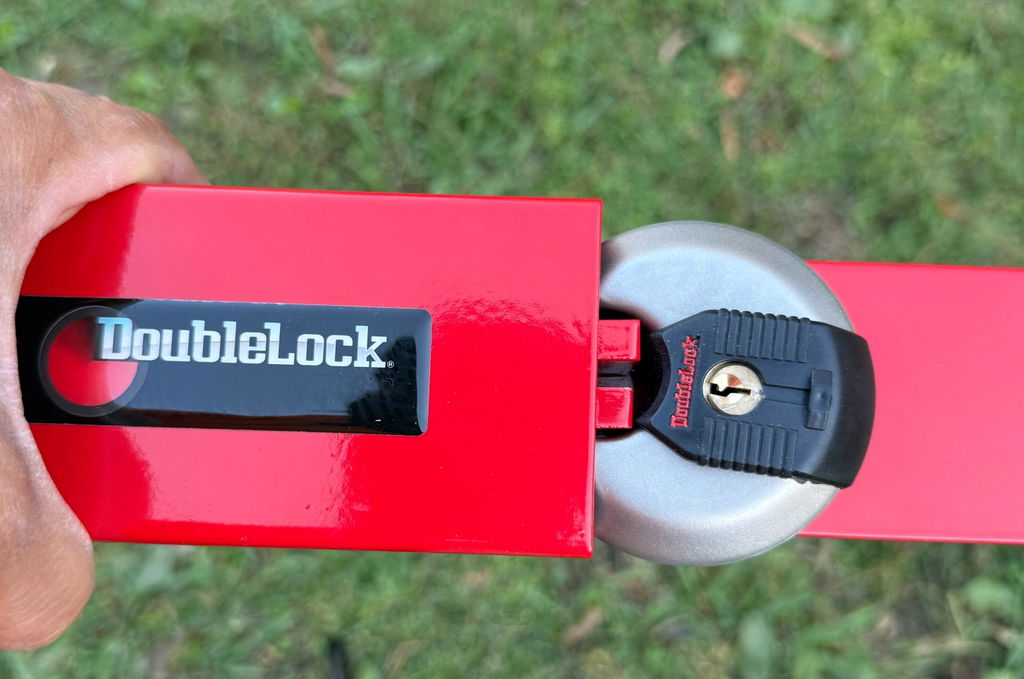
A parked semi-trailer needs a different fit than a bumper-pull trailer. The LION Trailer Lock is designed for kingpin security, where it blocks normal fifth-wheel connection. Fleet teams can review the practical details in DoubleLock USA's guide to securing semi-trailer king pins.
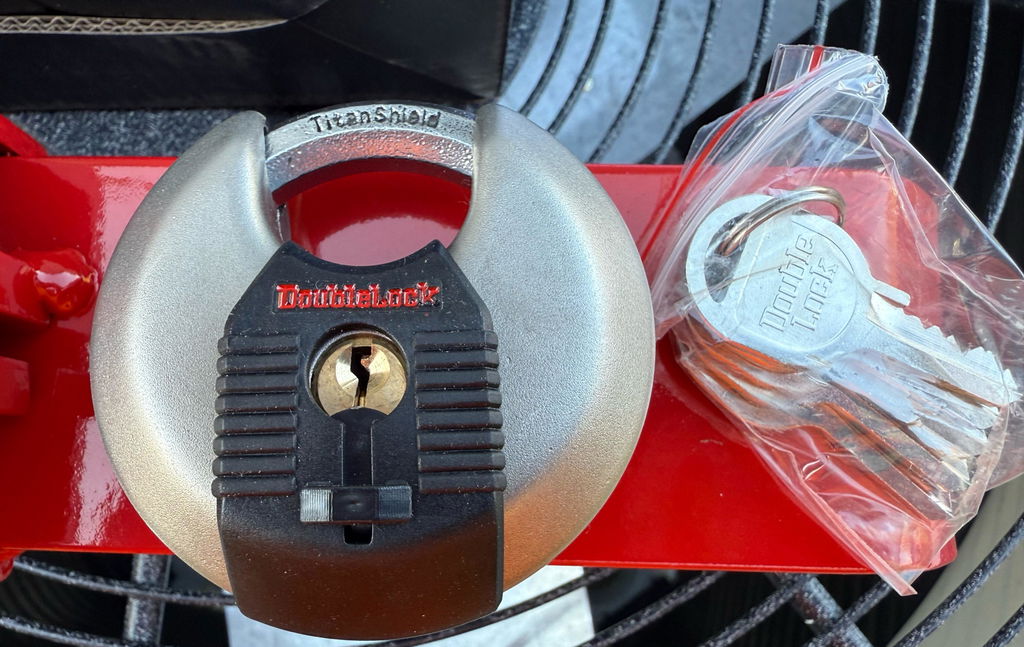
Secondary security can address removable gear and lock-ready points. The BEAST Cable and Lock Bundle adds a flexible cable option. The RED HAWK padlock can serve a compatible hasp or chain point. Confirm every opening, cable route, and lock fit before relying on either product.
- Use SCORPION for a compatible pintle hitch layer.
- Use TITAN at a compatible receiver hitch pin connection.
- Use LION on a semi-trailer kingpin.
- Use BEAST or RED HAWK only where the cable, hasp, or chain fits correctly.
Build a repeatable fleet standard
Fleet buyers should turn the layered checklist into a clear standard for each trailer class. Record the lock model, assigned keys, fit checks, parking rules, and inspection steps. Train drivers to check every fitted layer before departure and after parking.
Start with a small field test across the hitch and trailer types in service. Check fit, access, and daily use before scaling the setup. For larger orders, use DoubleLock USA's wholesale and quote path to discuss fleet needs and suitable options.
No product makes a trailer impossible to steal. A sound setup uses the right lock at each exposed point, then backs it with parking controls and routine checks. That is the practical answer to how to lock a trailer so it cannot be stolen.
Frequently Asked Questions
How can I make sure a used trailer was not stolen before buying it?
Compare the trailer's VIN, plate, make, and model with its title or registration before paying. Check whether the VIN plate looks altered, replaced, or damaged. Ask the seller for identification and a signed bill of sale. Verify the ownership record and local transfer requirements with the appropriate state motor vehicle agency. Walk away if the seller cannot explain missing documents or mismatched details.
Do trailer locks actually work?
Trailer locks reduce theft risk by adding time, noise, and tool requirements, but no lock makes a trailer impossible to steal. A properly fitted coupler, receiver, kingpin, or wheel lock can deter an opportunistic thief. Using different lock types together protects separate attack points. Good parking, controlled keys, current records, and regular inspections strengthen those physical barriers.
Can GPS tracking replace physical trailer locks?
No. GPS tracking can help locate a trailer after theft, but it does not stop someone from coupling or moving the trailer. Use tracking as a secondary layer behind physical barriers, such as a coupler or kingpin lock and wheel lock. Purdue Extension identifies GPS asset tracking as a theft deterrent that may support recovery.
How often should trailer locks be checked?
Check every trailer lock after installation, before leaving the trailer, and again before towing. Inspect stored trailers regularly and after severe weather or suspected tampering. Look for loose fit, corrosion, blocked keyways, damaged parts, and missing keys. Fleet teams should record checks at dispatch and return so skipped steps, damaged hardware, and missing devices become visible quickly.
Ready to strengthen your trailer security?
Every day a trailer sits without layered protection, thieves have fewer barriers between them and your equipment, cargo, or livelihood. Waiting until after a theft can mean lost time, replacement costs, disrupted work, and no quick way to recover what matters. Starting now lets you address weak points one by one, build a stronger routine, and reduce avoidable risk before the next trip. Act today so every parked trailer presents several clear barriers instead of one easy target.
Ready to strengthen your trailer security? Shop trailer security locks to add the right protection for your coupler, receiver, wheels, or king pin. Fleet operators can also request wholesale pricing when they need practical security across several trailers.