

An e-bike is valuable, portable, and often left in public while you work, shop, or travel. That makes lock choice a practical security decision, not an accessory decision. The right setup must fit the bike, the rack, the available locking points, and the way you actually carry and store it.
Shop DoubleLock security hardware for your riding routine.
The best e-bike security lock combines a rigid primary lock or appropriately selected cable with a secure frame-and-wheel connection to a fixed rack. Matched to the bike's size, parking routine, and storage needs.
Portability matters because an excellent lock that stays at home provides no protection on the road. Flexibility matters when the rack or frame leaves little room, while visibility and a consistent parking routine add practical deterrence. Before comparing cable locks with U-locks, start with the parts of the e-bike and the fixed object your lock must protect.
What Should an E-Bike Security Lock Protect?
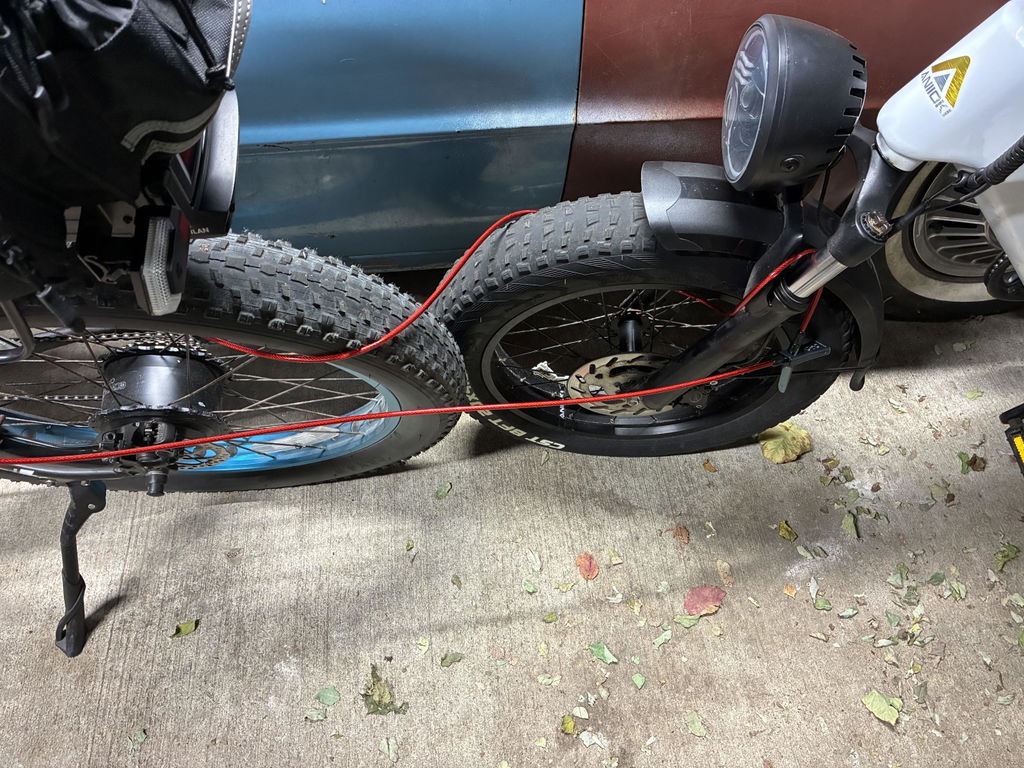
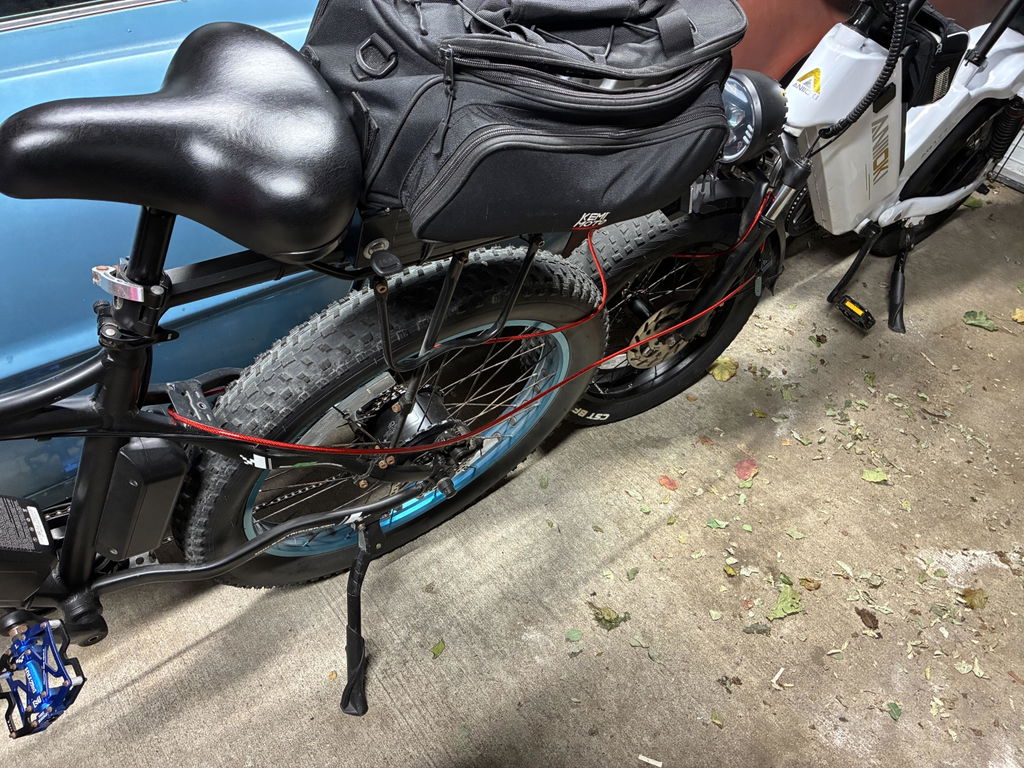
An e-bike security lock should capture the frame, at least one wheel, and a secure bike rack or fixed object. It should fit tightly enough to limit leverage and leave no removable accessory exposed. That setup creates a physical barrier around the bike's most important components instead of securing only a wheel or accessory.
Capture the frame and a wheel
The frame is the core of the bike, so run the primary lock through a main frame triangle whenever the design allows it. Include one wheel in the same lock when you can do so without leaving excessive space inside the shackle or cable. The frame keeps the bike connected to the lock, while the wheel adds another obstacle to a quick removal.
Portland's transportation guidance recommends using a U-lock to secure the frame, one wheel, and the bike rack. Seattle gives similar advice and also recommends securing the second wheel when possible. If the front wheel uses a quick-release mechanism, treat it as a separate security concern rather than assuming the frame lock protects it. Portland's bike-theft guidance provides the same frame-and-wheel baseline.
Choose a stable locking point
The other end of the lock needs a real anchor. Use a rack designed for bicycles or another stable fixed object that cannot be lifted out of the lock or removed easily. Portland specifically advises using a bike rack instead of a sign pole, while Seattle recommends positioning the bike so it has two rack contact points for stability. Check the rack before locking. A loose, damaged, or poorly anchored rack weakens the entire setup.
Fit matters as much as the lock type. A shackle or cable that barely reaches the frame and rack may force an insecure compromise. An oversized loop, on the other hand, leaves extra room for movement and tool access. Choose the smallest practical fit that reaches the frame, wheel, and anchor together. A long-shackle U-lock may suit a larger frame and rack combination, while a compact U-lock option may work better where the locking points sit close together.
Build a deterrent, not an absolute guarantee
No lock makes an unattended e-bike undefeatable. The goal is to make removal harder, slower, and more visible while reducing easy opportunities. Portland cautions against relying on only a cable lock because cutters or a saw can cut through it. Use a rigid lock as the primary restraint when the fit and application support it. Then add flexible protection when you need extra reach or a second wheel connection.
Parking also contributes to the deterrent. Choose a well-lit, well-traveled location, take removable lights and other easily removed items with you, and avoid leaving the bike hidden for long periods. These habits do not replace a properly fitted lock. They reduce the number of easy targets and support the physical protection created by the locking points.
Shop DoubleLock security hardware for the right locking setup.
Cable Locks vs U-Locks for E-Bike Security
For most e-bike owners, a U-lock provides the primary locking point for the frame and a fixed rack. While a cable lock adds flexible reach for a second wheel or awkward attachment point. Choose between them by checking the rack, the space inside the frame, the wheels you need to capture, and the lock you will carry consistently.
| Factor | Cable lock | U-lock |
|---|---|---|
| Flexibility and reach | Loops around larger or irregular objects and reaches wheels or accessories more easily. | Fits only where the rigid shackle can pass around the frame, wheel, and fixed object. |
| Portability | Coils or routes around the bike with little storage space. Shorter models favor compact carrying. | Stores as a rigid unit. A compact model takes less room, while a long shackle offers more clearance. |
| Primary or secondary role | Best used as a secondary lock, especially for the second wheel, or when reach matters most. | Best suited to the primary connection between the frame and a properly designed bike rack. |
| Main limitation | A cable alone does not provide the same rigid barrier as a U-lock. Portland advises against relying on only a cable lock because cutters or a saw may cut it. | A small shackle may not fit around a wide frame tube, wheel, and rack at the same time. |
Use the U-lock as the anchor
A rigid U-lock gives you a defined locking path. Pass it through the frame and one wheel, then connect it to a rack designed for bicycles. Seattle gives the same frame-and-wheel guidance and recommends securing the second wheel as well when possible. Seattle's bike security guidance also emphasizes using an appropriate rack rather than improvising around an unstable object.
Size controls whether that plan works. A long-shackle U-lock offers more room for frame and fixed-object connections. A compact U-lock option favors easier storage but requires a closer fit between the bike and rack. Neither size replaces a careful check of the actual locking points on your e-bike.
Add cable reach where the U-lock stops
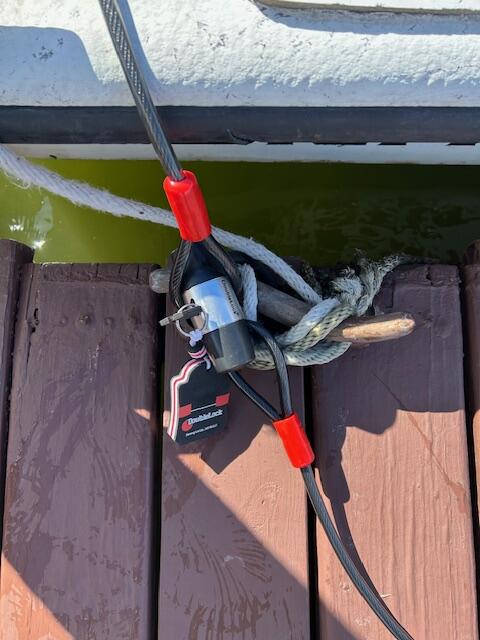
A cable earns its place when the bike's geometry or parking location creates a second job. Route it through the other wheel, around a component that needs an additional deterrent, or through a larger fixed object that a short U-lock cannot reach. A BOBCAT 8 combination cable lock is listed for bikes and equipment. The shorter BOBCAT 6 portable cable lock suits riders prioritizing compact carrying, while the TIGER-SHARK extra-long cable lock addresses situations that demand more reach.
Read the steel cable lock guide for broader cable selection context. The practical rule is simple: make the U-lock the primary connection when its fit works, then use a cable to extend coverage. No lock is undefeatable, so pair the hardware with a visible, well-traveled parking location and take removable lights or other easy-to-remove items with you.
How Do You Choose the Right Lock Size and Locking Point?
Answer: Choose a lock that captures the e-bike frame, at least one wheel when practical, and a fixed rack without excessive open space. Check the rack's construction, contact points, and clearance around fenders, tires, and accessories. The right size closes securely, stays stable, and leaves little room for manipulation.
Measure the route your lock must take: around the rack, through the frame triangle, and around the wheel or tire area you want to secure. Account for fenders, racks, wide tires, suspension components, and accessories. The lock should close without forcing the bike into an unstable position. It should also avoid pressing against painted surfaces or delicate components.
Start with the fixed object
The locking point controls the size you need. Use a rack designed for bicycles rather than a sign pole or another object that may be less secure. Portland's bike-theft guidance specifically recommends a bike rack and advises securing the frame, one wheel, and the rack with a U-lock. Read the Portland guidance for the full parking recommendations.
Look for a rack that remains anchored when you apply normal hand pressure. Seattle also recommends positioning the bike with two rack contact points, one near the front of the frame and one toward the back. That arrangement improves stability and gives you a more predictable locking path. If the rack is too thick for the shackle, too low for the frame, or crowded by other bikes, choose another approved rack instead of forcing the fit.
Match the shackle to the bike
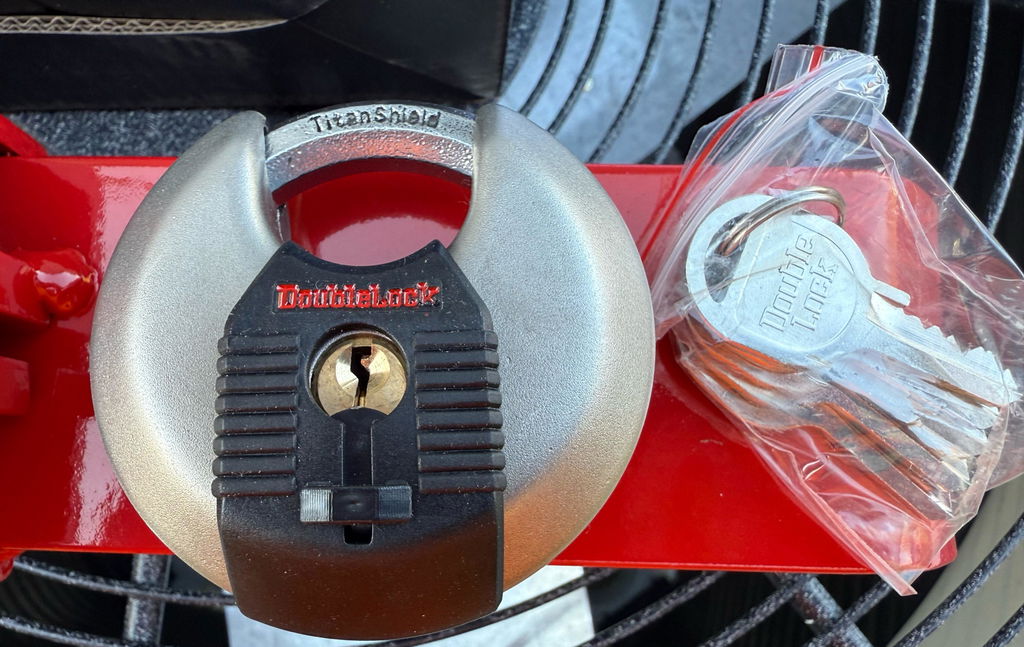
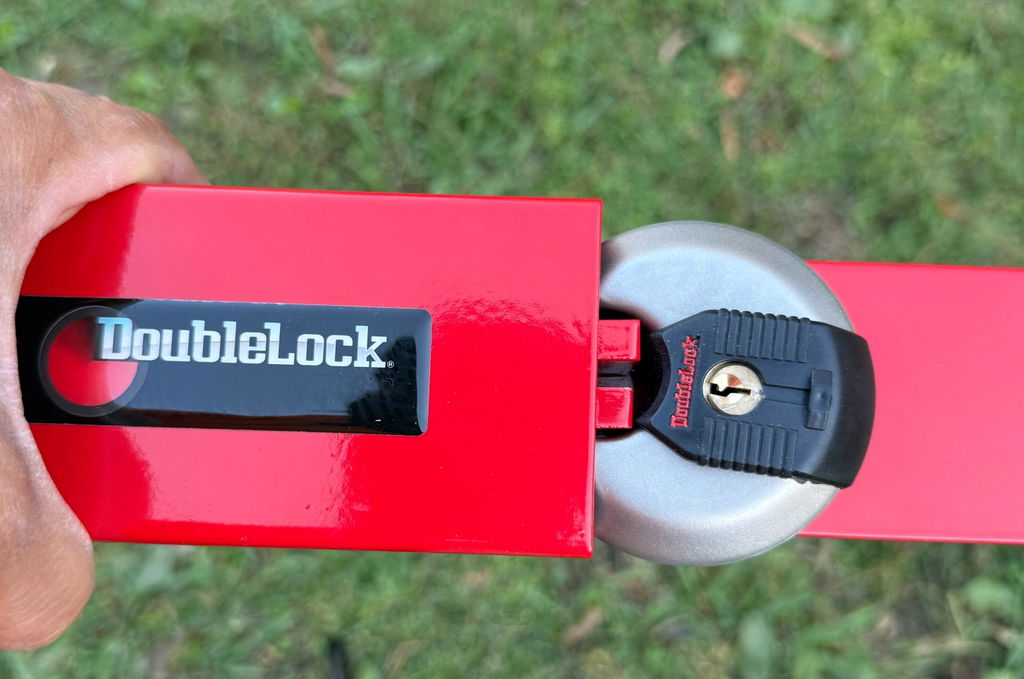
A compact U-lock reduces unused space and works well when the frame and rack sit close together. DoubleLock's KODIAK is a compact U-lock example. A long-shackle design creates more reach when the rack, frame, or wheel sits farther apart. DoubleLock's GRIZZLY is a long-shackle U-lock example. These product names indicate their form factors, not a guarantee that either lock fits every e-bike.
Before buying, test the intended path with a piece of cord or a flexible tape measure. Capture solid frame tubing, not only a removable accessory or a thin fender. Seattle recommends securing the frame and one wheel to a bicycle rack with a U-lock, and recommends locking the second wheel as well when possible. Seattle's bike-security guidance provides the reference technique. Leave enough clearance to close the lock fully, but not enough empty space to make the lock easy to manipulate.
Portability and Storage Decide Whether You Use the Lock
The best e-bike security lock is one you carry on every ride, store without creating a riding hazard. And can fit around the frame, wheel, and fixed object you need to secure. A lock that stays at home offers no protection, while a lock that rattles, interferes with steering, or damages the frame will eventually get left behind.
Start with the distance and objects you expect to secure. Cable length affects reach, routing, and the number of components you can capture in one pass. A shorter cable may work well at a compact rack when you want less loose material to manage. A longer cable gives you more flexibility around a larger rack or fixed object, but it also needs more careful handling and storage. DoubleLock lists the BEAST cable and lock bundle in 9.8-foot and XL 16.4-foot variants. Illustrating why length should match the application rather than simply being treated as a bigger-is-better feature. BEAST is positioned for rental and construction equipment and flexible-reach applications, not specifically as a bike product, so confirm product fit before using it for an e-bike.
Compact U-locks favor easy carrying
A compact U-lock takes less room in a bag or on a purpose-built mount. Its smaller opening also requires more deliberate positioning. Check that the shackle reaches around the frame, the wheel or wheels you intend to secure, and the rack without leaving excessive space. The KODIAK compact U-lock option is relevant to this portability comparison. Use its product specifications to confirm whether it fits your frame and regular parking points.
Long-shackle U-locks favor reach
A long-shackle design may make it easier to capture a frame and a fixed rack when the compact opening is too restrictive. The tradeoff is more space to carry and more room inside the shackle for a thief to work. The GRIZZLY long-shackle U-lock provides a verified example of this format. Choose based on the rack and frame combination you actually use, not on length alone.
Store any lock where it stays secure during movement and remains easy to reach at a stop. Keep cables away from pedals, spokes, tires, chainrings, and steering controls. Do not place a rigid lock where it can strike the frame or become a projectile during a fall. Remove lights and other easily removed accessories when parking, as Portland advises, and choose a visible, well-traveled location for the bike. A consistent storage routine turns the lock from optional equipment into part of every ride.
How Should You Secure an E-Bike When Parked?
Use a dependable rack or fixed object, pass the primary lock through the frame and at least one wheel. Keep the lock tight and off the ground, choose a visible location, remove loose accessories, and record the bike's identifying details. No lock guarantees protection, so combine sound locking technique with a parking location and storage routine that reduce opportunity.
- Choose a stable locking point. Start with a proper bike rack or another permitted fixed object that cannot be easily cut, lifted, or removed. Test the rack before locking. Avoid temporary signs, thin rails, loose posts, or objects that allow the bike to be lifted over the top. If the rack feels unstable or sits in an isolated area, choose a better location rather than relying on the lock alone. Guidance from the Portland Police Bureau recommends securing the frame to a fixed rack or object.
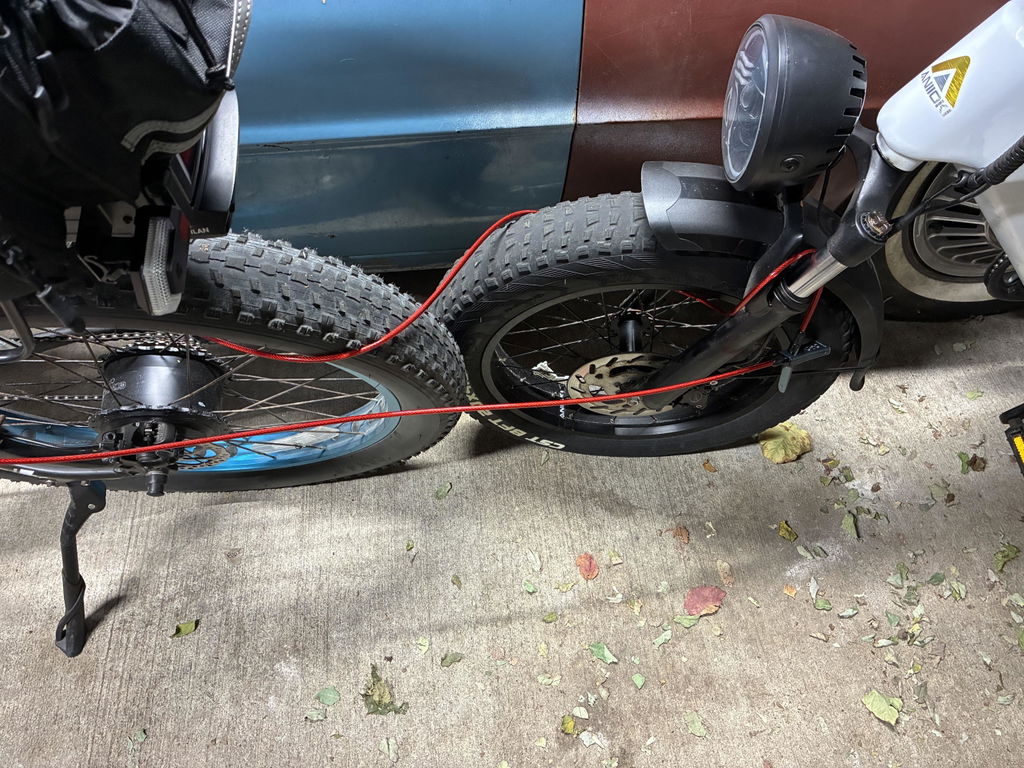
- Capture the frame and wheel. Put the primary lock around the frame and the rack, not only through a wheel. Include a wheel when the lock's size and the rack permit it. Keep the lock tight against the bike and rack to limit open space for tools. A second cable or lock can secure the remaining wheel, especially when the bike uses removable wheels or quick-release parts. For a practical example of flexible secondary protection, review this steel cable lock guide.
- Position the lock carefully. Keep the lock low when practical, but do not let it rest on the pavement. Ground contact can give a thief a more stable surface for force. Leave enough clearance to avoid damaging the frame, wheel, brake components, or motor hardware. Inspect the lock before use, and replace it if it becomes damaged, worn, or unreliable.
- Park where people can see the bike. Select a well-lit location with regular pedestrian activity. Avoid hidden corners and isolated racks. Do not leave the e-bike unattended longer than necessary. For overnight or extended parking, check it regularly when possible, and use indoor secured storage when available. A garage, shared room, or covered area still deserves a fixed-object lock; apparent shelter does not automatically make storage secure.
- Remove what you can carry. Take detachable lights, bags, displays, tools, and other loose accessories with you. Remove the battery when practical, particularly during longer storage, and follow the bike maker's handling guidance. A second lock can secure a removable wheel or accessory that must remain with the bike.
- Record the bike before leaving it. Save the serial number, manufacturer, model, colors, distinctive modifications, purchase proof, and clear photographs. Keep the record somewhere you can access if the bike disappears, and connect the serial number to current contact information. Update the record when your contact details or the bike's appearance changes. These practices support identification and recovery, but they do not replace a physical lock.
Shop DoubleLock security hardware for your e-bike parking routine
DoubleLock Examples for Different E-Bike Routines
An e-bike security lock should match the way you park, the fixed objects available, and how much equipment you are willing to carry. Cable locks offer flexible reach, while U-locks provide a rigid locking shape. DoubleLock examples below show where each product fits without treating every lock as a bike-specific solution.
| Product | Product type | Best fit in a routine | Important distinction |
|---|---|---|---|
| BOBCAT 8 | Combination cable lock | Bike and equipment use where flexible routing matters | A direct bike-oriented cable example, not a rigid U-lock |
| BOBCAT 6 | Combination cable lock | Shorter, more portable cable-lock routines | Choose it when the available locking path does not require extra reach |
| GRIZZLY | Long-shackle U-lock | Frame and fixed-object locking where additional interior space helps | Rigid U-lock format with a longer shackle |
| KODIAK | Compact U-lock | Riders who prioritize a smaller lock for carrying and storage | Compact form may limit the size of the rack or object it can capture |
| TIGER-SHARK | Extra-long cable and lock combination | Routing through an e-bike frame and around a larger fixed object | Extra reach improves fit options, but does not make a cable an absolute barrier |
| BEAST | Cable and lock bundle | General equipment security and flexible-reach applications | Positioned for equipment use, so verify the live product page before treating it as bike-specific |
Match the lock to the parking pattern
For a daily ride with a suitable rack nearby. A compact U-lock such as KODIAK gives the routine a rigid option that is easier to store than a longer format. A larger frame, unusual rack, or awkward fixed object may favor the extra clearance of GRIZZLY. The right choice depends on whether the lock can capture the frame and a solid object without leaving excessive unused space.
BOBCAT 8 and BOBCAT 6 serve different cable habits. BOBCAT 8 is the more direct example for bike and equipment use when the route around the frame, wheel, and rack needs flexibility. BOBCAT 6 fits a rider who wants a more portable cable approach and does not need the same reach. Neither should replace sound locking technique or a secure parking location.
TIGER-SHARK addresses reach, not a promise of total theft prevention. Use its extra-long format when a larger fixed object makes a short cable impractical, then keep the cable routed through the frame rather than only through a wheel. BEAST belongs in the general equipment category. Its flexible reach may suit broader security work, but its equipment positioning does not establish bike-specific performance. No lock eliminates theft risk, so choose the product you will carry, use correctly, and store responsibly.
Frequently Asked Questions
What is the best security lock for an e-bike?
The best choice depends on your frame, wheels, parking location, and carrying habits. Use a rigid U-lock or another primary bicycle lock to secure the frame to a fixed rack. Then add a cable when you need extra reach for a wheel or accessory. Choose a lock that fits tightly around the bike and rack without resting on the ground.
Is a cable lock enough to secure an e-bike?
A cable lock should not serve as your e-bike's only or primary security. Its flexibility makes it useful for securing removable wheels and accessories, or for reaching a larger locking point. Pair it with a primary lock designed for bicycle security, especially when the bike will remain unattended.
How should I lock an e-bike in public?
Pass the primary lock through the frame and connect it to a fixed rack or permitted object that cannot be easily cut, lifted, or removed. Keep the lock close to the bike and rack, position it low without letting it touch the ground, and choose a visible, well-lit location with regular pedestrian activity. These practices follow guidance from the Portland Police Bureau.
What should I do with my e-bike battery when I park?
Remove the battery whenever you store or lock the e-bike, when practical. Taking it with you protects a valuable component and may make the bike less useful or attractive to a thief. Also remove easily detachable accessories, and store the bike indoors when possible. No lock or storage location completely eliminates theft risk.
Shop an E-Bike Security Setup That Fits
Choose the lock that matches your frame, rack, wheels, parking routine, and carrying habits. DoubleLock offers cable and U-lock formats for different locking paths, but the right product is the one you can carry, fit correctly, and use consistently.
Shop DoubleLock security hardware or call +1 561 289 4865 for help selecting a practical setup.