
A disk lock for storage unit doors is usually a better choice than a conventional long-shackle padlock when it fits the latch correctly. Its round body shields most of the shackle, leaving less room for bolt cutters and pry tools. The right lock still depends on your unit's latch opening, clearance, and facility rules.
Shop the DoubleLock stainless steel discus lock or contact DoubleLock USA for help choosing security hardware.
This guide explains the practical differences between discus locks and padlocks without pretending that any lock is undefeatable. You will learn what to measure, which attack points matter, and when a conventional padlock may be the more workable option.
Disk lock for storage unit doors: the short answer
Choose a disk lock when its shackle passes through the latch and the round body can sit close to the door. That tight fit limits tool access. Choose a padlock when the latch shape, recessed hardware, or required clearance prevents a discus lock from closing properly.
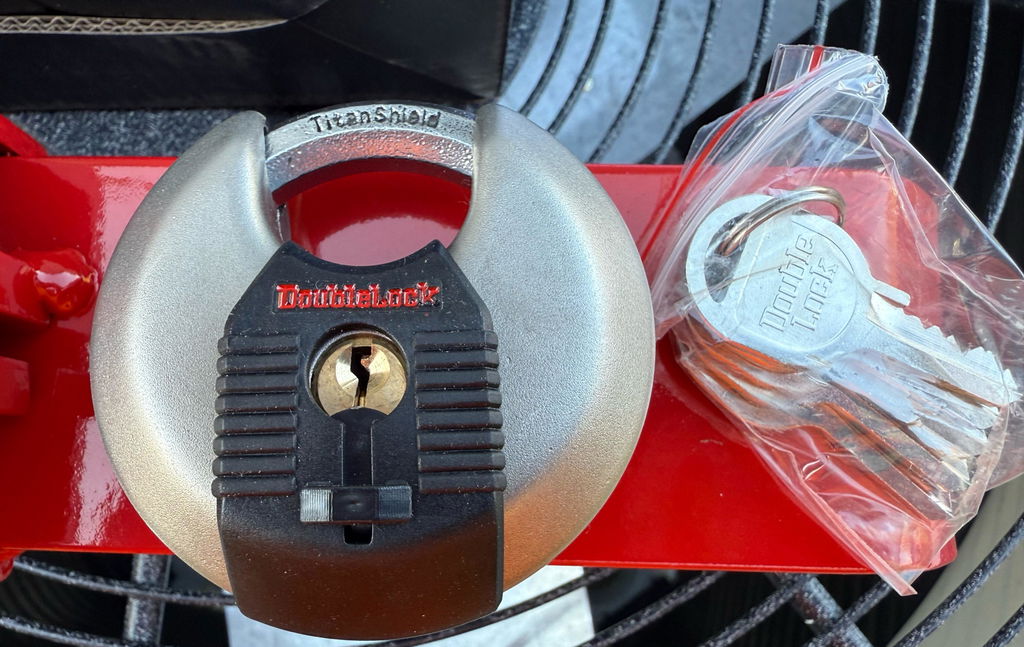
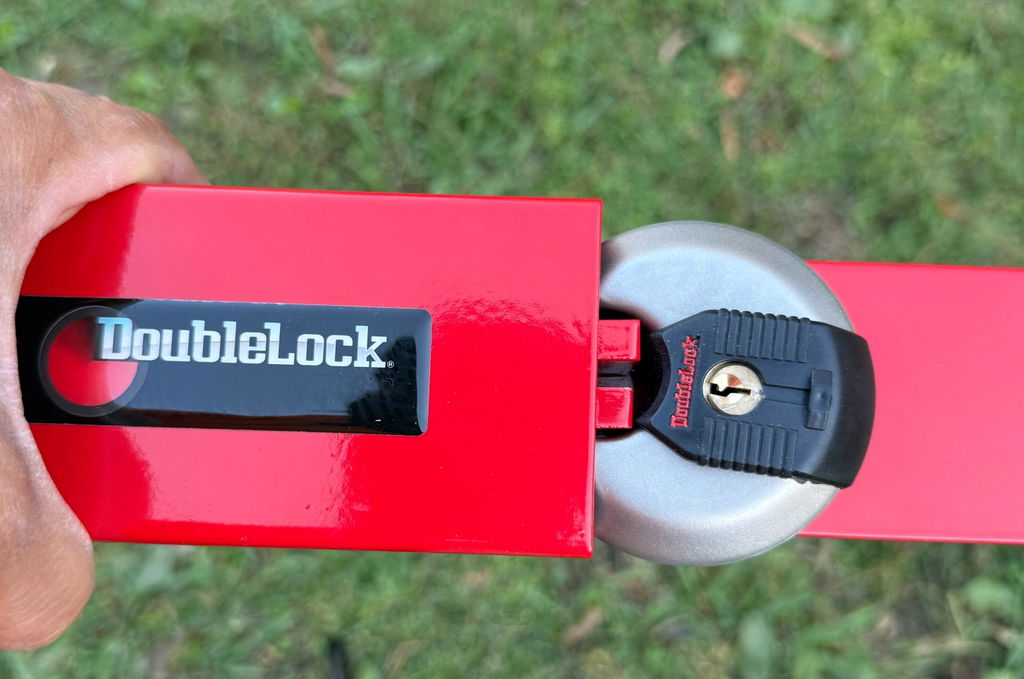
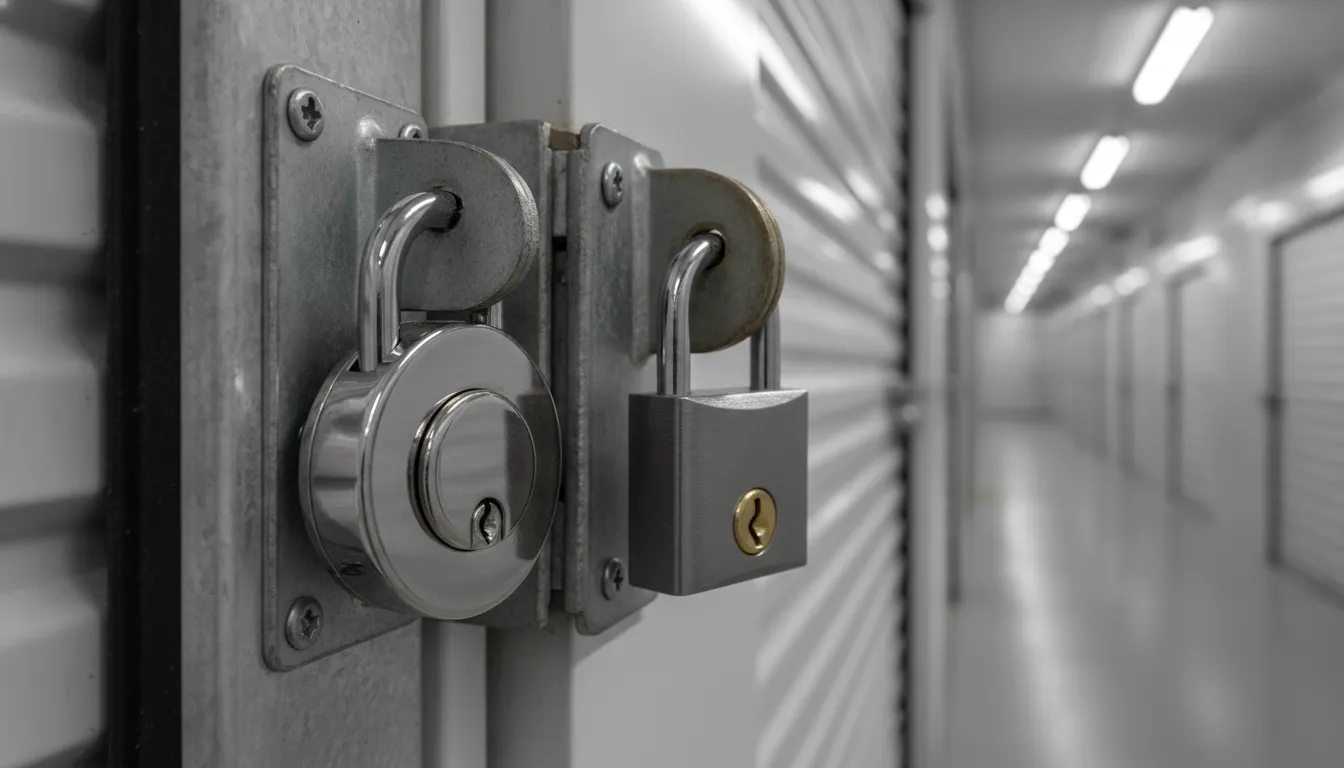
A disk lock, also called a discus lock, wraps a broad circular body around a short section of shackle. A conventional padlock generally leaves more of its U-shaped shackle exposed. That difference matters because the shackle is one of the easiest places for a thief to attack with common hand tools.
The lock is only one part of the system. A strong lock on a weak, damaged, or loose latch does not solve the underlying problem. Inspect the door, latch plate, and surrounding hardware before buying. Report significant rust, bending, or excess play to the storage facility.
Why reduced shackle exposure matters
Bolt cutters need enough space to place their jaws around the metal. A discus body reduces that working room. The round profile can also make it harder to seat a pry tool securely. This does not make the lock impossible to defeat, but it can increase the time, noise, and effort required.
Where a padlock still makes sense
A conventional padlock is versatile. Its longer shackle can pass through thick handles, offset holes, and awkward latches that will not accept a discus lock. The tradeoff is usually greater shackle exposure. If the door requires a padlock, choose one that fits closely and leaves as little unused shackle visible as possible.
Discus lock vs padlock: what changes in practice?
A discus lock prioritizes shackle shielding and a close fit. A padlock prioritizes reach and flexibility across different latch shapes. For a typical self-storage sliding latch, the discus form often offers better resistance to common cutting and prying attempts, provided it closes without binding.
The most important comparison is not which lock looks heavier. It is how much access the installed lock gives to a cutting or prying tool. Judge both form factors while they are attached to the actual latch, not while they are sitting in your hand.
| Decision factor | Discus lock | Conventional padlock |
|---|---|---|
| Shackle exposure | Usually low | Usually higher |
| Tool access | Restricted by round body | Varies with shackle length |
| Latch compatibility | Best on compatible sliding latches | Fits more latch shapes |
| Clearance needed | Room for wide circular body | Room for hanging body and shackle |
| Best reason to choose | Close fit and shackle shielding | Versatile reach when discus will not fit |
Think like a thief for thirty seconds
Look at the installed lock from the front and sides. Can you clearly see and reach the shackle? Is there a gap behind the body where a pry bar could sit? Does the lock hang far enough from the latch to create leverage? These observations are often more useful than comparing package claims.
Use the weakest-link test
After checking the lock, inspect the latch and door. A bent latch plate or loose fastener may become the easier target. A balanced setup makes both the lock and the surrounding hardware inconvenient to attack. If you cannot fix a facility-owned latch yourself, request maintenance or a different unit.
Before buying, use DoubleLock USA's guide on how to choose a discus lock and confirm the lock will match your door.
How do you check whether a disk lock will fit?
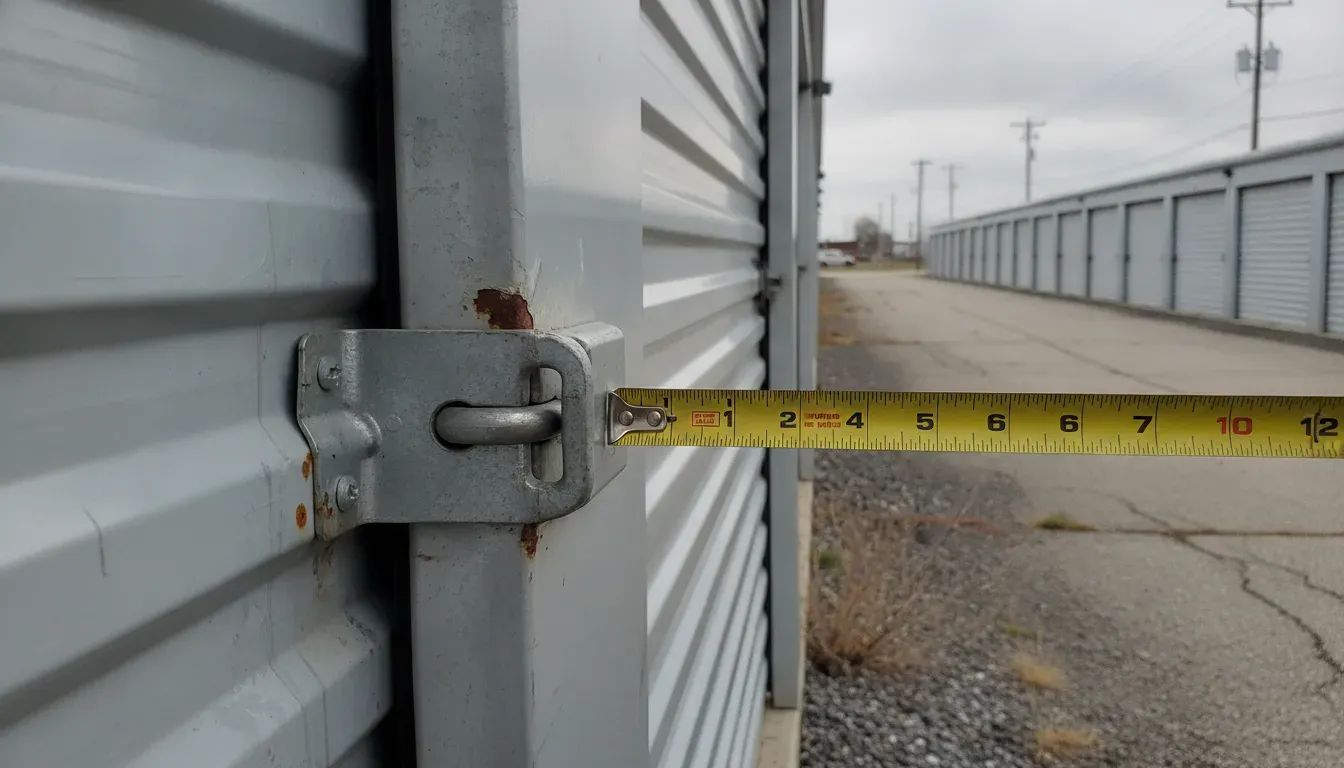
Measure the latch-hole diameter, the thickness of the metal the shackle must pass around, and the open space around the latch. Then confirm the discus body can sit flat and the key can turn freely. Ask the facility about approved lock types before purchasing.
Fit determines whether a lock can deliver the protection its design promises. A lock that barely closes may bind, while one that hangs loosely may expose more metal to tools. Take a tape measure or ruler to the unit and record the dimensions instead of guessing.
- Inspect the latch. Look for rust, bending, cracks, or loose hardware.
- Measure the opening. Confirm the lock's shackle or locking pin can pass through the hole.
- Measure the required reach. Account for the thickness and spacing of the latch parts.
- Check body clearance. Make sure the circular body will not hit a door rib, frame, or recessed cover.
- Test operation. Close, lock, unlock, and remove it without forcing the key.
Confirm the facility's rules
Some facilities require or prohibit certain lock forms. Others have recessed latches that accept only specific dimensions. Ask the manager what fits before you buy, but make your own security assessment rather than assuming every offered lock provides the same deterrence.
Check daily usability
A strong lock that is difficult to operate may be left partly closed or used incorrectly. Make sure you can reach the keyway, turn the key, and verify that the lock is fully engaged. After closing the unit, pull gently on the latch and lock to confirm both are secure.
What makes a storage lock harder to attack?
A harder-to-attack storage lock limits tool access, uses robust materials, fits closely, and protects its locking mechanism. The complete installation matters more than any single feature. A shielded shackle helps, but the door and latch must also resist cutting, twisting, and prying.
Most opportunistic attacks focus on speed. Visible shackle, large gaps, and loose hardware give a thief straightforward places to work. Reducing those opportunities can make the unit a less attractive target, especially when the facility also uses lighting, cameras, access controls, and regular inspections.
Cutting resistance starts with access
Hard metal matters, but cutters cannot work effectively without a clean bite. A discus lock's short, shielded shackle reduces the space available to cutter jaws. A high-quality padlock can also reduce exposure when it uses a short shackle and fits tightly against the latch.
Pry resistance depends on leverage
Prying attacks need a gap and a stable point of contact. A broad, rounded body that sits close to the door gives a pry tool fewer places to settle. Loose locks and long shackles can create more leverage, so correct sizing remains critical.
Weather resistance protects long-term operation
Outdoor and non-climate-controlled units expose hardware to moisture, dust, and temperature changes. Corrosion can make a lock hard to operate and may weaken exposed components over time. Inspect and maintain the lock according to its instructions, and replace hardware that no longer opens or closes cleanly.
Which DoubleLock option fits the decision?
The CRAB discus format is the direct fit to assess for compatible storage-unit latches. Its 2.75-inch body, 0.37-inch shackle diameter, and 1-inch shackle clearance give buyers concrete dimensions to compare with a measured latch. If that shape will not fit, compare a conventional padlock instead.
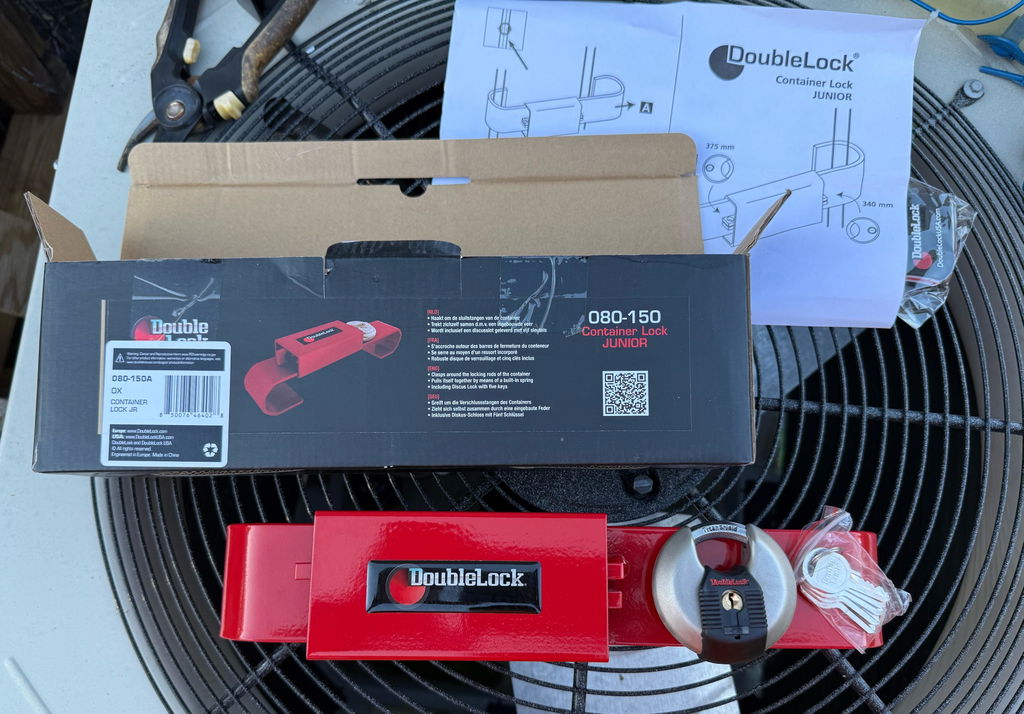
The stainless steel CRAB Discus Lock is the relevant starting point for a storage-unit buyer considering the discus form. The CRAB Discus Lock 2.0 uses hardened steel, a weather-resistant keyway, and five precision-cut keys. Its measured dimensions make it possible to check fit before ordering rather than relying on package labels.
When a discus body cannot clear the door hardware, compare a compact conventional option such as the FALCON X padlock. Its 0.50-inch shackle diameter and 0.75-by-1.0-inch shackle clearance provide a different fit profile. Neither option is automatically right: the installed clearance and exposed metal decide the better match.
DoubleLock USA builds premium security hardware with more than 30 years of European engineering heritage. The practical goal is not to promise that a lock can stop every determined attacker. It is to create stronger deterrence by making common attacks slower and more difficult. Learn more about the company's European engineering heritage.
When to broaden the search
If a discus lock cannot clear the door hardware, do not force it. Look for a lock whose shape and dimensions match the application. Browse DoubleLock USA's padlock collection or the full security catalog to compare options.
When to ask for help
Fleet operators, storage businesses, rental companies, and other bulk buyers may need keyed systems or application-specific guidance. Review the wholesale options or use the DoubleLock USA contact page to discuss the hardware, quantities, and installation conditions before ordering.
Shop the stainless steel discus lock for a compatible storage latch, or request help from DoubleLock USA.
A practical storage-unit lock buying checklist
The best storage-unit lock is the strongest option that fits the door correctly and remains easy for you to operate. Measure first, minimize exposed shackle, inspect the entire latch system, verify facility rules, and buy from a source that provides clear product and contact information.
- Match the lock to the door: Measure the latch opening, reach, and surrounding clearance.
- Minimize exposed metal: Choose a fit that gives tools as little working room as possible.
- Inspect the entire system: Look for weak, loose, bent, or corroded door hardware.
- Prioritize clean operation: The lock should close fully and the key should turn without force.
- Confirm site rules: Verify approved forms and dimensions with the storage facility.
- Plan layered security: Choose a well-managed facility with controlled access, lighting, cameras, and regular checks.
- Keep records: Save purchase details and take a photo of the installed lock and unit condition.
Common buying mistakes to avoid
Do not choose a lock solely because it is large or heavy. Avoid buying before measuring, leaving extra shackle exposed, or ignoring a damaged latch. Do not assume a lock eliminates all risk. It is one layer in a broader storage-security plan.
Inspect after every visit
When you return to the unit, check for new scratches, dents, drill marks, looseness, or trouble operating the key. Report suspicious changes promptly. A fast inspection can reveal an attempted attack before your next long absence.
Frequently asked questions
Is a disk lock better than a padlock for a storage unit?
A disk lock is usually better when it fits correctly because its round body hides more of the shackle. That leaves less room for bolt cutters and pry tools. A padlock is the better choice when the latch shape or clearance prevents a disk lock from closing securely.
Can bolt cutters cut a disk lock?
No lock is undefeatable. A disk lock is designed to make bolt-cutter access more difficult by shielding most of its shackle. Its real-world resistance depends on its materials, dimensions, fit, condition, and the surrounding latch hardware.
What should I measure before buying a storage-unit lock?
Measure the latch-hole diameter, the required shackle reach, the thickness of the latch parts, and the clearance around the latch. Also verify that the lock body will not hit the door frame and that you can reach the keyway.
How often should I inspect my storage-unit lock?
Inspect it every time you visit. Look for new marks, looseness, corrosion, or changes in how the key turns. If you see possible tampering, photograph it and notify facility staff before opening the unit.
Choose the lock that fits before it fights
A disk lock for storage unit doors can provide stronger theft deterrence than a conventional padlock by limiting access to the shackle. That advantage only holds when the lock closes cleanly and sits close to sound door hardware. Measure the latch, compare the installed exposure, and treat the lock as one part of layered security.
Shop DoubleLock's stainless steel discus lock or contact DoubleLock USA for product and wholesale guidance.