


How to Choose an outboard motor lock for Boat Security
An outboard motor lock adds a physical barrier between a thief and the mounting hardware that holds your engine to the transom. The right lock fits the motor correctly, handles marine exposure, and forces an attempted removal to take more time, tools, and noise. No lock is undefeatable, but practical layered security can make your boat a much less convenient target.
See the BARRACUDA outboard motor lock built for practical marine protection.
What an outboard motor lock actually does
An outboard lock blocks access to a motor's clamps, bolts, or mounting nuts. Its job is to increase the effort and exposure involved in removing the engine, not to promise that theft is impossible.
Many portable and mid-size outboards attach with hand-operated clamp screws. Larger motors commonly use bolts through the transom. Standard hardware is designed for installation and service, which can also make it approachable with ordinary tools. A purpose-built lock covers or replaces a critical part so the normal removal process cannot proceed without the lock key or a more aggressive attack.
That difference matters because thieves generally favor predictable, low-friction opportunities. A visible barrier signals that removal will be slower and potentially louder. It can also interrupt a thief who arrives with only basic tools. For a broader view of hardware designed around wet environments, review DoubleLock USA's marine security collection.
Clamp locks and bolt locks solve different problems
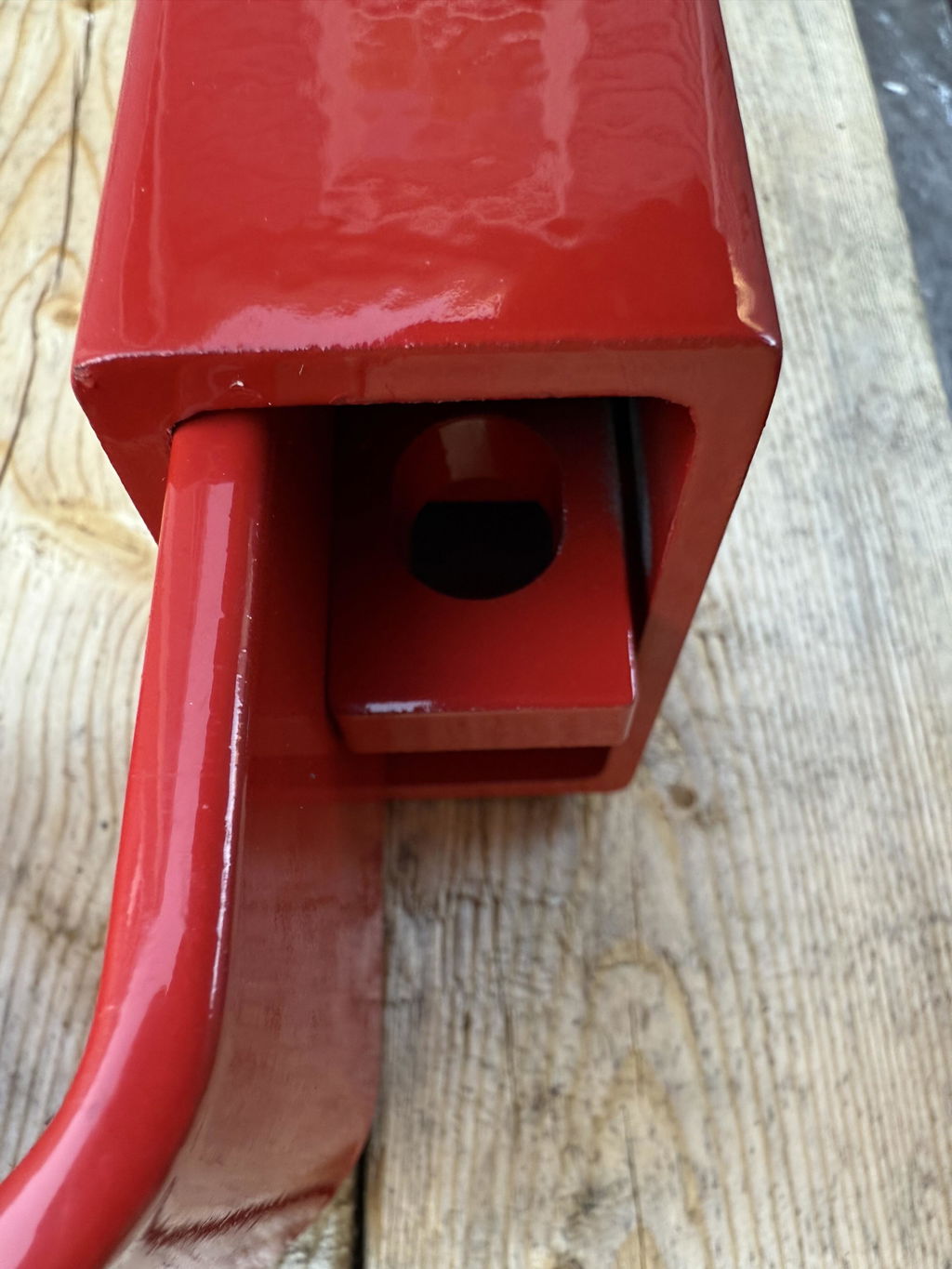
A clamp lock usually encloses the turning handles on a clamp-mounted outboard. Once enclosed, those handles cannot be rotated normally. A bolt-style lock protects or replaces mounting hardware on an engine secured through the transom. Neither type is automatically better. The useful type is the one that matches the motor's actual mounting arrangement and leaves little exploitable movement or tool access.
Some motors use both clamps and bolts. In that case, inspect every attachment point and determine which components could still be removed if only one point were protected. A lock should address the most practical removal path without interfering with steering, tilt, wiring, fuel lines, or routine service.
A lock is a deterrent, not a guarantee
Security claims need to stay grounded. Given enough time, privacy, and equipment, a determined attacker may defeat almost any physical device. The useful question is whether your setup makes an attempt slower, more difficult, and more conspicuous than an unprotected boat nearby.
Use the motor lock alongside sensible storage choices, trailer protection, good lighting, controlled key access, and frequent checks. DoubleLock USA's overview of boat and dock security hardware can help you think beyond one component.
Why are outboard motors attractive theft targets?
Outboards combine accessible mounting hardware with portability and useful resale value. Boats stored on trailers, quiet docks, or exposed lots can give a thief both access and time.
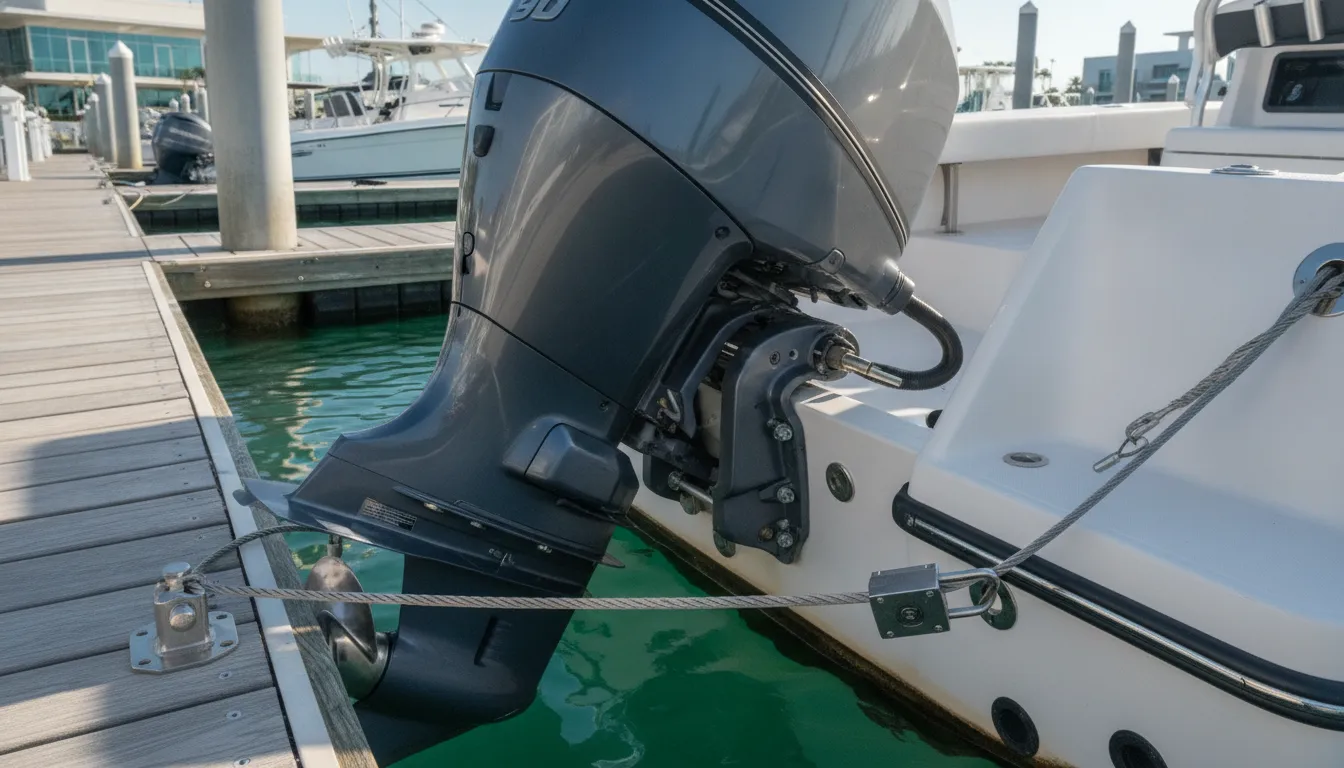
An engine sits at the edge of the boat where its mounting points may be easy to reach. Portable motors can be lifted once clamps are released, while larger units may be removed by a prepared group. The practical risk depends on the motor, storage location, visibility, surrounding security, and how long the boat remains unattended.
Do not rely on one broad statement such as "the marina is safe" or "the boat is behind the house." Walk the actual site. Note where a vehicle could stop, whether shrubs or structures hide the transom, when people are present, and whether lighting reveals activity without creating deep shadows.
Evaluate the complete removal path
Think like a defender, not a product shopper. Start at the road or dock entrance and trace the path someone would use to reach, detach, carry, and load the motor. Each useful security layer should add delay, noise, visibility, or uncertainty somewhere along that path.
- Keep the transom visible from occupied areas when practical.
- Avoid leaving keys, tools, and removable gear in obvious onboard storage.
- Secure the trailer as well as the motor when the boat is stored ashore.
- Record identifying details and current photographs for your own files.
- Inspect the boat after long storage periods or severe weather.
General background on how mounting locks protect critical hardware is available in this outboard engine lock reference. Use it as context, then verify the fit and operating instructions for the specific device you choose.
Choose the right lock by mount, fit, and clearance
Begin with the motor's mounting style, then measure the relevant hardware and surrounding space. A strong lock with the wrong dimensions can rattle, interfere with operation, or leave enough access for ordinary tools.
Before shopping, photograph the transom from several angles. Identify clamp handles, through-bolts, nuts, nearby cables, steering components, and the full path of the motor while tilting and turning. Check the engine manual if the mounting arrangement is unclear. Never assume compatibility from horsepower alone, because designs and clearances vary.
Use a disciplined fit check
- Confirm whether the primary attachment uses screw clamps, through-bolts, or both.
- Measure the diameter, length, spacing, and exposed clearance around the hardware to be protected.
- Check whether the proposed lock can sit flush without pressing on paint, cables, or controls.
- Move the motor through its normal tilt and steering range to identify interference points.
- Compare your measurements with the maker's current fit guidance.
- Ask the maker before purchase if the model or mounting arrangement is uncertain.
A close, stable fit matters. Excess movement can create noise, wear nearby surfaces, and expose space for tools. A lock also needs to remain practical for the owner. If normal removal is unnecessarily awkward, maintenance may be delayed or the device may be left off.
Inspect construction without chasing vague claims
Marine hardware faces moisture, salt, grit, vibration, and impact. Examine how the lock shields the mounting point, how much of its body is exposed, whether the keyway has protection, and what care the maker requires. Look for clear material and maintenance information rather than unsupported labels such as "unbreakable."
Pay attention to the complete system. A heavy lock cannot compensate for a damaged transom, loose mounting hardware, or an attachment point that can be bypassed. For another perspective on outboard lock formats, see the existing marine outboard lock examples.
Check BARRACUDA details and confirm whether it fits your motor setup.
Marine exposure changes the security decision
A marine lock must remain usable after repeated exposure to water, salt, grit, and changing temperatures. Material choice helps, but rinsing, inspection, and correct maintenance are what keep the device dependable in daily use.
Salt residue holds moisture and can accelerate corrosion. Fresh water is less aggressive, but it does not eliminate corrosion, contamination, or wear. A neglected keyway may become difficult to operate, while trapped grit can damage moving parts. Treat the lock as working boat hardware, not as an install-and-forget accessory.
Build a simple care routine
Follow the lock maker's instructions first. As a general practice, rinse exposed security hardware with fresh water after saltwater use, dry it, and inspect it for damage or unusual movement. Use only the lubricant or protective product recommended for the lock. Applying the wrong product can attract grit or affect internal components.
Include the transom and mounting hardware in the same inspection. Look for loose fasteners, cracks, movement, corrosion, and contact marks. Boat anodes serve a different protective purpose, but understanding their maintenance reinforces the need to inspect underwater and exposed metals. This engine anode overview explains the basic role of those components.
- Operate the key and locking mechanism regularly so problems appear before urgent service is needed.
- Keep a spare key in a controlled location away from the boat, not beside the lock.
- Replace damaged hardware rather than relying on cosmetic cleanup.
- Recheck the installation after towing, rough water, or maintenance work.
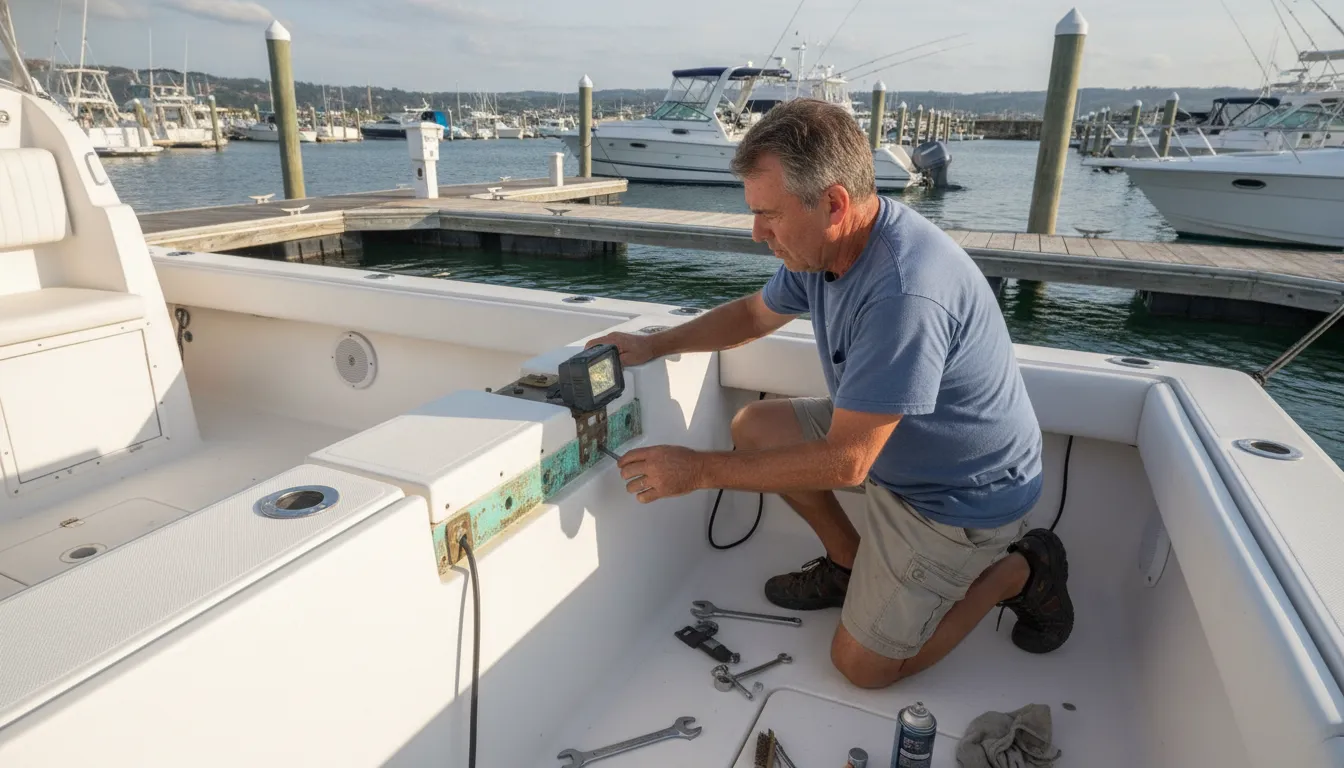
Install the lock correctly and verify the result
Correct installation protects the intended mounting point without compromising the motor, transom, wiring, or controls. Follow the product and engine instructions, then test both the lock and the motor's normal movement before use.
Do not improvise around a questionable fit. If installation requires removing or replacing engine mounting hardware, use the correct tools and follow the engine maker's service guidance. When the work exceeds your experience, use a qualified marine technician. Security hardware should not create a new mechanical problem.
Run a post-installation check
After installation, confirm that the device locks fully and cannot be slipped away from the protected point through normal hand movement. Check for rattling and inspect all nearby surfaces. Turn and tilt the motor through its safe operating range while watching cables, lines, and lock clearance.
Then review the setup from an attacker's viewpoint. Can an unprotected clamp still turn? Is another standard nut accessible? Can the guarded component be bypassed without interacting with the lock? Resolve obvious gaps before leaving the boat unattended.
Keep ownership access controlled
A secure device is only useful if the owner can operate it when needed. Label and store spare keys in a controlled place, document the lock model, and tell only necessary users where access is kept. Do not hide the key on the boat. A thief who finds it has a direct path past the barrier.
For boats stored on trailers, expand the same disciplined approach to the rest of the rig. Review DoubleLock USA's security hardware catalog and match each layer to a real removal or access path rather than adding devices at random.
When the BARRACUDA belongs in your security plan
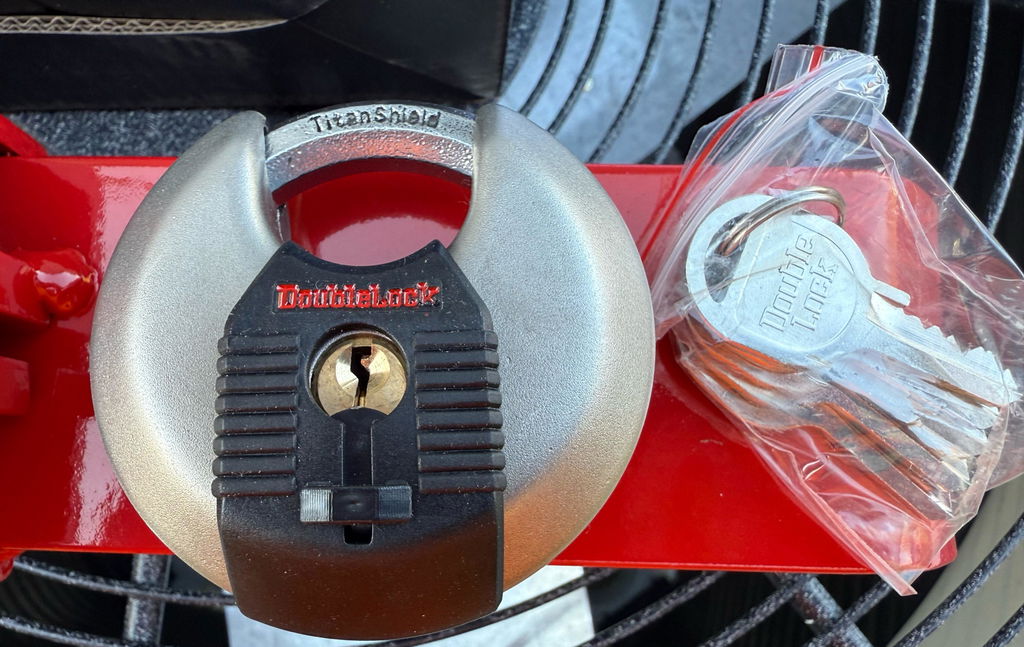
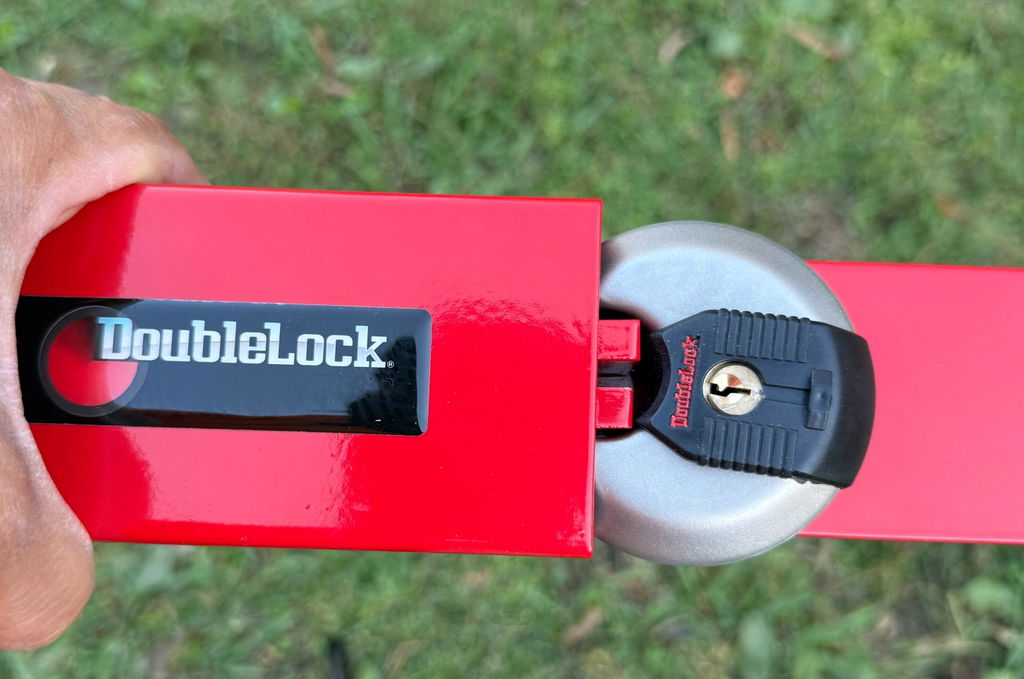
BARRACUDA is worth considering when its fit and operating design match your motor and storage routine. Evaluate it as one purposeful layer in a wider boat security plan, then confirm compatibility before purchase.
Start with the fit process in this guide. Identify the mounting arrangement, measure carefully, and check the product information. Consider how often you remove or service the motor, where the boat is stored, and what exposure the lock will face. A good choice must work for real ownership habits, not just look substantial in a product photo.
DoubleLock USA positions its marine hardware for practical physical deterrence. That approach is straightforward: protect exposed attachment points, make unauthorized removal harder, maintain the hardware, and combine it with site-level measures. Fleet, rental, marina, and other bulk buyers can use the existing wholesale request path to discuss operational needs without assuming one configuration fits every boat.
A practical layered boat security checklist
The best plan combines a correctly fitted motor lock with secure storage, visibility, controlled access, trailer protection, and routine inspection. Each layer should address a specific weakness you observed around the boat.
| Security layer | Risk addressed | Owner check |
|---|---|---|
| Motor lock | Access to clamp or bolt hardware | Confirm fit, clearance, and operation |
| Trailer security | Removal of the complete boat and trailer | Inspect the hitch, coupling, wheels, and parking location |
| Storage controls | Time and concealment for an attempted theft | Improve visibility, lighting, and controlled access |
| Routine inspection | Damage, corrosion, or loose hardware | Check after towing, service, storms, and storage |
- Motor: Protect the relevant clamp or bolt hardware with a compatible lock.
- Transom: Repair damage and keep mounting components tight and serviceable.
- Trailer: Address hitch, coupling, wheel, and parking risks appropriate to the site.
- Location: Favor visible, controlled areas and reduce places where someone can work unseen.
- Access: Keep keys and tools controlled, and remove tempting portable gear.
- Records: Maintain photographs, identifying details, and a list of installed security hardware.
- Inspection: Check the complete setup after towing, service, storms, and extended storage.
Do not mistake more hardware for better security. A smaller number of well-fitted, maintained devices can be more useful than several poorly chosen layers. If you need help matching DoubleLock hardware to a specific use, use the DoubleLock USA contact page and provide clear photographs and measurements.
Review the plan whenever conditions change
A setup that works at a staffed marina may not be enough when the same boat moves to a remote launch, an open driveway, or a storage yard. Reassess the removal path whenever the location, motor, trailer, or access routine changes. Look for newly exposed hardware, dark working areas, predictable periods without activity, and keys that are shared more widely than necessary.
Seasonal storage deserves a separate review. Long unattended periods give an attacker more opportunity and give corrosion or loose hardware more time to develop unnoticed. Before storage, clean and inspect the lock, confirm that it operates correctly, secure the trailer, remove portable valuables, and photograph the condition of the boat. During storage, arrange periodic checks rather than assuming the first setup remains unchanged.
After service work, verify that every security component was reinstalled correctly. A technician may need to remove a lock or adjust mounting hardware to reach the engine. Confirm that keys were returned, fasteners are secure, protective devices do not interfere with controls, and no tools remain aboard. This short check closes a common gap between proper maintenance and proper security.
The goal is a repeatable routine that boat owners, family members, or fleet staff can follow without guesswork. Write down the inspection points, assign responsibility, and correct problems when they first appear. Physical security works best when the hardware and the operating habits support each other.
Explore DoubleLock USA marine security options for a stronger layered plan.
Frequently asked questions
These quick answers cover the most common fit, care, and planning questions. Use them as a starting point, then verify instructions for your specific motor and lock.
What does an outboard motor lock do?
It covers, replaces, or blocks access to critical mounting hardware so removing an outboard requires more time, tools, and noise. It is a theft deterrent and risk-reduction measure, not a guarantee against theft.
How do I know which lock fits my motor?
Identify whether the motor uses clamp screws, transom bolts, or both. Then measure the relevant hardware and clearance, and confirm compatibility with the lock maker before purchase.
Can I leave an outboard lock installed in salt water?
Use a lock intended for marine exposure and follow its care instructions. Rinse away salt, dry the lock, maintain the keyway as directed, and inspect it regularly for corrosion or damage.
Is one motor lock enough boat security?
A motor lock should be one layer in a broader plan that includes thoughtful storage, lighting, controlled key access, trailer security, and regular inspections. Layering measures makes theft more difficult and conspicuous.
Shop the BARRACUDA and add a purpose-built barrier to your boat security plan.