
An unattended semi-trailer is only secure if an unauthorized tractor cannot couple to it. A king pin lock closes that gap before the trailer and its cargo disappear.
Shop the DoubleLock LION king pin lock
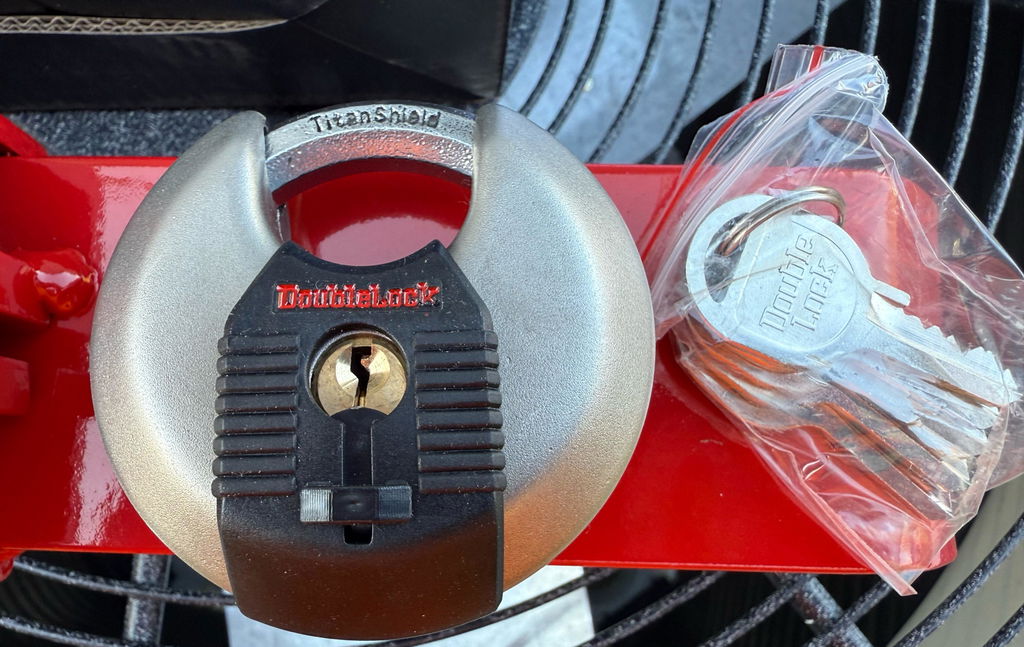
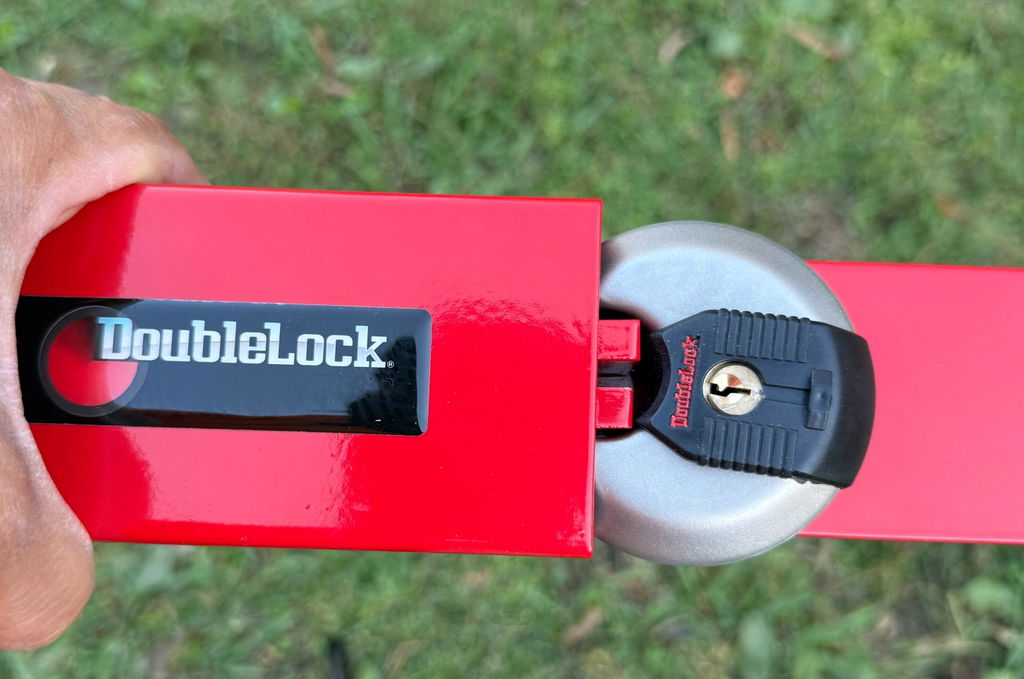
A king pin lock is a physical security device that covers a semi-trailer's kingpin, blocking an unauthorized tractor from coupling to it. It is built for fleet operators, owner-operators, storage yards, and any business leaving detached semi-trailers parked between loads. Before buying, confirm the trailer uses a standard 2-inch kingpin and check that the lock body can seat fully without interference. The hardened-steel DoubleLock LION fits standard 2-inch kingpins and immobilizes the coupling point, adding a strong layer of defense where theft often begins. That matters because trucks are frequently taken from parking places while drivers are on breaks, and no physical lock should be treated as an absolute guarantee.
The key question is not whether every trailer needs the same lock, but whether your parked semi-trailer exposes a standard kingpin to unauthorized coupling. The next section, What is a king pin lock?, answers that first and sets up the fit and security decisions that follow. The path begins with
What is a king pin lock?
The short definition
A king pin lock is a physical security device for an uncoupled semi-trailer. It covers and immobilizes the trailer's kingpin, so another tractor cannot connect to it in the usual way. The lock helps block unauthorized coupling while the trailer is parked.
The kingpin is the steel pin beneath the front of a semi-trailer. A tractor's fifth wheel closes around that pin to couple with the trailer. A king pin lock takes control of this key connection point before an unauthorized driver can use it.
This type of lock is a theft deterrent, not a guarantee. No physical lock makes a trailer impossible to steal. Still, blocking the normal coupling point adds a direct barrier between an unattended trailer and a would-be thief.
Where the lock sits
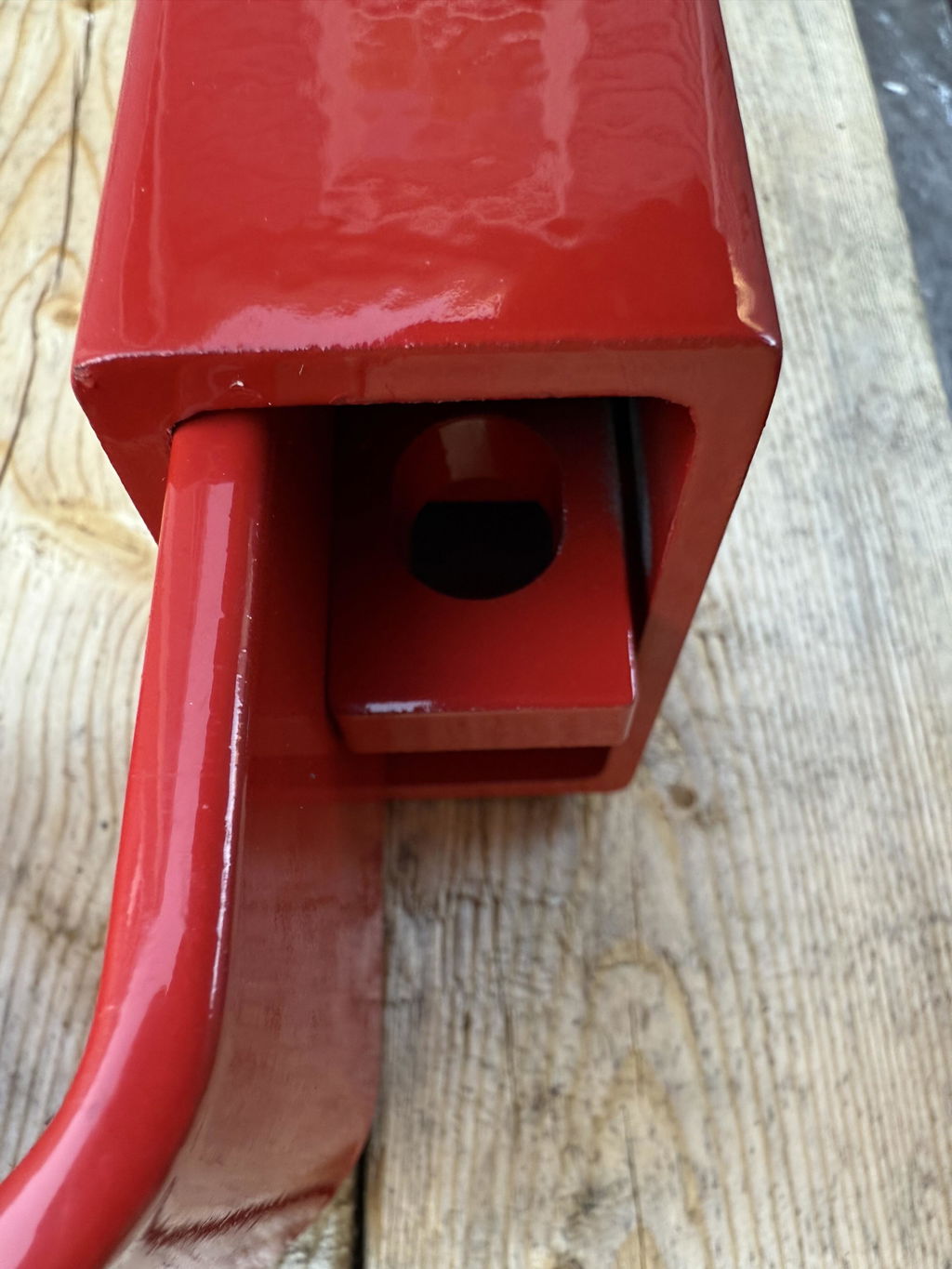
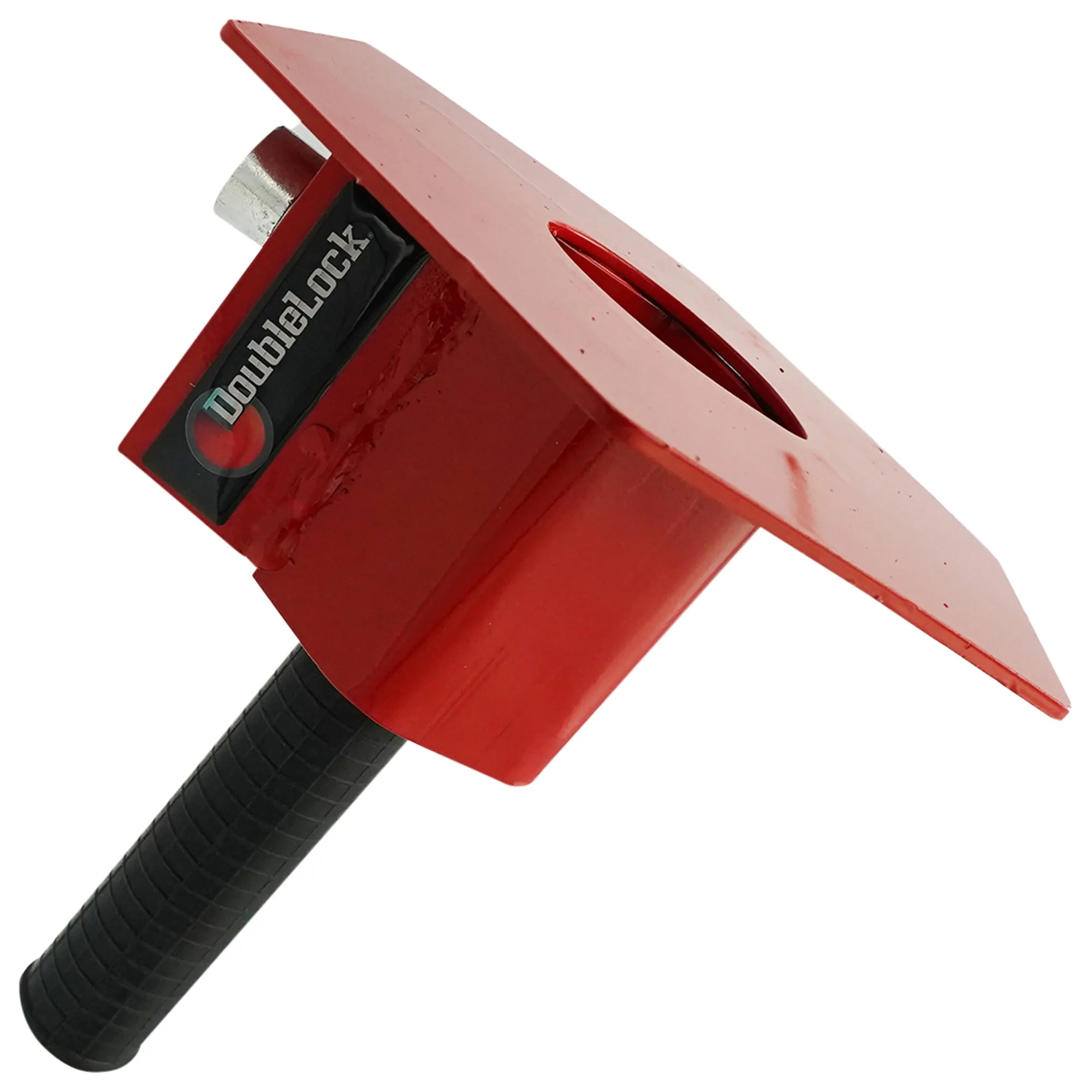
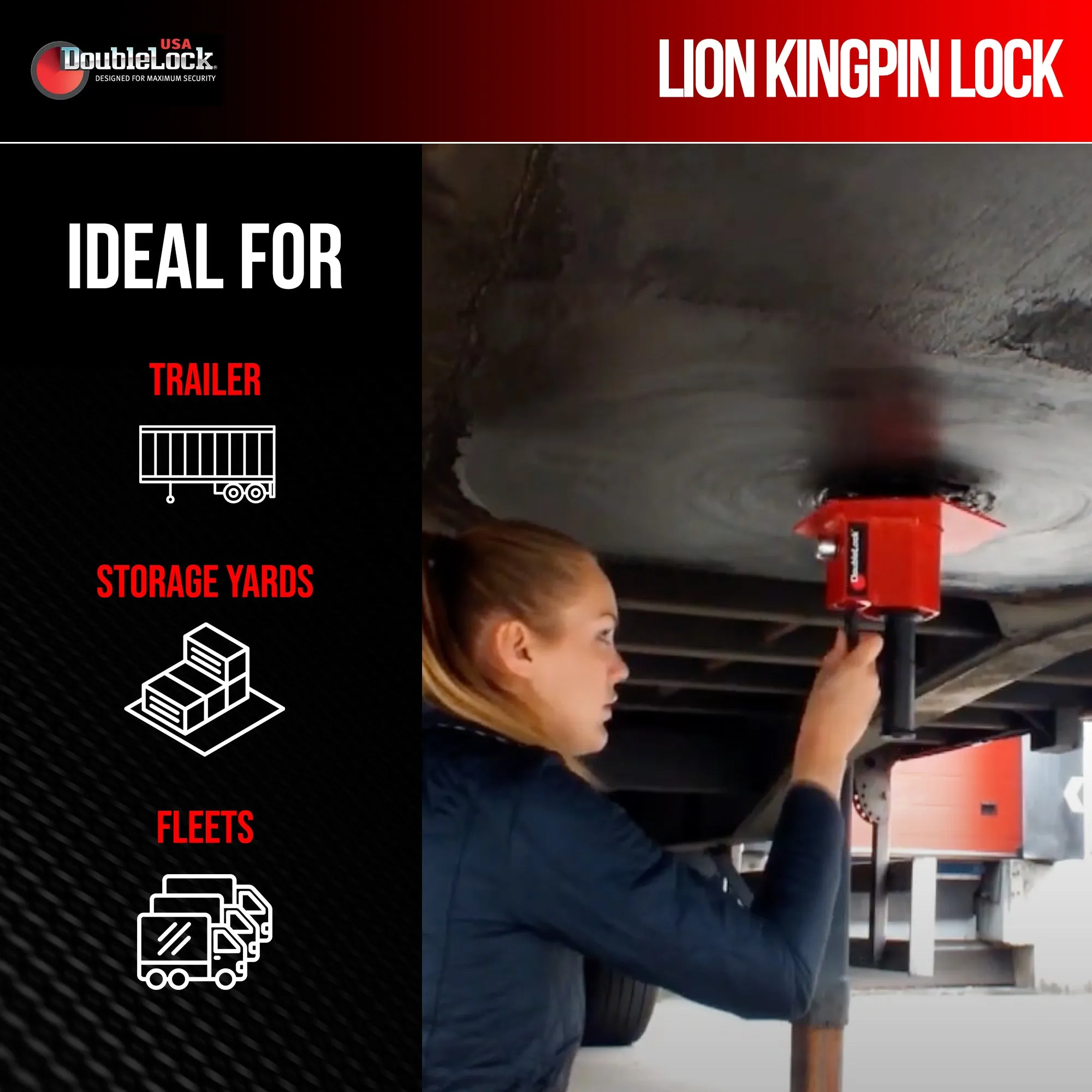
The lock mounts directly over the exposed kingpin after the tractor has dropped the trailer. Once secured, its body surrounds the pin and prevents a fifth wheel from closing around it. It stays with the trailer rather than mounting on the tractor.
Fit matters because kingpins and lock designs are not all the same. The DoubleLock LION kingpin lock, for example, is designed for standard 2-inch kingpins used on most semi-trailers. Operators should confirm the kingpin size and lock fit before use.
A king pin lock should be easy to see during a walkaround. That visibility reminds an authorized driver to remove it before coupling. It also tells other people in the yard that the trailer is secured and not ready for pickup.
When a king pin lock matters
A dropped trailer can sit without its tractor at a yard, loading site, storage area, or rest point. In each setting, the exposed kingpin creates a coupling point. A lock blocks routine hookup until an authorized person removes it.
- Fleet yards: Secure trailers waiting for dispatch, service, or reassignment.
- Staging areas: Protect loaded or empty trailers before the next scheduled move.
- Owner-operator stops: Add a barrier when a trailer must remain uncoupled.
- Long-term storage: Control access to trailers that may receive less daily attention.
The wider risk affects more than one parked unit. The Federal Maritime Commission describes cargo theft as a serious problem for the whole transportation network. Government research also notes that trucks are often taken from parking places while drivers are on breaks.
For a fleet manager, yard lead, or owner-operator, the purpose is simple: control who can couple to a dropped trailer. A king pin lock creates that control at the trailer's main connection point. It works alongside site access rules, inspections, and other security steps.
Why king pin locks matter for semi-trailer theft prevention
A dropped trailer is both cargo storage and transport equipment, yet it may sit without a tractor or driver. That gap matters in storage yards, staging lots, and parking areas where many trailers move through one site. A king pin lock adds a physical barrier at the point another tractor would need to couple with the trailer.
The risk reaches beyond one load or one fleet. A Federal Maritime Commission report says cargo theft affects the entire transportation network and disrupts the flow of goods. For operators, prevention should account for both the cargo and the trailer that carries it.
Protection during unattended stops
Trailers become exposed whenever normal work puts distance between them and their drivers. This can happen during required breaks, overnight parking, loading delays, yard staging, or temporary storage. Research collected by the Office of Justice Programs notes that trucks are often taken from parking places while drivers are on breaks.
High-risk parking does not always look unsafe. A busy lot may have lights, people, and steady traffic, but that activity can make an unfamiliar tractor less obvious. A quiet storage yard creates a different concern because fewer people may notice activity near a dropped trailer.
A direct barrier to unauthorized coupling
Paperwork, dispatch rules, gate logs, and driver checks all support control. Still, these steps depend on people spotting a mismatch before a trailer leaves. A king pin lock works at the trailer itself. It is designed to immobilize the kingpin, which blocks the normal coupling point used by a tractor.
This physical layer matters when a trailer sits outside direct supervision. The DoubleLock LION kingpin lock, for example, is made from hardened steel and fits standard 2-inch kingpins. Operators should still confirm fit and inspect the lock before relying on it in the field.
Layered security for yards and fleets
Cameras and perimeter fencing remain useful, but they serve different roles. Cameras may record activity or help staff review an event. Fences and gates guide site access, yet their value depends on sound controls, working equipment, and consistent use.
A king pin lock adds another obstacle after those outer layers. It can help protect a dropped trailer even if someone enters the yard or reaches the parking space. The lock does not make theft impossible, and no single control can cover every threat.
Fleet teams get stronger protection by combining physical locks with clear parking rules, controlled key access, trailer checks, and fast reporting. The goal is not a guarantee. It is to reduce easy opportunities and make unauthorized coupling harder during the times a trailer is most exposed.
Who needs a king pin lock?
Anyone responsible for an unattached semi-trailer should consider a king pin lock. An idle trailer can be exposed at a terminal, yard, jobsite, rental lot, or rest stop. The lock covers and immobilizes the kingpin, which helps deter an unauthorized tractor from coupling to the trailer.
Fleet and logistics operations
Fleet and logistics managers often oversee trailers that sit apart from tractors between loads. Those trailers may hold cargo, tools, or equipment while waiting for dispatch. Cargo theft affects the full transportation network, according to a Federal Maritime Commission report. A king pin lock adds a clear physical barrier during these gaps.
Owner-operators face the same issue on a smaller scale. A driver may drop a trailer overnight, during a break, or while handling another load. Parking areas deserve close attention because trucks are often taken while drivers are on breaks. A lock is useful when the driver cannot keep the trailer in sight.
- Drop yards where trailers wait for their next tractor
- Customer sites where loaded trailers remain after delivery hours
- Rest areas, truck stops, and other temporary parking places
- Fleet terminals with many trailers and frequent driver changes
Rental fleets and storage yards
Trailer rental companies need control between reservations, especially when units sit outside. A king pin lock can help prevent someone from coupling to an available trailer without permission. Key control and routine checks also matter when many workers handle the same fleet.
Storage yards and trailer dealers face a similar risk. Their trailers may remain unattended for days, with predictable access points and limited staff after hours. A physical lock supports gates, lights, cameras, and access logs. It should be one layer in the yard's wider security plan, not the only layer.
Jobsites and unattended trailers
Construction and jobsite operators often use semi-trailers for tools, materials, or mobile storage. These trailers can sit in open areas after crews leave. A king pin lock helps deter unauthorized coupling when the site has no tractor attached or no overnight guard.
The same rule applies to any business or person parking a semi-trailer unattached. Risk rises when the trailer is loaded, easy to reach, or left in one place on a set schedule. Before choosing a lock, confirm kingpin fit and inspect how the device mounts. The DoubleLock LION kingpin lock, for example, is designed for standard 2-inch kingpins used on most semi-trailers.
No lock makes a trailer impossible to steal. Pair the device with good parking choices, regular inspections, controlled keys, and a clear response plan for missing equipment.
How to choose the right king pin lock fit
A secure fit starts with the trailer, not the lock box. Measure, inspect, and test each part before assigning a king pin lock to daily service. DoubleLock states that the LION fits standard 2-inch kingpins, but that does not prove it fits every trailer.
Measure before buying
Start by confirming the kingpin size and comparing it with the lock maker's listed fit. Then check the space around the kingpin and plate. A matching kingpin diameter alone is not enough when nearby parts block the lock body.
Confirm the kingpin size. Check the trailer records or measure the kingpin with a suitable tool. Compare that result with the lock maker's stated fit range.
Inspect the kingpin. Look for heavy rust, bent areas, burrs, packed dirt, or other damage. Clean the mounting area before testing the lock.
Check clearance around the plate. Measure the open space beside and below the kingpin. Compare those clearances with the full lock body dimensions, including any handle or cover.
Test the lock by hand. Fit and remove it while the trailer is parked safely. The lock should seat as designed, close fully, and release without forced movement.
Review daily handling. Check the lock's weight, grip points, storage needs, and exposure to road grime. Drivers should be able to use it without improvised tools.
Plan key control. Decide who holds keys, where spare keys stay, and how lost keys get reported. For a fleet, confirm the chosen key setup before ordering several locks.
Fit checks for real work
Test fit under the same conditions drivers will face. Gloves, low light, dirt, and tight access can turn a simple shop test into a slow roadside task. A lock that requires force or unusual handling needs another fit review.
Also check whether the fitted lock stays clear of nearby parts and rests in its intended position. Do not grind the lock or alter the kingpin to make a poor match work. Record the approved lock model for each trailer group after a successful test.
Key control and routine checks
A king pin lock works by immobilizing the kingpin, which helps stop unauthorized coupling. That layer matters because trucks are often taken from parking places while drivers are on breaks, according to an Office of Justice Programs summary. Fit checks should therefore be part of normal parking routines.
Set a clear process for installing, locking, removing, and storing the device. Track issued keys and remove access when roles change. Inspect both the lock and kingpin at set service points, then repeat the fit test after repairs or visible damage.
A standard 2-inch kingpin specification narrows the search, but it does not replace a hands-on check. Choose only after the lock fits the kingpin, clears the plate, closes as designed, and works within the fleet's key process.
What separates a basic lock from a heavy-duty king pin lock?
A basic king pin lock may stop an easy, unplanned coupling attempt. A heavy-duty model should add stronger material, fuller coverage, and features that support daily fleet use. The distinction matters because cargo theft affects the entire transportation network, not just one trailer or carrier.
Labels alone do not prove that a lock is heavy duty. Buyers should compare the design, fit, key controls, and upkeep needs before choosing a king pin lock. The table below shows practical points to inspect rather than making claims about any unnamed product.
Core design differences
| Feature | Basic lock | Heavy-duty lock |
|---|---|---|
| Material | Lighter construction; verify the metal and thickness | Hardened steel or another clearly stated, tough material |
| Kingpin coverage | May cover only part of the coupling point | Designed for close, broad coverage around the kingpin |
| Key system and fleet use | Simple key setup for one trailer | Managed key options worth reviewing for multiple trailers |
| Weather resistance | Few stated protections; inspect exposed parts | Protected working parts and stated outdoor-use features |
| Visibility | May be hard to spot during a walkaround | Easy to see before hookup and during checks |
| Daily operation | Can suit occasional, low-volume use | Simple fitting, removal, checks, and key handling |
Material is the first useful check. Hardened steel is a premium feature because it gives the lock a tough structural base. For example, the DoubleLock LION king pin lock uses hardened steel and immobilizes the kingpin.
Coverage also deserves a close look. A lock should sit firmly around the intended coupling point, without a loose fit that causes poor handling. Confirm the required kingpin size before buying, then test the actual lock on each trailer type in the fleet.
Keys, weather, and visibility
A key system affects more than access. Fleet teams need a clear plan for issuing keys, tracking copies, storing spares, and removing access when roles change. If keyed-alike or master-key options are offered, confirm exactly how they work before adopting them.
Outdoor exposure can affect any mechanical device. Ask what protects the lock body, keyway, and moving parts from rain, road grime, and salt. Then add cleaning, inspection, and function checks to the trailer's normal security routine.
Visibility has two jobs. A visible lock can show that the trailer has an added barrier, and it can help drivers notice the device before hookup. Color alone does not make a lock secure, so treat visibility as a support feature.
Operational fit for a fleet
The strongest design on paper can still fail as a fleet choice if crews avoid using it. Drivers should be able to fit, confirm, remove, and store the lock through a clear process. A short field trial can reveal handling problems before a large order.
Fleet suitability also depends on consistent fit, key control, inspection steps, replacement plans, and staff training. Record which lock belongs to each trailer and who holds each key. This simple control helps turn a heavy-duty king pin lock into a repeatable security step.
Request a DoubleLock USA quote for fleet trailer security
How DoubleLock LION supports kingpin trailer security
A direct barrier at the kingpin
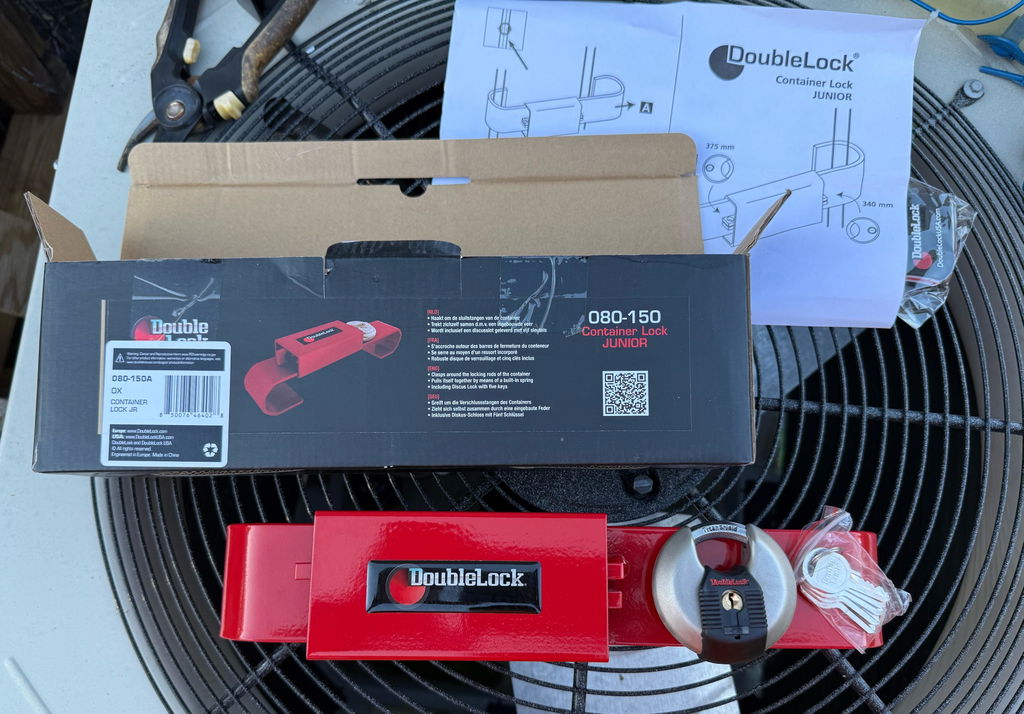
The DoubleLock LION is a king pin lock made to secure a semi-trailer by immobilizing its kingpin. This approach blocks access at the trailer's main coupling point while the trailer is parked and detached. It gives fleet teams a clear way to add a physical barrier before a tractor can connect.
The need for that barrier extends beyond a single trailer or load. A Federal Maritime Commission report on cargo theft calls theft a serious problem that affects the whole transportation network. For fleets, that makes parked-trailer security part of daily risk control, not a task reserved for rare cases.
Fit and hardened steel construction
The LION fits standard 2-inch kingpins used on most semi-trailers. That fit makes it relevant for common fleet equipment, but teams should still confirm the kingpin size before use. A proper fit matters because the lock must immobilize the kingpin rather than sit loosely around it.
DoubleLock makes the LION from hardened steel. The material supports its role as a strong physical barrier at a key connection point. Teams comparing options can review DoubleLock's kingpin security hardware alongside their trailer types and parking risks. No lock makes a trailer impossible to steal, so it should support a wider security plan.
Use in fleet parking routines
A king pin lock is most useful when crews treat it as part of every parking handoff. Drivers or yard staff can verify the trailer is detached, check the kingpin, and fit the lock before leaving. A second person can confirm placement when the site faces higher theft risk.
- Assign responsibility for fitting and removing the lock during each trailer handoff.
- Check the kingpin and lock for damage before each use.
- Record the lock check with the trailer's yard or dispatch status.
- Control key access and report missing keys at once.
Parking location also shapes the risk. An Office of Justice Programs summary notes that trucks are often taken from parking places while drivers are on breaks. Fleets, storage yards, and high-risk parking sites can use the LION as one visible part of layered trailer security.
That layered plan can also include lighting, access control, inspections, and clear key records. The LION addresses the kingpin itself, while those other controls cover the site and the people using it. Together, the steps make trailer security easier to apply, check, and document across routine fleet work.
How to use a king pin lock as part of a trailer security plan
A king pin lock should be one part of a layered trailer security plan. It blocks normal coupling, but no lock is undefeatable. Pair it with clear routines that make theft harder, expose weak points, and help staff spot trouble early.
Inspection and key control
Inspect the lock, kingpin, and trailer before every departure and after each return. Look for fresh marks, loose parts, rust, blocked keyways, or signs of forced entry. Test the lock before leaving the trailer unattended, and replace damaged gear rather than trusting it.
Keep a simple key log for every king pin lock. Record who receives each key, when it leaves, and when it comes back. Limit spare keys to named managers, and never leave them inside a tractor or an unlocked yard office.
- Assign each lock and key pair to a trailer or asset number.
- Check keys at shift changes and after staff or vendor access.
- Report lost keys at once, then change the affected lock plan.
- Log each inspection, fault, repair, and replacement.
Parking and yard awareness
Choose parking with care. An Office of Justice Programs summary notes that trucks are often taken from parking places while drivers are on breaks. Avoid isolated spaces when a busy, controlled, and well-lit option is available.
In a yard, place trailers where staff or cameras can see the coupling area. Keep lights working, trim blocked sightlines, and check camera views after parking patterns change. Cameras can help document events, but they do not replace a locked gate or a physical inspection.
Set rules for where loaded trailers may sit and who may move them. Drivers should confirm the trailer number, parking bay, and lock status at handoff. If a trailer must stay off-site, record its location and expected pickup time.
Layered physical protection
Match the added locks to the trailer and the load. A king pin lock helps stop normal tractor coupling. Door locks, glad-hand locks, wheel restraints, and secure yard gates address other access points. Use only devices that fit the equipment and do not create unsafe handling risks.
For semi-trailers with standard 2-inch kingpins, the LION kingpin lock is designed to immobilize the kingpin. Confirm fit before relying on any device. Installation should be easy enough that crews use it every time, yet strict enough that skipped steps are noticed.
Document the full plan in a short checklist. Include parking rules, lock steps, key control, inspection points, and incident contacts. Review it after a lost key, damaged lock, yard change, or suspicious event, then fix the weak point found.
Frequently Asked Questions
Why do I need a king pin lock for my trailer?
A king pin lock helps protect an uncoupled semi-trailer when it is parked in a yard, lot, or loading area. It blocks unauthorized coupling, adding a physical barrier before someone can tow the trailer away. This matters because trucks are frequently stolen from parking places while drivers are on breaks, according to the Office of Justice Programs.
How does a king pin lock prevent semi-trailer theft?
A king pin lock covers or immobilizes the trailer's kingpin, preventing another tractor's fifth wheel from coupling to it. That barrier can delay or deter an attempt to tow an unattended semi-trailer. The DoubleLock LION uses hardened steel and immobilizes the kingpin, according to DoubleLock. No lock guarantees prevention, so it should support broader yard and fleet security measures.
Does a king pin lock fit all types of semi-trailers?
No. Fit depends on the kingpin diameter, surrounding clearance, and the lock manufacturer's specifications. The DoubleLock LION fits standard 2-inch kingpins used on most semi-trailers, according to DoubleLock. Before buying, measure the kingpin and inspect the trailer plate for anything that could block installation. Confirm the exact fit when the trailer uses a nonstandard coupling system.
How do you install a king pin lock on a 5th wheel?
A king pin lock normally attaches to the exposed kingpin beneath an uncoupled semi-trailer, not to the tractor's fifth wheel. Park securely, disconnect the tractor, place the lock over the kingpin, and engage its locking mechanism. Test that it is fully seated and cannot be removed. Follow the lock maker's instructions, since the exact placement and locking steps vary by model.
Are king pin locks weather-resistant?
Weather resistance varies by model, material, cylinder design, and exposure conditions. Before selecting a king pin lock, check its stated corrosion and weather protection for the trailer's operating environment. Inspect the lock regularly for rust, dirt, damage, and smooth operation. Follow the manufacturer's care guidance, especially when trailers remain outdoors or operate around road salt, coastal air, or frequent rain.
Ready to secure your parked trailers?
Shop DoubleLock trailer security products online
A king pin lock is one of the most direct ways to protect an uncoupled semi-trailer from unauthorized hookup. If your trailers sit in yards, staging areas, docks, jobsites, or high-risk parking environments, do not treat physical security as an afterthought. Match the lock to the trailer, control the keys, and make the lock part of a repeatable security routine.
DoubleLock USA builds premium trailer and industrial security hardware for operators who need rugged equipment without the noise. Shop DoubleLock trailer security products online, or call +1 561-289-4865 to discuss fleet and bulk needs.