
Your trailer is a valuable asset, but its mobility also makes it a prime target. To protect it, you need to start thinking like a thief. Criminals aren't looking for a challenge; they're looking for a quick and easy score. This guide will teach you to see your trailer through their eyes, identifying weak points you may have overlooked. The goal isn't to build an impossible fortress. It's about creating a strong enough deterrent to make a potential thief move on. This mindset is the foundation for how to prevent trailer theft.
Key Takeaways
- Combine different security devices: A single lock is not enough to stop a determined thief. The most effective approach is to use multiple layers of security, such as a coupler lock, a wheel clamp, and heavy-duty padlocks, to make stealing your trailer too difficult and time-consuming.
- Make your security visible: Thieves look for easy targets and prefer to work unnoticed. Parking in well-lit, high-traffic areas and using brightly colored, robust locks sends a clear signal that your trailer is well-protected and not worth the risk.
- Prepare for prevention and recovery: While strong locks are your best defense against theft, a hidden GPS tracker is your best tool for recovery. Keep important documents like your trailer's VIN, registration, and photos in a safe place to help law enforcement and your insurance company if a theft occurs.
How Do Trailers Get Stolen?
To protect your trailer, you first need to understand how a thief operates. It’s not about elaborate heists; it’s about opportunity. Thieves are looking for the path of least resistance. They want a target that is quick, quiet, and easy to take. By making your trailer look like more trouble than it’s worth, you encourage them to move on to an easier score. The goal isn't to build an impenetrable fortress, but to create enough of a deterrent that a potential thief decides your trailer isn't worth the risk. Understanding their methods and what they look for is the first step in building a solid security plan.
What Are the Most Common Theft Methods?
A thief’s biggest asset is speed. They want to hook up your trailer and be gone in minutes, drawing as little attention as possible. They often scout areas for trailers left unsecured, especially those that can be hitched to a standard vehicle without any special effort. A common tactic involves a quick drive-by to assess the situation. If they don't see any visible locks or deterrents, they'll mark it as a potential target. While a determined professional might come prepared with tools to cut locks, most opportunistic thieves won't. The key is slowing them down, as every extra minute spent trying to defeat a security device increases their risk of being caught.
Is Your Trailer an Easy Target?
An unprotected trailer is an open invitation. Many trailers are stolen from homes or campsites, often because they lack obvious security measures. If a thief can’t immediately see a coupler lock, a wheel clamp, or a heavy-duty chain, they assume the job will be simple. The location also plays a huge role. Thieves prefer to work in dark, quiet, or secluded areas where they are less likely to be seen. A trailer parked at the back of a property, obscured from street view, or left in an unlit lot is far more vulnerable than one parked in a well-lit, high-traffic area. A visible, layered security system signals that your trailer is a hard target, which is often enough to make a thief look elsewhere.
Essential Security Devices to Prevent Trailer Theft
Choosing the right security devices is your first line of defense against trailer theft. Each device serves a specific purpose, and using them in combination creates a formidable barrier. Think of it as building a security toolkit for your trailer. From the hitch to the wheels, every part of your trailer can be secured. Let's go over the most effective options available to protect your investment.
Securing the Coupler and Hitch
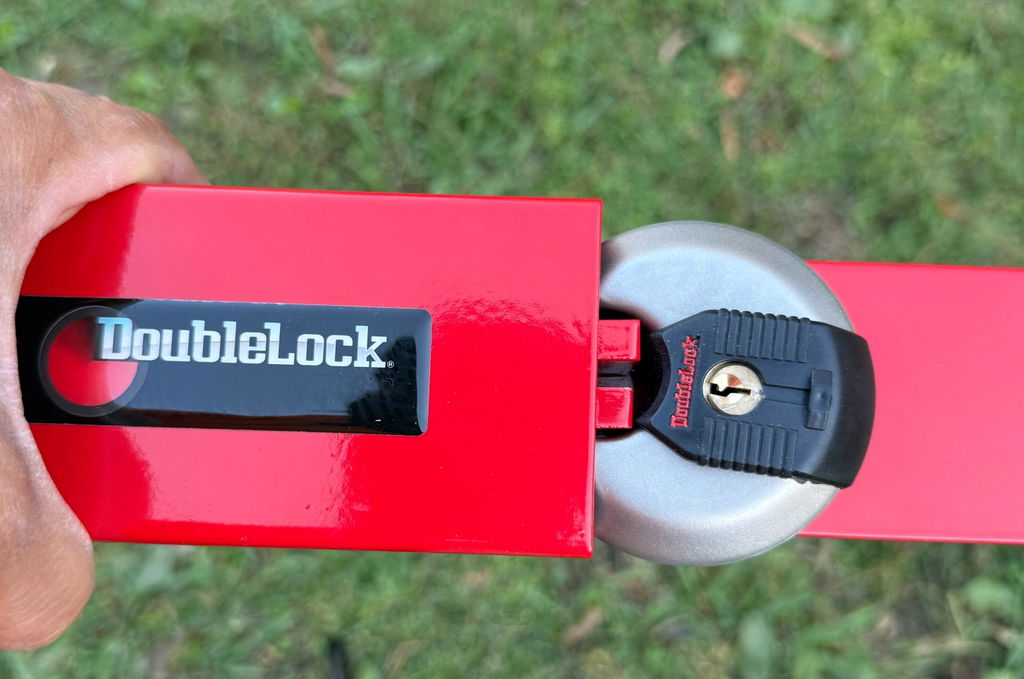
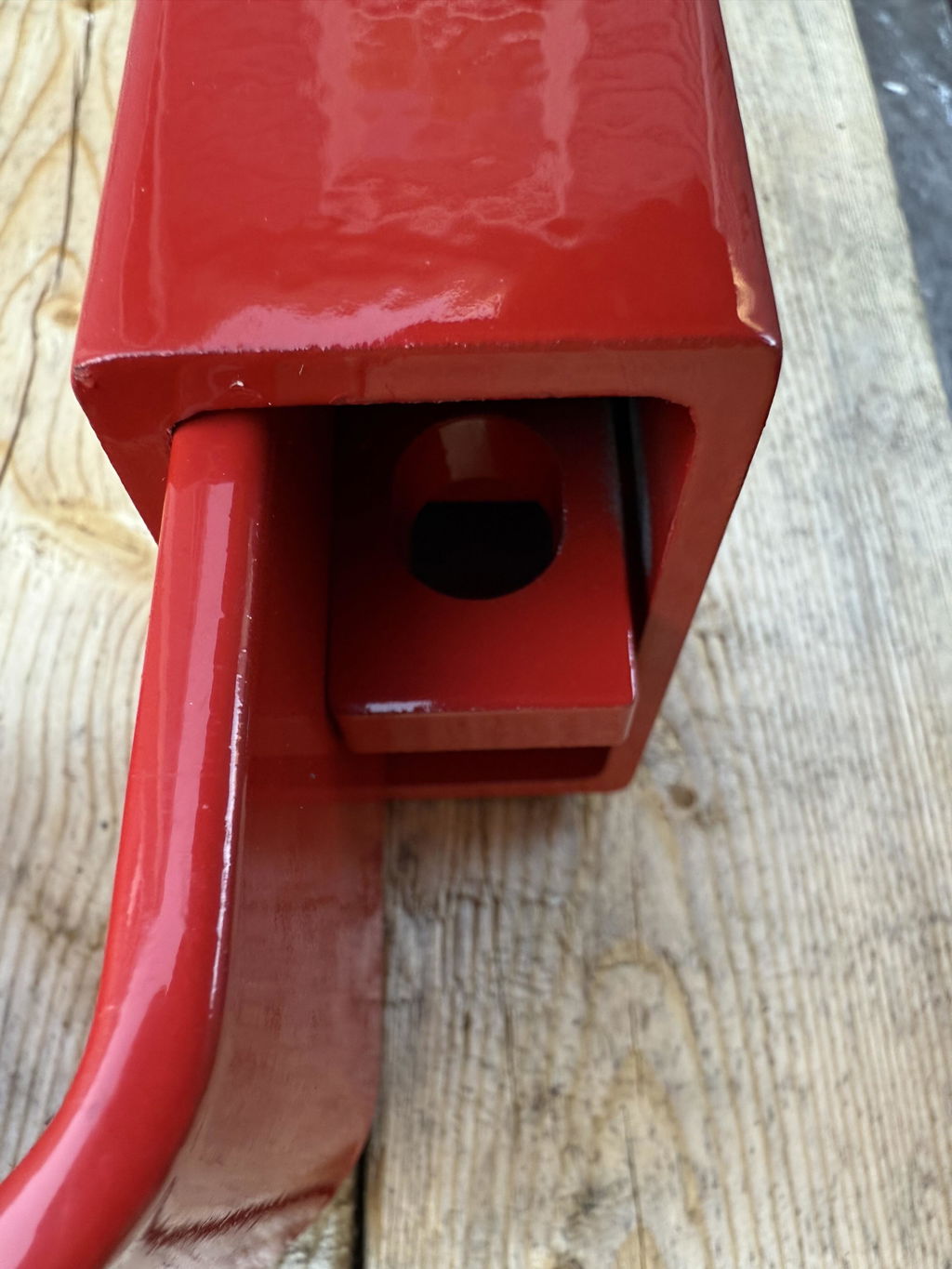
A coupler lock is an essential piece of security. This device fits over your trailer's coupler, which is the part that connects to your vehicle's hitch ball. When your trailer is parked and unhitched, a coupler guard prevents a thief from simply backing up their own vehicle, hooking up your trailer, and driving off. It’s a simple and highly effective way to secure a detached trailer.
For when you’re on the move, a hitch pin lock secures the coupler latch after you've connected the trailer to your tow vehicle. This small but mighty device stops anyone from unhitching your trailer when you're parked at a rest stop or job site. Using both types of security devices provides protection whether your trailer is attached or standing alone.
Don't Forget the Safety Chains
While many trailer owners focus on the coupler and wheels, safety chains are an often-overlooked weak point. Thieves are opportunistic and know that loose chains can be their ticket to a quick getaway. A common method involves simply looping your safety chains over their own hitch ball, allowing them to defeat your primary security and drive off. To counter this, make it a habit to secure your chains. You can twist them to remove slack and lock them together with a padlock, or run them through the housing of your coupler guard. This simple action adds another time-consuming step for a potential thief. Since their goal is to be gone in minutes, every extra layer of defense makes your trailer a less appealing target.
Using Heavy-Duty Security Clasps
Your trailer likely has more than just a hitch to protect. Toolboxes, storage compartments, and security chains all need to be secured. This is where high-security padlocks come in. Look for units made from hardened steel that are designed to resist cutting, prying, and picking. A standard, low-quality fastener can be broken in seconds, but a robust, heavy-duty model will deter most opportunistic thieves.
When securing chains or hasps, make sure the security clasp itself is as strong as the chain it’s holding. A thief will always go for the weakest point, so using top-notch security products on every access point is crucial. It’s a small investment that protects the valuable equipment you store in and on your trailer.
Stopping Movement with Wheel Immobilizers
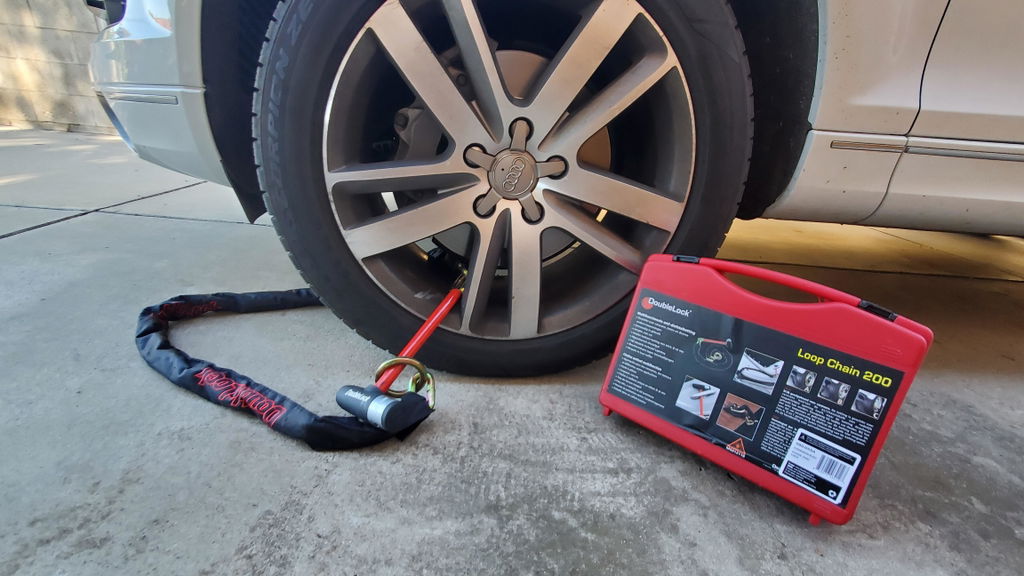
To make your trailer truly immobile, you can use a wheel clamp. These large, highly visible devices attach to a trailer's wheel, physically preventing it from rotating. A thief can’t tow a trailer if the wheels won’t turn. Often brightly colored, these immobilizers also act as a powerful visual deterrent, signaling to potential thieves that your trailer is well-protected and not an easy target.
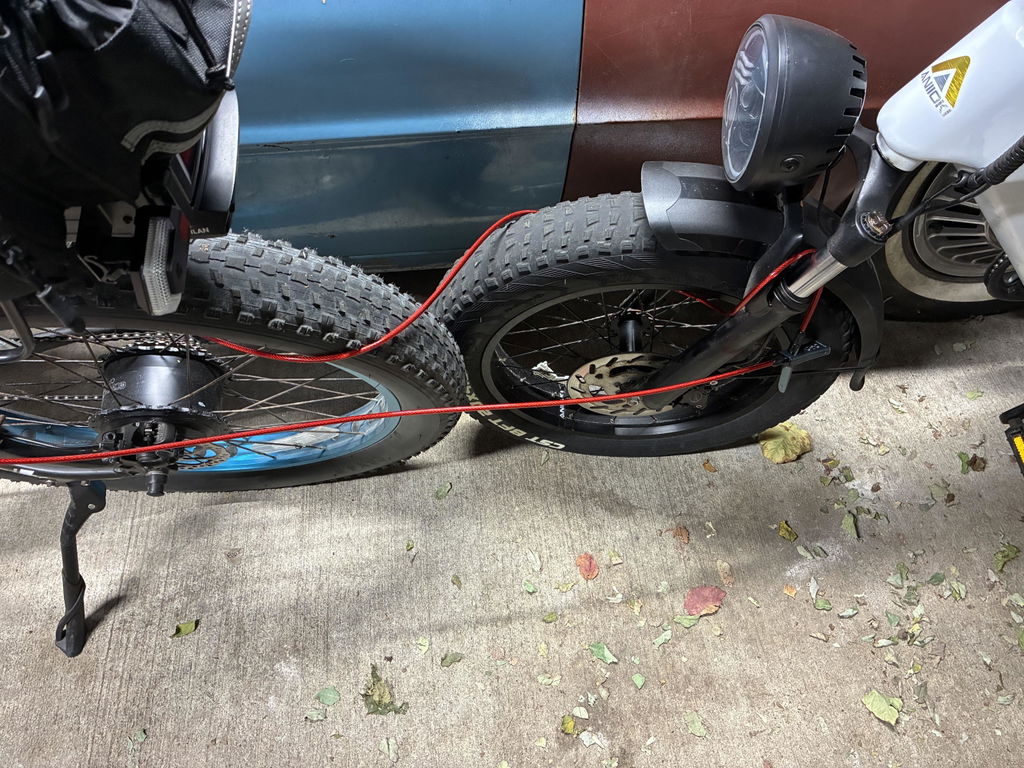
For an alternative, you can run heavy-duty security cables through the wheels and around the axle. While not as visible as a large clamp, this method also makes it extremely difficult for someone to move the trailer. Combining a wheel immobilizer with a coupler guard creates a very challenging situation for any would-be thief.
Use Wheel Chock Security Devices
Beyond securing the hitch, you can physically stop the wheels from moving with a wheel chock security device. This device serves a dual purpose: it acts as a heavy-duty chock to prevent the trailer from rolling and as a clamp that pinches the tire to stop it from rotating. It’s another powerful layer in your security strategy, making it impossible for a thief to simply tow your trailer away. Much like a wheel clamp, these are often brightly colored, serving as a clear visual warning that your trailer is protected. When a thief sees this level of security, they understand that attempting a theft will be a noisy, time-consuming process, which is exactly what they want to avoid.
Add Security Lug Nuts
If your trailer has expensive custom wheels or new tires, they can be a target all on their own. A determined thief might try to bypass a wheel clamp by simply unbolting the wheel and replacing it with a spare. You can prevent this by installing security lug nuts. These require a special key for removal, making it nearly impossible for someone to steal your wheels. It’s a small detail that provides a significant amount of protection for valuable components. This step ensures that even if a thief comes prepared, they won't be able to easily strip your trailer of its valuable parts, protecting your investment down to the last detail.
Secure the Spare Tire
Your trailer’s spare tire is another item that is often overlooked but is a common target for thieves. It’s usually mounted in an accessible location, and if left unsecured, it can be stolen in seconds. Use a dedicated spare tire security device to keep it safe. These devices are designed to fit over the mounting bolts, preventing removal. Losing your spare is more than just an inconvenience; it leaves you stranded if you get a flat tire during a trip. Securing it is a simple, inexpensive step that ensures your backup is there when you need it and doesn't end up in the hands of a criminal.
Protect Your Gear with a Tongue Box
Many trailers are used to haul more than just large items; they also carry expensive tools, straps, and other essential gear. A trailer tongue box is an excellent way to keep these items organized and secure. This is a storage container that mounts directly onto the A-frame at the front of your trailer. It provides a dedicated, protected space for all the smaller equipment you need for your work or recreation. Not only does it keep your gear safe from theft, but it also protects it from rain, sun, and road grime, ensuring everything stays in good working condition and is ready to use when you arrive at your destination.
Of course, a storage box is only as secure as the fastener that keeps it shut. A flimsy latch or a low-quality clasp can be broken with minimal effort, rendering the box useless as a security measure. It's critical to pair your tongue box with a robust, heavy-duty security clasp that can resist cutting and prying. Investing in high-quality security hardware ensures that your toolbox protects your valuable equipment instead of just hiding it. Remember, a thief will always look for the weakest link, so make sure the fastener on your tongue box is just as tough as the rest of your security setup.
Should You Install an Alarm System?
In addition to physical deterrents, you can add a layer of technology with an alarm system. Many modern trailer alarms are designed to detect motion or tampering. If a thief tries to move the trailer or force open a door, a loud siren will sound, drawing immediate attention and likely scaring them away. This is often enough to stop a theft in progress.
Some advanced motion-activated alarms can even send an alert directly to your smartphone. This gives you real-time information if your trailer is being tampered with, allowing you to notify the authorities right away. An alarm system works well with physical security measures to provide comprehensive protection.
Building Your Multi-Layered Security Plan
Relying on a single security device is like leaving your front door unlocked just because the back door is secure. A determined thief will simply find the weakest point. The most effective way to protect your trailer is by creating multiple layers of defense. This approach makes the theft process more difficult, time-consuming, and conspicuous for a criminal, which often convinces them to move on to an easier target. Think of it as a series of obstacles. Each one requires a different tool or technique to bypass, increasing the thief's risk of getting caught. A layered strategy combines physical barriers with modern technology and smart, preventative habits to create a comprehensive security system for your valuable asset. By using a variety of security products, you aren't just securing a trailer; you're building a fortress around it. This method ensures you have a robust defense in place, giving you the peace of mind that comes from knowing you've done everything possible to protect your property. It’s about making your trailer a hard target, not an easy score.
Combine Physical Security Devices
The foundation of any good security plan is a set of robust physical barriers. Using several different types of security hardware forces a thief to carry multiple tools and spend more time at the scene, increasing their risk of being caught. For example, you can use a coupler lock to prevent someone from hitching your trailer, and then add a heavy-duty shackle lock to the trailer doors or storage compartments. By combining different security devices, you create a formidable defense that deters all but the most determined criminals. The goal is to make your trailer look like too much work.
Layer in GPS Tracking and Tech
While physical hardware is your first line of defense for preventing theft, technology is your best bet for recovery if the worst happens. Installing a hidden GPS tracker on your trailer allows you to monitor its location in real time. If your trailer is stolen, you can provide law enforcement with its exact coordinates, which dramatically increases the chances of getting it back. Many modern GPS systems also allow you to set up geofences, which send an alert to your phone if the trailer moves outside of a designated area. This technology acts as a silent alarm, giving you a crucial head start in a theft scenario.
Use Alternative Tracking Devices
For an extra layer of security, consider adding a secondary, more discreet tracking device. While a dedicated GPS unit is a powerful tool, savvy thieves might look for and disable it. This is where smaller, more affordable trackers like Apple AirTags or similar Bluetooth-based locators come in handy. Because of their small size and low cost, you can hide several of them in different spots throughout your trailer—inside wall panels, under the flooring, or tucked away in a storage compartment. If your primary tracker is discovered, these hidden backups can serve as your last resort for recovery, providing law enforcement with the location information needed to find your trailer. It’s a simple, inexpensive way to add another layer to your recovery plan.
Make Your Security Obvious to Thieves
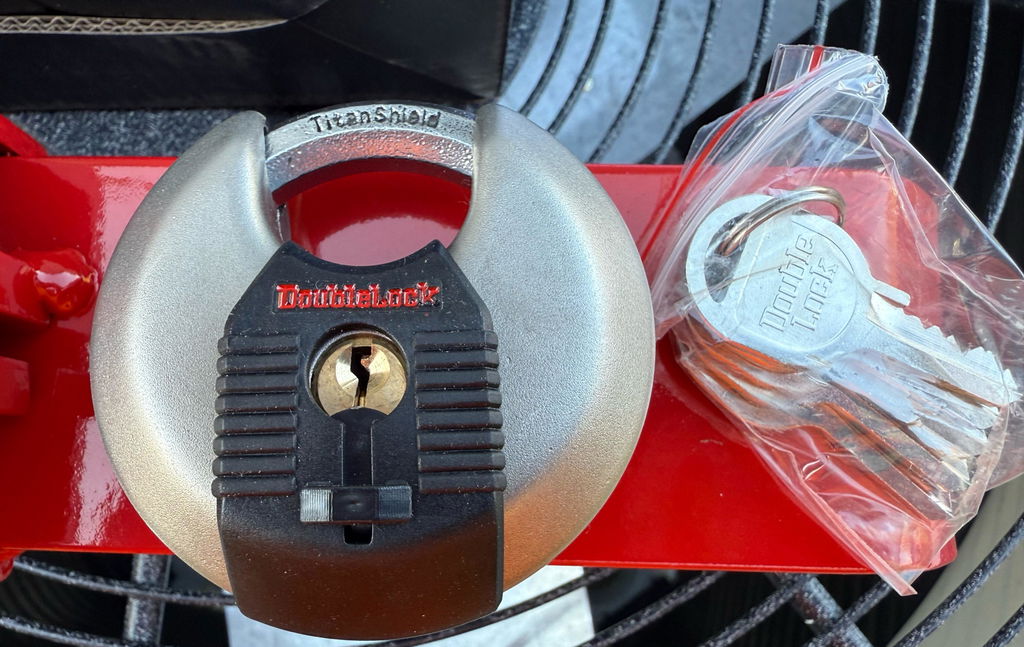
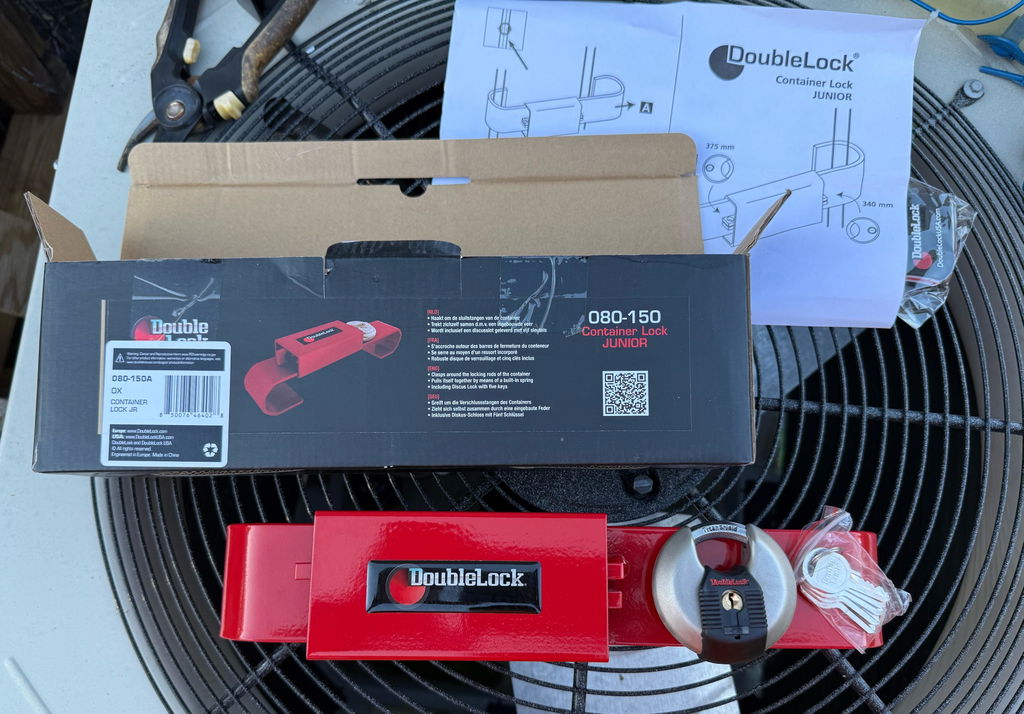
Thieves thrive in the shadows and prefer targets that offer minimal resistance. You can use this to your advantage by making your security measures as visible as possible. Park your trailer in well-lit, high-traffic areas whenever you can. At home, consider installing motion-activated floodlights and security cameras near your storage spot. Furthermore, using brightly colored, heavy-duty security hardware from a trusted brand like DoubleLock USA sends a clear visual message. When a potential thief sees multiple, high-quality security devices, they know that attempting to steal your trailer will be a difficult and noisy process, making it a much less attractive target.
Add Warning Decals
Beyond physical hardware, you can add a psychological layer of defense with warning decals. A simple sticker indicating that your trailer is protected by a security system or GPS tracking can make a potential thief pause. They are looking for the easiest target, and a decal suggests that even if they bypass the visible locks, other, unseen measures are in place. Placing a sticker from a reputable security brand on a window or near the hitch signals that you are serious about protection. This small detail complements your physical security, reinforcing the message that your trailer is not worth the risk or effort.
Mark Your Trailer for Identification
While your main goal is to prevent theft, preparing for a worst-case scenario is a crucial part of any security plan. If your trailer is stolen, having clear identification is your best tool for recovery. Start by gathering all your important documents, including the trailer's title, registration, and proof of insurance. Keep physical copies in a secure place like a fireproof safe at home, and consider saving digital copies in a password-protected cloud folder. This ensures you have immediate access to the Vehicle Identification Number (VIN) and other necessary details for a police report and insurance claim.
You should also take a comprehensive set of photographs of your trailer. Capture it from every angle, and be sure to document any unique features, custom modifications, or distinguishing marks and scratches. These photos provide law enforcement with a clear visual reference, making it easier to identify your trailer if it's found. A well-documented asset is not only easier to recover but can also be a less attractive target, as thieves know it will be harder to sell or disguise. Taking these preparatory steps gives you the best possible chance of a positive outcome if a theft occurs.
Etch the VIN or Use Invisible Ink
To make your trailer permanently identifiable, consider etching its VIN onto multiple parts of the frame and major components. A thief can swap out a license plate, but a number etched into the steel frame is much harder to remove or alter. This process makes it significantly more difficult for them to sell the trailer or its parts. For a more discreet option, you can use an invisible ink pen to write the VIN on various surfaces. This ink is only visible under a special UV light, providing a secret layer of identification that law enforcement can use to confirm ownership during a recovery.
Incorporate Low-Cost Immobilization Tactics
Effective security isn’t always about buying the most expensive gear. Some of the most practical deterrents are simple, low-cost habits that make your trailer more difficult to move. These tactics are designed to create inconvenience and add time to the theft process, which are two things criminals actively avoid. When a thief has to spend extra minutes figuring out how to lift a tongue or retract a jack, it increases their risk of being seen. By incorporating these small steps into your routine every time you park, you add valuable layers to your security plan without spending an extra dime. These simple actions, when combined with robust physical security devices, create a frustrating and time-consuming challenge for any would-be thief.
Lower the Tongue and Remove the Jack Handle
One of the easiest and most effective immobilization tactics is to lower your trailer's tongue all the way to the ground after you unhitch it. This simple action prevents a thief from quickly backing up their vehicle and connecting to the coupler. They would be forced to manually lift the heavy tongue, a task made even more difficult if you also remove the trailer jack handle. Without the handle, the built-in jack is useless, forcing the thief to bring their own equipment. This adds significant time, effort, and noise to their attempt, making your trailer a much less appealing target.
Lower Stabilizer Jacks
If your trailer is equipped with stabilizer jacks, use them as another layer of defense. After you park and unhitch, lower each jack firmly to the ground. While their primary purpose is to keep the trailer from rocking, they also serve as a subtle but effective security measure. A thief would have to take the time to retract each jack before they could even begin to move the trailer. It’s a small inconvenience, but when combined with other security measures like a lowered tongue and a coupler lock, it contributes to a cumulative effect. Each additional step a thief has to take makes your trailer a more complicated and less desirable score.
Where You Park Matters: Secure Storage Tips
The locks you choose are a critical part of your security plan, but they work best when combined with smart parking and storage habits. Where you leave your trailer can either invite trouble or send a clear message to thieves to keep moving. By being strategic about where and how you park, you add powerful, practical layers to your defense that make your trailer a much harder target to hit.
How to Choose a Secure Parking Spot
Thieves thrive on privacy and darkness, so your first line of defense is to deny them both. Whenever possible, park your trailer in a well-lit, high-traffic area. A secluded spot at the back of a lot might seem convenient, but it gives a potential thief the time and cover they need to work on your locks. If you're choosing a storage facility, look for one with strong security features. Fences, controlled gate access, and visible security cameras are all excellent deterrents. These elements create an environment where criminals feel watched and exposed, making them more likely to look for an easier score elsewhere.
Strategic Parking to Prevent Trailer Theft
How you orient your trailer can make a huge difference. A simple but effective trick is to park it with the tongue facing a wall, a sturdy fence, or even another vehicle. This physically blocks a thief from backing up their truck and hooking up to your trailer. The more difficult you make it for someone to access the coupler, the better. Think about creating an obstacle course. Even with this strategy, you should always use a high-quality coupler lock as your primary defense. Smart positioning is a great secondary measure, but it can't replace a solid, purpose-built lock.
Preparing Your Trailer for Long-Term Storage
If you plan to store your trailer for an extended period, you can take more drastic measures to immobilize it. One of the most effective methods is to remove the wheels and set the trailer on sturdy blocks or jack stands. This simple action makes a quick getaway impossible. A thief would need to bring their own wheels and a jack, a process that takes time and creates a lot of noise and commotion. It’s a significant hassle that will stop all but the most determined criminals. For even more security, you can combine this technique with a wheel clamp on the axle itself.
Use Ground Anchors
For an even more robust stationary security solution, you can physically tether your trailer to the ground. This method involves using heavy-duty chains or cables to connect your trailer's frame to a fixed object, like a concrete ground anchor installed in your driveway or storage spot. Using ground anchors to tie the trailer to something solid creates significant friction, making it incredibly difficult for a thief to drag or tow it away. This tactic adds another powerful layer of security that works well in combination with other physical deterrents, especially for trailers parked for long periods. Just remember to secure the chains with a high-quality, cut-resistant security clasp to ensure the chain itself isn't the weak point.
Remove the Coupler Assembly
When preparing for long-term storage, consider taking a more mechanical approach to immobilization. For a determined thief, a missing coupler is a major roadblock. You can unbolt the coupler assembly—the entire part that connects to the tow vehicle—and store it separately in a secure location. Without this key component, a thief cannot hitch your trailer to their vehicle and drive away. This makes your trailer a far less appealing target, as it would require the criminal to bring their own coupler and the tools to install it, a process that is both time-consuming and conspicuous.
How Cameras and Lighting Deter Theft
When storing your trailer at home, you have the power to create your own secure zone. Motion-activated floodlights are a fantastic tool because they instantly eliminate the darkness that thieves rely on. A sudden bright light can be enough to startle someone and send them running. Similarly, visible security cameras are a powerful psychological deterrent. Studies on property crime show that the mere presence of cameras can significantly reduce the likelihood of a break-in. Even if you use dummy cameras, they signal that the area is monitored. A well-lit, recorded space is a thief’s worst nightmare.
Can GPS Tracking Help Recover a Stolen Trailer?
While heavy-duty locks are your first and best line of defense against theft, a GPS tracker is an excellent backup plan. Think of it as an insurance policy for your trailer. If a determined thief manages to bypass your physical security, a tracker gives you a real chance of getting your property back. It won’t stop the initial theft, but it can make the difference between a total loss and a successful recovery.
Modern GPS devices are small, effective, and more affordable than ever, making them a practical addition to any security strategy. They work silently in the background, providing you with the trailer's location if it ever goes missing. When you combine a hidden tracker with visible deterrents like a sturdy coupler lock and a wheel clamp, you create a comprehensive security system. The locks make your trailer a difficult target, and the tracker ensures that even if the worst happens, you have a way to find it. This layered approach gives you peace of mind, knowing you’ve done everything possible to protect your investment.
How GPS Trackers Work
At its core, a GPS tracker is a small device that uses satellite signals to determine its precise location. It then sends this location data to an app on your phone or a web portal, letting you see where your trailer is in near real-time. These trackers come in a few different types. Some are wired directly into your trailer’s electrical system for a constant power supply. Others are battery-powered, offering more flexibility for placement, while some even use solar power to keep the battery charged. The right one for you depends on your trailer and how you plan to use it.
Using Geofencing and Real-Time Alerts
One of the most powerful features of a modern GPS tracker is geofencing. This allows you to draw a virtual boundary on a map around a specific location, like your home or a storage facility. If your trailer ever moves outside this pre-defined zone, the system will instantly send an alert to your phone. This immediate notification is critical. It means you can contact law enforcement right away with the trailer's last known location and direction of travel, significantly increasing the odds of a quick recovery before your trailer disappears for good.
Where to Hide Your GPS Tracker
For a GPS tracker to be effective, it needs to remain undiscovered. Thieves are wise to this technology and will often look for trackers to disable them. Your job is to place it somewhere they won’t think to check. Avoid obvious spots like easily accessible panels. Instead, get creative. Some owners have had success hiding small, battery-powered units deep inside the trailer’s frame or concealing them within upholstery. The goal is to make it so difficult and time-consuming to find that the thief either gives up or is caught before they can locate it.
What to Look for in Security Products
Selecting the right security hardware is the most important step in protecting your trailer. With so many options on the market, it can be tough to know what to look for. The best security products act as a strong foundation for your entire security strategy, giving you confidence whether your trailer is parked at a job site or stored at home. Focusing on a few key features will help you find locks and devices that offer real protection, not just a false sense of security. Let's walk through what makes a security product truly effective.
Prioritize Durable, Weather-Resistant Materials
Your trailer lives outside, so its locks should be able to handle anything the weather throws at them. When choosing security products, look for durable, weather-resistant materials that can withstand the elements and resist tampering. Materials like hardened steel provide a strong defense against cutting or drilling. It's also smart to check for protective coatings that prevent rust and corrosion, ensuring your lock works smoothly for years. Our commitment to quality is rooted in a long European heritage of creating robust security solutions. A durable lock is your first line of defense, and it’s a critical part of a layered security plan that keeps your property safe.
Choose Pick- and Cut-Resistant Designs
A basic lock might deter an opportunistic thief, but a determined one will come prepared with tools. That’s why it’s important to choose locks designed to be difficult to cut, pick, or pry open. For padlocks, look for features like a shrouded shackle, which leaves very little of the metal exposed and makes it hard for bolt cutters to get a grip. High-security key mechanisms also make a lock much harder to pick. Investing in a high-quality, heavy-duty padlock for your trailer doors, toolboxes, and chains provides a significant security improvement and is an essential layer of protection against common theft methods.
Look Beyond a 'Heavy-Duty' Appearance
It’s easy to assume that a big, bulky security device is a strong one, but appearances can be misleading. A thief isn’t intimidated by size; they’re looking for weaknesses. A security device might look tough on the outside but could be made from soft metals or have a simple internal mechanism that’s easy to defeat. Instead of judging a product by its size, focus on its construction. True security comes from high-quality materials like hardened steel and smart designs that resist cutting and picking. A criminal will always attack the weakest point, so using genuinely robust security products as part of a layered system is far more effective. The goal is to make your trailer look like too much work, forcing a thief to move on to an easier target.
Custom-Fit vs. Universal Security Devices
When it comes to coupler locks, fit is everything. Many "one-size-fits-all" or universal locks can leave gaps around the hitch. Even a small gap is an invitation for a thief to use a crowbar or other tool to pry the lock off. A custom-fit lock, on the other hand, is designed to fit your specific coupler size and shape perfectly. This snug fit eliminates any room for tampering, making it much more secure. Think of it as the difference between a loose-fitting jacket and one that’s tailored just for you. Taking the time to find the right fit for your trailer is one of the smartest moves you can make.
Consider Added Features like Anti-Rattle
Beyond the basic fit, look for added features that enhance security, like an anti-rattle mechanism. While it might seem like a minor detail designed to reduce noise during transit, it actually plays a key role in security. A lock that rattles is a lock that's loose, and any looseness creates a potential weak point for a thief to exploit with a pry bar. An anti-rattle feature ensures a tight, snug connection, leaving no room for tampering. This attention to detail is often a hallmark of a high-quality security device and contributes to a more effective, layered security approach. It’s another way to make your trailer a difficult target, signaling to thieves that you’ve invested in serious protection.
What to Do If Your Trailer Is Stolen
Discovering your trailer is gone is a stressful experience, but knowing exactly what to do next can make a significant difference. Acting quickly and methodically improves your chances of recovery and helps streamline the insurance process. This guide walks you through the immediate actions to take and the preparations you can make right now to protect yourself.
What Are the First Steps to Take?
The moment you realize your trailer is missing, your first call should be to local law enforcement. Time is critical, and the sooner you file a report, the better the odds of recovery. Be ready to provide the officer with the trailer’s Vehicle Identification Number (VIN), make, model, license plate number, and any unique features like custom paint or visible damage. After you have a police report number, contact your insurance provider to begin the claims process. The Insurance Information Institute notes that having a detailed list of your trailer's contents can help expedite your claim.
Why You Should Prepare Your Documents Now
You can make a stressful situation more manageable by preparing for it now. Gather all your important paperwork and store digital and physical copies in a safe, accessible place. This includes the trailer’s title, registration, and insurance policy. It’s also a great idea to take detailed photos of your trailer from all angles, including close-ups of the VIN plate and any custom features. The National Association of Insurance Commissioners suggests creating a home inventory checklist for your property, and the same principle applies here. Documenting your trailer and any valuable equipment inside provides crucial proof of ownership.
Confirm Your Insurance Coverage
It's a common misconception that your existing auto or homeowner's policy will fully cover your trailer and everything in it. This often isn't the case. Many standard policies offer limited or no coverage for trailers, especially for the valuable tools or recreational gear stored inside. The best time to understand your coverage is before you actually need it. Take a few minutes to call your insurance agent and review your policy. Ask specific questions: Is the trailer covered for theft? What about the contents? Are there specific coverage limits or a separate deductible? Clarifying these details now ensures you have the right protection in place and helps you avoid any unwelcome financial surprises during an already stressful time. This proactive step is just as important as having good physical security.
How to Monitor Online Marketplaces for Your Trailer
Thieves often try to sell stolen property quickly, and online marketplaces are a common outlet. After you’ve filed a police report, start checking sites like Facebook Marketplace, Craigslist, and eBay for listings that match your trailer's description. Set up alerts for new listings that fit your trailer’s make and model. If you find what you believe is your stolen trailer, do not attempt to contact the seller or recover the property yourself. Your safety is the priority. Instead, immediately forward the information to the law enforcement officer handling your case. They have the resources to investigate stolen vehicle reports and handle the recovery process safely.
Related Articles
- 5 Best Theft Proof Trailer Locks (Buyer's Guide)
- 5th Wheel Lock for Semi Trailer: The Ultimate Guide
Frequently Asked Questions
What's the single most important security device I should start with? If you're just starting to build your security toolkit, begin with a high-quality coupler lock. This device is essential because it blocks the most common method of theft: a criminal simply hitching your trailer to their own vehicle and driving away. A well-made coupler lock makes this quick and easy tactic impossible, forcing a thief to either give up or attempt a much more difficult and time-consuming approach.
Is using multiple locks really necessary? Yes, it's the smartest way to protect your property. Relying on a single lock creates a single point of failure. A layered strategy, which involves using different types of locks like a coupler guard and a wheel clamp, creates multiple obstacles. Each additional layer requires more time, more tools, and more effort to defeat, which makes your trailer a much less appealing target for a thief looking for an easy score.
Can a GPS tracker prevent my trailer from being stolen? A GPS tracker is a recovery tool, not a prevention device. It won't stop a thief from taking your trailer, but it dramatically increases your chances of getting it back. Physical locks are your first line of defense to deter the theft itself. A tracker works as your backup plan, allowing you to provide law enforcement with the trailer's location if the physical security is bypassed. The two work best as a team.
Besides locks, what’s a simple, no-cost way to make my trailer safer? Your parking habits can be a powerful deterrent. Always try to park in a well-lit, visible area where a thief would feel exposed. At home, you can also position your trailer so the tongue is blocked by a wall, a building, or another vehicle. This physically prevents someone from backing up to the hitch, adding a simple yet effective layer of security without any extra cost.
How can I tell if a lock is high-quality? A quality lock is defined by its materials and design. Look for products made from hardened steel, which is resistant to cutting and drilling. The lock should also be designed to withstand weather without rusting or seizing. Features like a shrouded shackle on a padlock or a custom, snug fit on a coupler lock are signs of a superior design, as they minimize weak points that a thief could exploit with tools like bolt cutters or pry bars.
Ongoing Security and Maintenance Practices
Your security strategy doesn't end once the locks are on. True protection comes from building consistent habits that make security a natural part of your routine. It’s about being mindful every time you hitch up, make a stop, or store your trailer. These ongoing practices are simple, but they are crucial for ensuring your security measures remain effective day in and day out. By integrating these small steps into your process, you reinforce your defenses and maintain the integrity of your security system, giving you lasting peace of mind.
Check Connections During Stops
Every time you pull over during a trip, take a moment for a quick security check. Before walking away, do a walk-around of your trailer. Confirm your hitch pin lock is secure and other devices are in place. If you need to unhitch the trailer, even for a short time, use your coupler lock. It’s also important to park in a visible, well-lit area. A spot near the front of a store is much safer than a dark corner of the lot. These brief checks take less than a minute but can make all the difference.
Manage Your Keys Safely
A security device is only as good as the security of its key. The best practice is to keep the key for your trailer hardware on your main keychain with your car and house keys. This makes it part of your everyday carry and reduces the chance of misplacing it. For a spare, use a hidden magnetic box on your tow vehicle's frame or store it in your glove compartment. The one place you should never keep a spare key is on or inside the trailer itself. Thieves know all the common hiding spots, which defeats the purpose of your security measures.
Store Security Devices Properly When Not in Use
When you're not using your trailer, it's important to store your security devices correctly. This protects your investment and ensures they work when you need them most. After unhitching, remove the security hardware and store it in a dry, safe place like a designated bag in your vehicle or a shelf in your garage. This prevents rust and corrosion from setting in, which can cause a device to seize up. Keeping your high-quality security products clean, dry, and organized means they'll be ready to go for your next trip.